How to prepare for a wildfire
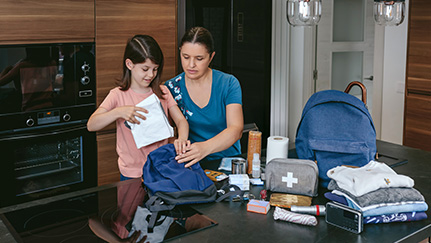
Over the past two decades, wildfires have occurred more frequently throughout areas in the western United States. These devastating events are becoming increasingly prevalent as warmer and dryer conditions create more active and prolonged fire seasons.1 Wildfires pose a significant danger to people and property, but there are ways to help keep your family and property safer. It can help to create an effective preparation plan for your situation. Check out these tips for ways you can help keep your family and home safe.
Build a wildfire preparedness emergency kit
Wildfires can spread rapidly and create dangerous conditions, often leaving little time to gather the necessary items in the event of an emergency or evacuation. So as a key first step in your preparation plan, make sure to put together a wildfire emergency kit that’s readily available. Here are some of the most important items that should be included:
- Water — Although it may be heavy to carry around, water is a must because you can’t be sure when you’ll find your next source.
- Respirators — Respirators help reduce your risk from smoke inhalation posed by fires and filter out particles. Research the appropriate respirators before buying, and purchase from a trusted source.
- First Aid Kit — It’s important to have items on hand such as bandages, antiseptic wipes, gauze, duct tape, glow sticks and other supplies so you can be prepared on the go.
- Battery Pack — Whether you’re evacuating or sheltering in place, it’s likely you’ll lose access to power, so it’s great to have a battery pack handy. And remember, it will need to be fully charged beforehand.
- Weather Radio — Wildfires can move and change direction, so you’ll want to be able to tune into the National Oceanic and Atmospheric Administration broadcasts to stay in the know.
How to protect your home from wildfires
There are a number of simple steps you can take to create a line of defense around your home to help prevent serious property damage.
- Remove all dry grass, brush, trees and dead leaves within at least 100 feet from your home.
- Keep grass cut short and ensure the 30-foot area around your home is always watered well.
- Avoid using combustible bark and wood-chip mulch for landscaping.
- Install tempered glass or multilayered glazed panels in exterior windows, glass doors and skylights.
- Plant native, fire-resistant vegetation whenever possible. Consult with a local greenhouse/nursery or research appropriate vegetation online to inform your landscaping choices.
- Install metal screens to keep flying embers from entering your home. These screens should be ⅛ inch or finer inside all vents and must be checked periodically for any accumulated debris.
- Remove any items on your deck that could catch fire, including dead brush and natural waste or stored items.
- Routinely remove dry debris from your roof and gutters. Gutters can catch flying embers and the dead leaves, pine needles and other organic material inside them can catch fire.
Know your ignition zones and your neighbor’s
The steps listed above are especially important because they take into account the three home ignition zones, which are “buffers” of up to 200 feet around your home. Essentially, they act as a safety bubble to help protect your house from fires, embers and smoke. The three areas include:
- The Immediate Zone: the area within 5 feet around your home
- The Intermediate Zone: the area between 5 and 30 feet around your home
- The Extended Zone: extends 100 feet around the home, or up to 200 feet if your home is near a steep slope.2
It is important to consider not only the areas around your home but also the people who are nearby. If you and your neighbors have fences that overlap, even a small gap between fences can cause debris and embers to accumulate and ignite. Plus, the two fences together create more fuel for a more intense fire, increasing your home’s exposure to heat and embers. Talk to your neighbors and work together to repair or remove sections that overlap. It’s helpful to also ask your neighbors about the steps they are taking to prepare their homes for wildfires, because your neighbor’s risk is your risk too.
Before a wildfire evacuation
If a wildfire outbreak is so severe that you expect local authorities to place an evacuation order, there are additional home safety measures you can take before leaving to take shelter in a safer area.
- Be sure to close all doors and windows to prevent embers from getting in and igniting combustible materials.
- Turn off the air conditioning to keep out smoke.
- Shut off the gas supply or propane tank(s) to help avoid feeding a fire.
- Place a ladder near or against your home to give firefighters quick access if needed.
During a wildfire evacuation
If it’s necessary to evacuate, you should act immediately yet safely to leave the area as soon and as safely as possible. First and foremost, gather your family members and pets. And before you get on the road, review the evacuation routes specified by local authorities. It’s easy for wildfires to quickly change direction, so your planned escape route may be blocked. Plan ahead and make sure to keep enough flashlights on hand.
If there’s enough time before you leave, close all the windows and doors and remove curtains or blinds. In case the power goes out, try to disconnect automatic garage door openers as well so that you can still open the door when you return. Once you’re traveling to a safer location, continue to monitor news reports for the latest information.
Keep in mind:
Wildfires can be unpredictable. You may not be in your home a wildfire occurs. If this is the case, don’t panic. Follow the safety protocols below if you are in your car or outside.
When you’re in a car:- Roll up the windows and close the doors.
- If you need to run the air, keep it in re-circulate mode ONLY and keep the vents closed. This helps prevent smoke or sparks from entering.
- Drive slowly and carefully with the headlights on.
- If you have to stop, turn off the engine, but keep the headlights on. Then get on the floor and cover up with a blanket.
- If you’re close to a road, lie down in a ditch and shield yourself with anything that can protect you from the heat.
- Seek shelter in an area with less fuel for the fire such as the backside of a mountain. Avoid canyons and topographic areas.
Returning home after a wildfire
Even after wildfires are contained, they can leave lingering smoke and ash throughout the area. Once you return home—only after you’ve received an all-clear from safety officials—it’s critical to take precautions when reentering your property. Breathing protection is important to protect against smoke inhalation and particles that are airborne or that settle on surfaces. Prioritize deep cleaning to keep you and your family safe.
- Wash clothes and other fabrics often to help ensure you’re getting rid of any particles.
- Open the windows to help air out your home.
- Use air purifiers to help ensure you’re breathing cleaner air
- Use a wet mop to clean up remaining particles on the floors.
When checking for fire damage:
Always use caution when entering a building and avoid all standing water because it may have an electrical charge.
- Examine roofs and attics for hot spots or sparks and extinguish them immediately. You should continue this every few hours until the risk has passed.
- Check utilities throughout the home and reach out to a professional if there is any damage.
- Throw away any contaminated food, medication or beverages.
- If the fire caused bleach, ammonia or other chemicals to spill, contact your local department of health or environmental protection agency on how to proceed.
Find the right insurance coverage for your home
At Nationwide, we’re happy to go the extra mile to help you with wildfire safety and preparedness. If you’re worried about wildfires impacting your home, review your policy and consult with your insurance agent to make sure you have the right coverage to meet your needs.