Mark Hackett, CFA®, CMT®, CFP®


Markets and economy
Markets and economy
Labor force participation:
more than a headline number
Key takeaways:
- Looking beyond the headline labor force participation rate can help uncover the demographic trends shaping labor supply.
- Economic conditions, household wealth, and retirement patterns can all influence labor force participation, particularly among older workers.
08/19/2026 – The labor force participation rate (LFPR) is often portrayed as a single number, rising or falling each month as investors focus on the unemployment rate and its potential implications for monetary policy. But beneath the headline figures, demographic shifts can be just as important to the labor market as changes in the overall participation rate.
When comparing the LFPR for 16–24-year-olds and workers 55 and older, it might be tempting to explain the differences as diverging trends. The reality is more nuanced, reflecting both secular and cyclical forces, shifting retirement patterns, and changes in the nature of work itself.
For much of the past three decades, labor force participation among workers over 55 moved steadily higher. This steady climb can be attributed to improvements in health and longevity, job availability, changing retirement preferences, and sometimes financial necessity.
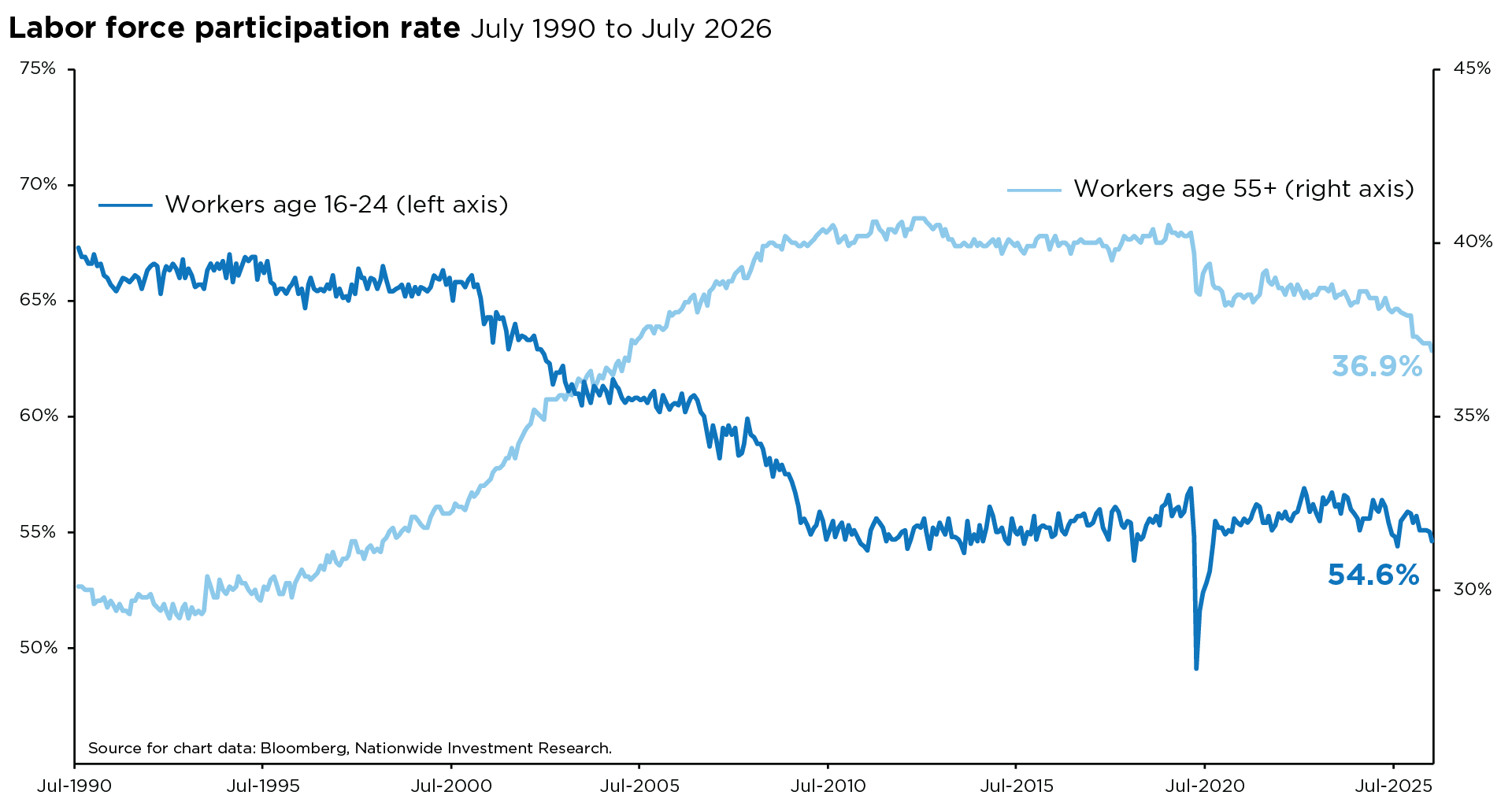
Whatever the reason, older workers became an increasingly important source of labor when participation among younger workers gradually declined. The LFPR for 16–24-year-olds fell by nearly 10 percentage points during the 2000s and has largely moved sideways since. (See the accompanying chart.) This trend may have longer-term implications for productivity, economic growth, and consumer spending.
Changes in the aggregate LFPR are the product of both population shifts and changes in the behavior of different demographic groups. Labor force participation can be influenced by a range of economic factors. For example, in the current economic environment, stronger household finances, higher home values, and the wealth effects of equity market gains may make retirement more attainable for some older workers.
At the same time, labor force exits may simply reflect demographic realities that were postponed during the COVID pandemic. The chart cannot tell us why participation is declining for both cohorts, only that a decades-long source of labor supply growth is no longer contributing as it once did. What stands out, however, is the absence of an obvious counterbalance.
Are younger workers entirely to blame for falling labor force participation rates? Absolutely not. Participation across different age groups is declining because of a combination of aging demographics, structural shifts in the labor market, statistical factors, and fewer entry-level opportunities. Some of these trends were reflected in the most recent payroll report, including the aggregate LFPR falling to a five-year low and remaining near levels not seen since the mid-1970s. Taken together, the story is less about any single age cohort and more about the intersection of several forces that are collectively constraining labor supply.
For financial professionals, it's important not to attribute these trends to any single economic factor. Instead, there's a lesson that transcends job market booms and busts. Saving early, investing consistently, and maintaining a long-term financial plan can help workers harness the power of compounding and build financial security, regardless of how labor force participation develops.
Author(s)

Mark Hackett, CFA®, CMT®, CFP®
Chief Market Strategist, Nationwide Investment Management Group
Mark Hackett is the Chief Market Strategist for Nationwide’s Investment Management Group, bringing more than 20 years of experience in the asset management industry to the role.
Trending articles
What could matter most for bond investors in 2026? Income, flexibility, and a disciplined approach to security selection.
As sports betting gains popularity, investors may blur the line between gambling and investing. Here's why time and compounding matter.
Looking beyond rates reveals what's historically fueled small-cap gains most: stronger earnings and a growing economy.
Sources/Disclaimers
This material is not a recommendation to buy or sell a financial product or to adopt an investment strategy. Investors should discuss their specific situation with their financial professional.
Except where otherwise indicated, the views and opinions expressed are those of Nationwide as of the date noted, are subject to change at any time and may not come to pass.