Mark Hackett, CFA, CMT


Markets and economy
Markets and economy
Soft dollar, hard data:
Rethinking the U.S. dollar weakness narrative
Key takeaways:
- Foreign investors are still buying U.S. assets—despite the dollar narrative.
- Dollar softness points to global expansion, not U.S. slowdown.
02/04/2026 – A mix of macroeconomic crosscurrents—shifting Fed signals, expanded fiscal spending, geopolitical tensions, and the prospect of yen intervention—has pushed the U.S. dollar lower over the past year. Those pullbacks have revived what many in the market refer to as the “dollar debasement trade.”
Dollar debasement reflects a view that the dollar’s purchasing power will erode over time. Investors position for this by leaning into traditional stores of value—gold, inflation-resilient real assets, and selective non-dollar exposures—when policy, fiscal, or global rate dynamics suggest the currency’s real value may weaken.
Last year’s surge in precious metals—gold up 65% and silver nearly 175%—offers a clear illustration of the dollar-debasement theme at work. These outsized moves have also sparked speculation that investors may rotate out of U.S.-denominated assets in search of protection against further dollar weakness.
Yet beneath the market buzz that often builds around volatility and momentum, the data tell a different story: foreign investors continue to buy U.S. assets at a strong pace, challenging the debasement narrative that has dominated recent market commentary.
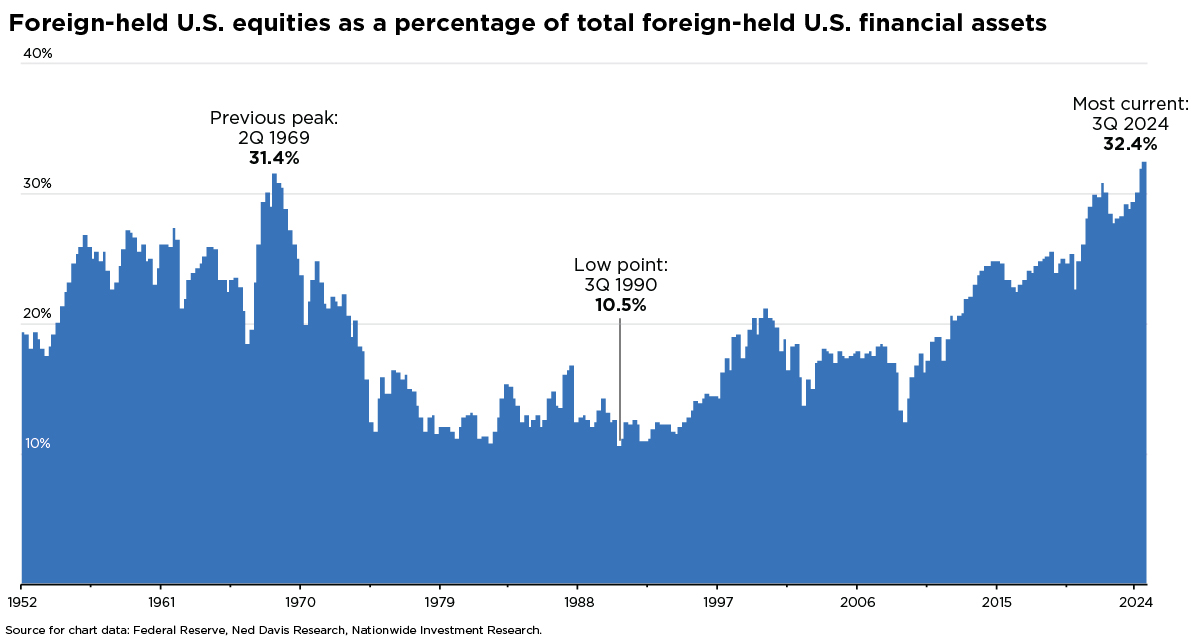
When markets are awash in competing opinions, flow-of-funds data can help clarify where real conviction sits. Foreign ownership of U.S. securities climbed to nearly $35 trillion in Q3 2025—an all-time high. And despite all the chatter about international markets outperforming the U.S. in 2025, foreign investors have continued to lean into U.S. equities. Foreign equity holdings climbed to $20.8 trillion last year—another record—representing 32% of all foreign-held U.S. financial assets and surpassing the previous high set during the 1968 bull-market peak. Goldman Sachs adds further context: from January through November 2025, foreign investors bought $628 billion in U.S. equities.
While dollar softness may persist into 2026, it appears to signal less about U.S. economic vulnerability—especially given the continued strength in corporate profits—and more about a broadening global expansion. A healthier global backdrop can improve earnings translation, enhance the competitiveness of U.S. firms abroad, and boost international returns for dollar-based investors.
Today’s dollar weakness looks less like a verdict on U.S. fundamentals and more like a byproduct of broader global diversification. It’s a reminder of the value—for clients and portfolios—of maintaining a well-diversified asset mix.
Support your client conversations
Author(s)

Mark Hackett, CFA®, CMT®, CFP®
Chief Market Strategist, Nationwide Investment Management Group
Mark Hackett is the Chief Market Strategist for Nationwide’s Investment Management Group, bringing more than 20 years of experience in the asset management industry to the role.
Trending articles
What could matter most for bond investors in 2026? Income, flexibility, and a disciplined approach to security selection.
As sports betting gains popularity, investors may blur the line between gambling and investing. Here's why time and compounding matter.
Looking beyond rates reveals what's historically fueled small-cap gains most: stronger earnings and a growing economy.
Sources/Disclaimers
This material is not a recommendation to buy or sell a financial product or to adopt an investment strategy. Investors should discuss their specific situation with their financial professional.
Except where otherwise indicated, the views and opinions expressed are those of Nationwide as of the date noted, are subject to change at any time and may not come to pass.