

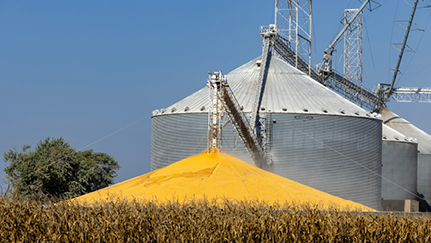
The 2025 corn harvest was one for the record books. American farmers pulled in a massive 17 billion bushels, storing more grain than expected. While that bumper crop is generally good news for farmers’ bottom lines, it brings a serious challenge that extends well past harvest season: Safely managing that high volume of stored grain.
With billions of bushels currently in on-farm storage, the risk of grain entrapment is higher than it has been in years. The more grain you store and the longer it’s stored, the more time you’ll spend managing it — checking moisture levels, breaking up crust or moving it out. It only takes a split second for a routine bin check to turn into a life-threatening emergency.
With such a massive crop in storage on farms around the country, it’s the ideal time to make sure everyone on your farm makes it home at the end of the day. That’s the inspiration behind Grain Bin Safety Week.
More stored grain, more grain entrapment potential
The correlation between high volumes of grain stored on farms and grain entrapments is clear. Recent data shows there were 34 reported grain entrapment incidents in 2024, representing a 25% increase from the previous year. And as many as 30% of all grain entrapments go unreported. The troubling trend is moving in the wrong direction.
With USDA reports showing over 12 billion bushels of corn stored in all positions as of December 1, 2025 — including over 7.6 billion bushels stored directly on farms — the potential for accidents in 2026 remains critically high. High storage volumes can also lead to grain quality issues like crusted or spoiled grain. This forces farmers to enter bins (PDF) to maintain stored grain quality. And that’s exactly where the danger lies.
5 critical grain safety protocols
Preventing grain entrapment starts with a strict adherence to safety. These five rules can help any worker stay safe from entrapment danger when working in or around stored grain.
- Lockout/tagout every time. Never enter a grain bin without de-energizing and locking out all power sources (PDF) to augers and conveyors. It is impossible to escape flowing grain; a six-foot tall person can be buried in just 11 seconds. Ensure that no one can accidentally turn on the equipment while you are inside.
- Never enter flowing grain. Walking on moving grain is like walking on quicksand. The suction created by an unloading auger is too strong to fight. If the grain is moving, stay out. If you drop a tool or equipment, leave it. It can be replaced; you cannot.
- The "observer" rule. Never work alone. If you must enter a bin, station an observer outside the entry point. This person’s sole job is to monitor the situation and call for help if things go wrong. They should never enter the bin to attempt a rescue themselves, as this often leads to multiple casualties.
- Harness and lifeline. Always wear a body harness attached to a lifeline. The lifeline should be positioned to prevent you from sinking further than waist-deep into the grain. In the event of a collapse or flow, this equipment provides the necessary support to keep your head above the grain mass.
- Test the air. Grain bins can accumulate toxic gases or have insufficient oxygen levels, especially if the grain has spoiled or is fermenting. Always test the atmosphere within the bin before entry. If the air quality is compromised, use proper ventilation until it is safe.
Equip your local first responders
Even with the best prevention plans, accidents can happen. When they do, rural fire departments are often the only line of defense. However, many volunteer departments lack the specialized equipment, and all fire departments may not have the training required for a grain bin rescue.
Nationwide’s Grain Bin Safety Week is working to change that. Now in its 12th year, this initiative has provided 452 grain rescue tubes and hands-on training to first responders across 35 states. These tools have already helped save 17 lives.
How you can help in your community
You can help protect your community by nominating your local fire department for the Nominate Your Fire Department Contest. Winners receive a specialized rescue tube and training that could save a neighbor's life — or your own.
The contest runs annually from January 1 to April 30. Taking a few minutes to fill out the nomination form is a simple step toward a safer farming community.
Prioritize grain storage safety
Managing a record crop requires patience and diligence. As you work through your stored grain this season, remember that efficiency should never come at the cost of safety. Review your protocols, nominate your local fire department for resources and ensure every person on your farm understands the risks.