

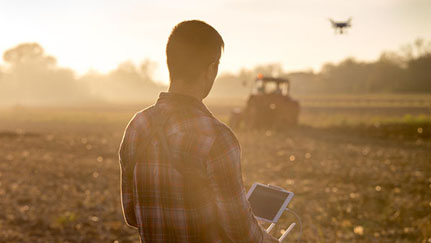
Farmers have always been early adopters of technology that works. From GPS-guided tractors to precision irrigation systems, agriculture has never been shy about embracing tools that save time, reduce waste and improve yields. Drones, or Unmanned Aerial Systems (UAS), are quickly becoming the next essential piece of equipment on modern farms and ranches.
"We're seeing a real shift in how farmers and ranchers are thinking about drones," says Peter LaMair, Nationwide Farm Staff Underwriting. "What used to seem like a high-tech novelty is now becoming a practical, cost-effective tool that's changing how operations of all sizes manage their crops and livestock."
The numbers back up LaMair. The agricultural drone market is currently valued at $7.55 billion. And it's growing fast. Whether you're managing a few hundred crop acres or managing a cow/calf operation, drones offer real, measurable advantages. Here's what you need to know before you take the leap.
What is an agricultural drone?
An agricultural drone is an unmanned aerial vehicle designed specifically for farm and ranch use. Modern ag drones are far more than cameras with propellers. Today's ag drones range from compact consumer-grade models to heavy-lift commercial sprayers capable of carrying 10 to 40 gallons of liquid at a time. Depending on the model and configuration, they can:
- Spray crops with herbicides, pesticides, fungicides or fertilizers
- Map and monitor fields using multispectral or thermal imaging
- Scout for pests, disease and weeds across large areas quickly
- Monitor livestock by tracking herd locations, identifying injured or separated animals, checking fencing and applying pesticides for flies and other pests
- Plant crops like cover crops in areas difficult to reach by ground equipment
- Assess irrigation coverage and identify dry spots before they become yield-loss problems
How drones can improve farm efficiency
The main appeal of agricultural drones is efficiency. A drone can cover land faster than most ground-based equipment, with some spray drones able to treat 15 to 40 acres per hour, depending on the terrain and application rate. For monitoring and scouting, a single drone flight can survey fields in minutes that would take hours to walk.
"Time is money on a farm," LaMair says. "When a drone can scout 300 acres in a morning and flag problem areas before they spread, that's a real competitive advantage."
For livestock operations, drones are proving their worth in monitoring cattle, checking on remote water sources and assessing fence lines. They’re all tasks that traditionally required an ATV, horse or long pickup ride.
Get started with drones
Drone technology has matured considerably, and the barrier to entry is lower than many farmers expect. There’s a real learning curve with adding drones to your farm or ranch. But it’s manageable. And the risks — like many other risks on your operation — are insurable.
Operating an agricultural drone, especially one used for chemical applications, comes with real responsibilities and requires Federal Aviation Administration (FAA) certification, pesticide applicator licensing, the right equipment and training. LaMair said it’s a good practice to treat a drone just like any other piece of machinery on a farm or ranch, especially when it comes to managing risk.
"Adding a drone to your operation is exciting, but it also introduces new risks," LaMair says. "Farmers have spent decades scheduling tractors, combines and implements on their insurance policies. It only makes sense that drones should be treated the same way. Now they can be."
Contact your Nationwide Farm Certified agent to ensure you have the proper drone insurance coverage to manage the risks of aerial operations. Nationwide offers a comprehensive suite of coverage that protects equipment, physical damage and liability during precision drone operations and crop input applications. Your agent can walk you through the available drone coverage options, help you find a solution that fits your operation and make sure your policy keeps pace with your farm's technology.