

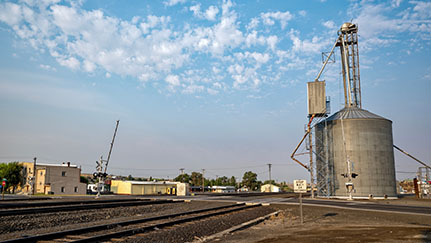
Essential safety tips for farmers, drivers, and co-op staff during peak harvest traffic near train tracks
As harvest season ramps up across the Midwest, agricultural co-ops become hubs of activity. Trucks, tractors, grain carts and other farm equipment converge near grain elevators—many of which are located alongside active railroad tracks. This seasonal surge in traffic increases the risk of accidents, especially at railroad crossings.
The risk is real: U.S. railroad crossing statistics
National data shows that hundreds of lives are lost each year in preventable incidents involving trains and vehicles. Understanding the scope of the danger is the first step toward prevention. According to the Federal Railroad Administration (FRA),1 in 2024 alone:
- 2,098 highway-rail grade crossing incidents were reported
- These resulted in 248 fatalities and 679 injuries
- Nearly 60% of all fatal railroad crossing crashes occurred in rural areas—many near agricultural zones
These numbers underscore the importance of heightened awareness and adherence to safety protocols during the busy harvest season.
Dangers around co-ops and train tracks
Co-ops become high-traffic zones during harvest, with large equipment and trucks moving in and out constantly. This congestion, combined with the presence of nearby train tracks, creates a perfect storm for potential accidents. Recognizing these specific hazards can help everyone stay alert and avoid tragedy:
- Limited visibility due to tall crops, grain bins or equipment
- Increased wait times at crossings, leading to risky decisions
- Fatigue from long harvest hours impairing judgment
- Distraction from radios, phones or CB chatter
- Slow-moving equipment that may stall or take longer to cross tracks
- Multiple tracks where a second train may approach unnoticed
Best practices for safe navigation near tracks
Staying safe around train tracks isn’t just about following rules—it’s about building habits that protect lives. Whether you're driving a semi, operating a combine, or directing traffic at a co-op, these best practices can make all the difference. A few extra seconds of caution can prevent a lifetime of regret.
For all drivers:
- Always stop, look, and roll down the windows to listen before crossing any track—even if signals aren’t active
- Never try to beat a train. Trains can take over a mile to stop
- Obey all warning signs and signals. Flashing lights mean a train is coming
- Don’t stop on the tracks. Ensure there’s enough room on the other side before crossing
- Use extra caution at night or in low-visibility conditions
For operators of farm equipment:
- Cross at a 90-degree angle to avoid getting stuck in the tracks
- Know your equipment’s clearance. Some lowboy trailers or auger wagons can bottom out
- Use a spotter when visibility is limited or when backing near tracks
- Avoid distractions. Radios and phones should be silenced when approaching crossings
- Report stuck or stalled vehicles immediately to the railroad using the blue Emergency Notification System (ENS) sign posted at every crossing
Community awareness saves lives
Harvest season is a time of hard work, long hours and tight deadlines—but safety should never take a back seat. With increased traffic around co-ops and the ever-present risk of train crossings, it’s critical for everyone—farmers, truck drivers and co-op staff—to stay alert and follow best practices. By working together and using available safety resources, we can ensure that this harvest season is not only productive but safe for all.