

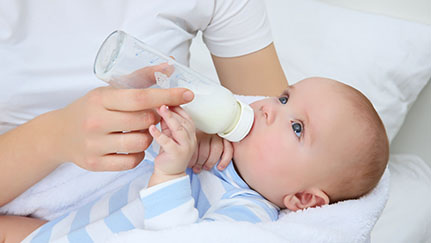
Childcare centers play a crucial role in nurturing and safeguarding our little ones. However, certain practices, like bottle-warming, can inadvertently pose risks to children. According to the Centers for Disease Control and Prevention (CDC), approximately 435 children are treated in emergency rooms for burn-related injuries every day.1 Let’s examine the hazards linked to bottle-warming practices and explore strategies to minimize them.
Scalding is a type of burn caused by hot liquids or steam. Young children have delicate skin, making them more susceptible to scald burns. In childcare centers, some of the most common and severe burns occur when scalding hot liquids or food contact a child’s skin. These burns can be painful and life-altering.
The following warming methods will put children and your organization at risk
Microwave heating
Using microwaves to warm bottles is a common practice; however, it can be very dangerous. Microwaving bottles can create uneven heating, leaving pockets of scalding liquid that can severely burn infants’ mouths. Additionally, spilled liquid from a hot bottle can burn a child’s face and body.
Slow cooker appliance and stove top
Slow cookers and stove tops are unsafe substitutes for microwaves. These methods to heat water for bottle-warming can cause severe burn injuries to children from hot water spills, unevenly heated bottles or physical injuries from the appliance falling on the child. For example, children have pulled on slow cooker cords, got splashed by boiling water, or dripped on by hot water from bottles removed from the scalding water.

Bottle warmers
Location. Location. Location. Bottle warmers can be a source of serious burns and injuries when placed or secured incorrectly. Injuries caused by bottle warmers can result in significant awards and damages and pose a critical risk to children and your organization’s reputation. These devices heat up milk or formula and use electricity and hot water to warm the bottles. They are becoming more common in childcare settings yet pose a severe danger when used, placed or secured improperly.
Some common causes of bottle warmer injuries are:
- Children pulling the cords of the bottle warmers, causing them to fall and spill hot water on them.
- Children reaching for the bottle warmers, tipping them over and getting burned by the water or the device.
- Children touching the bottle warmers, which can be very hot and cause skin damage.
- Caregivers accidently knocking over bottle warmers causing hot liquid to spill onto them and nearby children.
Tips to stay out of hot water
Bottle warming risks are easily avoidable. The best way to reduce the risk of burns is to eliminate the source of burns altogether: scalding hot water. Childcare workers should be aware of and trained on the safest and most-recommended ways to warm a child’s milk to prevent burn injuries.
Room temperature or cold bottles
Warming formula or milk prior to feeding is not necessary and is simply a preference for the baby and parent or guardian. The CDC recommends serving bottles at room temperature or cold.
Warm tap water
If parents or guardians insist on warmed bottles, the CDC recommends either holding the bottle under warm running water in a sink or place the bottle in a bowl of warm water for a few minutes; swirling the bottle occasionally. Avoid getting water into the bottle or nipple, as this could contaminate the liquid.
Bottle warmers should be avoided. If you must use them, strict adherence to the following safety precautions is crucial:
- Use a separate room or restricted area for warming bottles.
- Keep the bottle warmer, its cord, and the outlet out of children’s reach at all times.
- Secure the warmer on a flat surface where it cannot tip over.
- Follow the manufacturer’s instructions and precautions for using the bottle warmer. Read the product manual carefully and keep it for future reference. This includes how to clean and sanitize the bottle warmer properly.
- Check the bottle warmer’s label for a certification from a nationally recognized testing laboratory, such as UL, ETL, or CSA. This means the bottle warmer has met the safety standards of the laboratory.
- Check the CPSC website for any recalls or safety alerts related to the bottle warmer. If your bottle warmer is recalled, stop using it immediately and contact the manufacturer for a refund or replacement.
- Use a bottle warmer without an open water bath if possible. This reduces the risk of contamination and spills.
Test temperature before feeding
No matter the method you choose for warming a bottle, swirl the bottle well and test the milk on your wrist or the back of your hand. The milk should be lukewarm, never hot.
Supervise children closely
Maintain proper staff-to-child ratios and always monitor children. Closer supervision is essential when increased hazards are present. This may require an intentional shifting of duties or physical positioning, or additional staffing. Children should never be left unattended or alone to engage in unsafe behavior.
Keep children away from hot liquids
To reduce the risk of burns to children, hot liquids of all kinds must be eliminated from any area where children are present.
Childcare centers must ensure the safety of the children in their care. Therefore, they should prioritize bottle-warming practices that eliminate scalding temperatures and adopt safer methods. This can protect children from preventable burn injuries and life-changing consequences. Childcare centers should also address the risks of bottle-warming practices and minimize the occurrence of burns.
Make bottle-warming safety a priority in our childcare centers and ensure that every child has a happy and healthy childhood.
More information on warming bottles from the American Academy of Pediatrics:
[1] https://www.cdc.gov/injury/pdfs/fact_sheets/burns-fact-sheet-a.pdf