The danger of snow and ice on rooftops
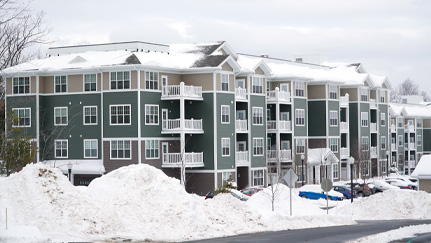
Snow, ice and rain can add tremendous weight to building roofs, causing them to collapse.
- Flat roofs are particularly vulnerable to collapse and water damage
- Due to their lighter construction, metal roofing systems, steel decks and boards on joists have little ability to withstand and recover from large loads of snow or rainwater
- Water and slush can pond in low areas of a roof where adequate slopes to drains aren’t present.
When snow is in the forecast, taking proper care of your roof will help prevent a collapse that could cause injury and an interruption in your business operations.
Conditions that may lead to roof collapse
- Damage to roof structural members, indicated by sagging, cracks, corrosion, spalling (surface flaking on concrete) or efflorescence (white powdery appearance on concrete)
- Roofs retrofitted with insulation, where snow may not melt as it had before
- Parts of a building that are not heated for more than a day
- Additional items such as AC units and solar panels; these items add weight, so less snow is needed to exceed the roof’s weight capacity
- Canopies or lower roof units that have been added to a structure, because they often have a lower load capacity than the main building
- Drains, gutters and downspouts that aren’t cleaned at least quarterly
Warning signs that may indicate weakness in the roof structure
- Broken, cracked or splintered wood joists, rafters or decking (visible from inside)
- Sagging ceiling tiles or boards; boards falling out of a ceiling grid
- Popping, cracking or creaking noises
- Sagging, bent or deformed metal roof components
- Bent or bowed conduit, utility or sprinkler piping at ceiling or roof height
- Doors or windows that are difficult to open
- Walls that have cracks or appear to bend outward
- Inadequate ventilation from blocking of roof vents, chimneys and flues that could help with snow melt; this can also impact air circulation throughout the building
Snow load based on accumulated depth
| Snow depth on roof
(feet) |
Dry snow
(lbs. per sq. ft.) |
In-between snow
(lbs./sq. ft.) |
Wet snow
(lbs. per sq. ft.) |
|---|---|---|---|
| 1 | 3.0 | 12 | 21 |
| 2 | 6.5 | 24 | 42 |
| 3 | 9.5 | 36 | 62 |
| 4 | 12.5 | 48 | 83 |
| 5 | 15.5 | 60 | 104 |
Actions you can take to help reduce the risk of snow-related losses
- Know the maximum snow depth your building can safely handle. This may vary with different portions of the building, especially if later additions were completed. Structural engineers can determine the acceptable depth by calculating the roof’s live load capacity.
- Preplan roof maintenance with a fully insured and experienced contractor. Have the roofing contractor check for water ponding and expedite all repairs prior to the onset of cold/inclement weather.
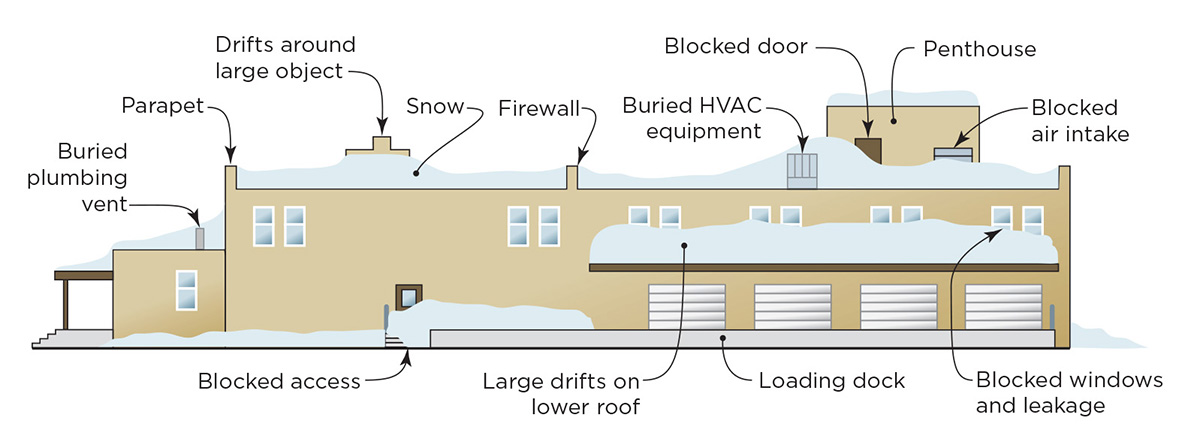
- Avoid allowing snow to accumulate. Hire a fully insured, experienced contractor to remove snow in even layers to balance the weight on the roof, paying special attention to areas where drifting has occurred (see diagram below). If a large snowfall is predicted, ask your contractor to ensure that the roof is clear before it arrives.
- This contractor should also be asked to clear roof drains and downspouts of debris, snow, and ice, so they can flow smoothly. Installing downspouts above grade will help this process.
Damage created by improper snow removal
Clearing snow from an entire roof is dangerous and best left to those trained and with the right equipment for the task. As professionals, they’re less likely to be injured or to do damage to your roof.
FEMA’s comprehensive guide
To learn more about the risks a snow event poses to your buildings, read the Snow Load Safety Guide (PDF), published by the Federal Emergency Management Agency (FEMA). This comprehensive guide provides information about preventative measures to take before the snow season, as well as actions you should take before, during and after a snowfall.
The diagram below from the FEMA guide illustrates various unbalanced snow load scenarios resulting from drifting and shows how snow is often deeper at roof protrusions, obstructions and elevation changes than in more open sections of the roof.