

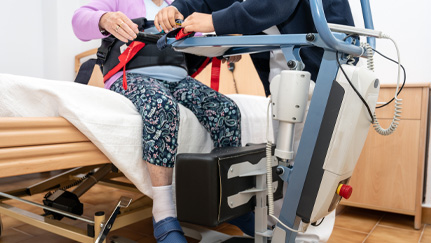
Mechanical lift slings are essential components of lift systems used multiple times each day throughout senior care settings, yet they can be overlooked once placed into daily service. Over time, slings may experience wear, damage, or inappropriate use that can increase the risk of resident injury and staff harm. Establishing a formal sling integrity program helps ensure slings remain safe, appropriate for resident needs, and compliant with manufacturer recommendations, while supporting a facility’s overall safety and liability management efforts.
The importance of using the appropriate sling
Sling integrity and proper selection are essential to protect residents during mechanical lift transfers. When a sling is undersized, oversized, worn, or incompatible with the lift device, the risk of injury may increase. Improper sling use may contribute to bruising, skin tears, or, in more serious cases, resident falls resulting in fractures.
Because sit-to-stand slings and full-body slings are designed for different transfer needs, staff must understand the functional purpose of each and be able to confidently select the correct sling type and size based on the resident’s assessed needs and documented care plan.
Before each use, slings should be visually inspected to verify they are safe for use. Indicators that a sling may no longer be suitable include:
- Frayed or loose stitching
- Thinning, torn, knots, deformation, or stretched fabric
- Damaged or elongated loops
- Faded or missing manufacturer labels
- Chemical or heat damage
Any sling showing signs of wear or damage should be removed from service immediately and replaced according to facility policy.
Building a reliable sling oversight system
A structured sling oversight and tracking process supports consistency and reduces the likelihood of unsafe equipment remaining in circulation. Slings should be identified at the time of purchase, including dating and numbering to assist with monitoring age and usage. Laundry staff are often well-positioned to check sling conditions after each wash, creating an additional layer of protection before equipment returns to service. Nursing staff should then perform a second inspection prior to resident use, reinforcing shared responsibility across departments under nursing leadership oversight.
Education is equally critical. Staff should receive sling and lift training upon hire, demonstrate and document competency prior to independent use, and participate in periodic refresher education—at least annually. Training and competency documentation should be maintained in accordance with facility policy.
To minimize compatibility risks, slings originating from outside organizations, such as hospitals or dialysis centers, should not be used within the community. Manufacturer specifications vary, and mismatched equipment may not be designed for use with the facility’s lift systems. Manufacturer guidelines should be readily available, reviewed regularly, and followed for inspection, maintenance, and replacement timelines.
Strengthening safety through culture and accountability
Facilities that consistently perform well in sling safety typically maintain strong oversight practices supported by a culture of accountability. Leadership can reinforce expectations through unannounced observations across all shifts to confirm adherence to care plans, proper sling selection, and correct transfer techniques.
Effective oversight strategies may include:
- Leadership spot checks of laundered slings for integrity and labeling
- Designation of lift or sling champions to support staff and reinforce best practices
- Review of observation findings and trends through the QAPI process
A sustained focus on sling integrity and safe use reduces preventable harm, supports staff confidence, and promotes consistency in transfer practices, while ensuring safe, dignified transfers for residents.
Resources
- Mechanical lift sling checklist (PDF)
- Mechanical lift checklist (PDF)
- Mechanical lift best practices senior living
Sources
- Centers for Medicare & Medicaid Services: State Operations Manual, Appendix PP – Guidance to Surveyors for Long Term Care Facilities.