

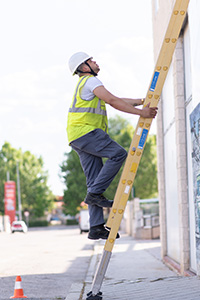
Every year, ladder-related incidents claim lives and cause life altering injuries across the United States, many of them in the construction industry, where work at height is routine. In 2022 alone, 90 construction workers lost their lives due to ladder-related falls, with more than 25,000 injuries reported between 2019 and 2022.1 Ladder safety remains a persistent challenge: falls continue to be a leading cause of fatalities in construction, and ladder violations consistently rank among OSHA’s top three most-cited safety issues.2
Ladder Safety should be top-of-mind year-round for contractors. Renew your focus in March by supporting the National Ladder Safety Month led by the American Ladder Institute (ALI). The campaign renews attention each March on the training, tools, and behaviors that keep workers safe. This dedicated campaign encourages employers and workers to take practical steps that reduce fall exposure and reinforce a culture of safety.
Key focus areas of ladder safety
The American Ladder Institute national observance highlights five core topics especially relevant to construction teams:
• Training and awareness
Insufficient training continues to be a key contributor to ladder-related falls. Workers must be equipped to choose the correct ladder for the job, recognize hazards, and understand proper climbing techniques.
• Inspection and maintenance
Routine inspections are essential for identifying hazards such as damaged rails, cracks, worn feet, or slippery rungs. Effective inspection and maintenance programs prevent equipment-related failures that could lead to fall events.
• Stabilization, setup, and accessories
Improper setup, particularly ladder angle is a major driver of ladder falls. According to CDC/NIOSH, incorrect ladder angle contributes to roughly 40% of ladder-related injuries.3 Proper setup procedures, stabilizing accessories, choosing the correct angle and secure footing significantly reduce these risks, especially for extension ladders.
• Safe climbing and positioning
Overreaching remains a common factor in ladder fall incidents, underscoring the importance of maintaining three points of contact, avoiding side-loading, and ensuring extension ladders are secured at both the top and bottom before use.
Goals of National Ladder Safety Month
This month long campaign seeks to:
- Raise awareness about safe ladder usage and hazard recognition.
- Reduce the number of injuries and fatalities caused by improper ladder use.
- Increase worker participation in the American Ladder Institute free ladder safety training, expanding competency across both new and experienced workers.
Every step matters
National Ladder Safety Month serves as a timely reminder for construction teams to:
- Refresh ladder safety training
- Reinforce equipment inspections
- Reevaluate job planning for safer alternatives
- Strengthen expectations around safe climbing behavior
- Evaluate ladder alternatives to enhance productivity and protection
More Resources
- Ladder alternative program (PDF)
- Ladder safety program (PDF)
- Portable ladder safety checklist (PDF)
- Ladder safety poster (PDF)
- Nationwide Toolbox Talks
References
[1] Fatal and Nonfatal Falls in the U.S. Construction Industry, 2011-2022. March 2024.
[2] Occupational Safety and Health Administration. Top 10 Most Frequently Cited Standards for Fiscal Year 2024. Updated August 2025.
[3] National Institute for Occupational Safety and Health (NIOSH). Ladder Safety. January 2024.