

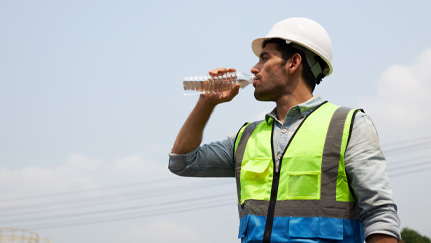
Construction workers account for fewer than 10% of the total workforce1, but historically experienced over 30% of all heat-related deaths.2 Construction workers who regularly work in direct sunlight, in enclosed spaces with elevated temperatures, next to heat-producing equipment or on surfaces that absorb and radiate heat such as asphalt or concrete are at risk of injury from heat exposure. When these conditions are combined, with strenuous physical activities, humidity, poor hydration practices, or personal health factors (such as medications, illness, pre-existing medical conditions, or being overweight), can quickly lead to a serious injury or fatality from a heat-related illness (HRI). HRIs occur when the body becomes unable to properly cool, resulting in a rapid rise in body temperature, or hyperthermia. HRIs include heat rash, heat cramps, heat syncope (fainting), rhabdomyolysis (death of muscle fiber), heat exhaustion or heat stroke.
While HRIs present a direct health concern, the physical symptoms of heat stress also elevate risk factors that can lead a worker to suffer other acute, traumatic injuries. These symptoms include a loss of balance, reduced mental awareness/focus, loss of grip, a decrease in reaction time, and general fatigue/muscle weakness. These physical states not only put the worker at risk, but possibly fellow co-workers and the public. Managing heat-related risk, whether from work outdoors or inside, is an essential part of an overall safety plan to prevent work-related injuries.
Steps you can take
Keeping workers safe from excess heat stress is 100% possible. Use these tips to manage the impact of heat stress and to keep workers cool while working in hot environments.
- Evaluate forecasted conditions against physical work demands to develop a daily work plan to safely manage heat stress.
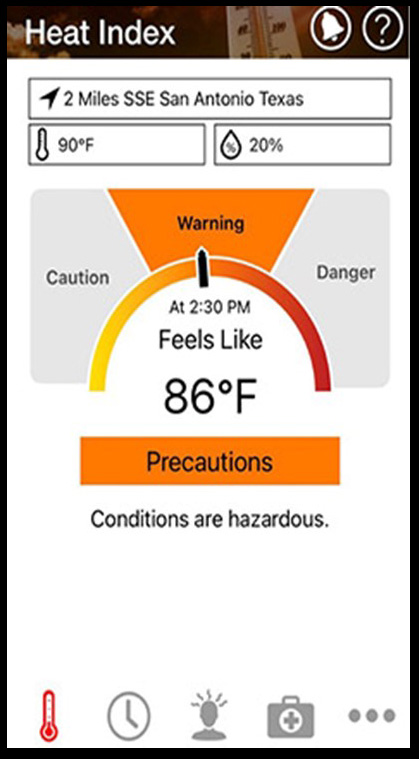
- Monitor the temperature and humidity throughout the day such as by using the free NIOSH/OSHA Heat Safety Tool App (see screen image at right), to adjust the work plan as needed.
- Conduct pre-work meetings to discuss HRI symptoms, expected heat-related conditions, and safety measures.
- Establish an acclimatization plan to allow new and returning workers to adapt to working in a hot environment.
- Modify work periods to avoid the high heat times of the day and increase breaks or rest periods.
- Identify at-risk environmental factors, such as the sun, air temperature, humidity, radiant heat from machinery, and air movement.
- Discuss non-environmental factors that contribute to heat stress. Physical characteristics such as body weight, nutrition, medical conditions, and age are factors to consider.
- Avoid foods or drinks that contribute to dehydration like caffeine, sugary drinks, and alcohol.
- Provide water and breaks on a regular schedule and locate water stations near work areas.
- Distribute electrolyte-based drinks to help combat dehydration.
- Provide wet towels or ice, which can be simple but effective measures to combat the stress of heat.
- Wear clothing that is lightweight and breathable.
- Limit the time in heavy or waterproof garments that retain heat
- Provide access to shade or cooled areas near the work area. Consider adding mechanical cooling methods to shaded areas.
- Create an emergency plan and train employees on the policy.
Record setting heat and extreme temperatures will continue to pose significant risk to your employees. These heat-related illness are preventable by implementing basic safeguards. To protect workers, it is critical you act now and develop heat illness prevention program by incorporating the above tips and below resources. Be sure to check your state for any additional heat illness prevention requirements. In addition, continue to monitor developments in the rule making process for a Federal Heat Stress Standard.
Additional resources
- ANSI/ASSP A10.50-2024 – Standard for Heat Stress Management in Construction and Demolition Operation
- Heat Illness Prevention Campaign
- OSHA-NIOSH Heat Safety Tool – A free App that offers site specific heat index information and risk assessment.
- Center for Disease Control (CDC) Topic Page on Heat Stress
- OSHA Topic Page on Heat Stress
- NIOSH – Occupational Exposure to Heat and Hot Environments
- National Integrated Heat Health Information System
[1] https://www.cpwr.com/research/research-to-practice-r2p/r2p-library/other-resources-for-stakeholders/working-in-hot-weather/
[2] https://pubmed.ncbi.nlm.nih.gov/31328819/