

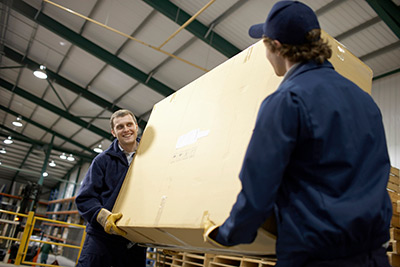
One of the primary causes of workplace injuries — whether your organization is in manufacturing, construction, warehousing, retail, or something else — is manual material handling (MMH). While most people automatically think of lifting when it comes to MMH, it can also include activities like pushing, pulling, carrying, reaching, twisting, and similar work activities.
Why study manual material handling?
In short, your organization should study MMH activities because you’ll benefit in three key areas:
- Safety — every time your workers have to move material, there is a risk for injury. By finding better ways to move material, safety is improved.
- Productivity — moving materials is a non-value-added task. Improving your processes can reduce the amount of time spent in your operation, saving you time and money.
- Quality — by reducing MMH, employee fatigue is reduced. Since fatigued employees make more errors, improved MMH can actually reduce your amount of rework.
How big is the MMH problem?
According to the Bureau of Labor Statistics (BLS), manual material handling contributes to a large percentage of the over 500,000 cases of musculoskeletal disorders reported annually in the United States. BLS has reported that more than one of every three injuries involving missed workdays were the result of shoulder and back injuries, many of which are caused by overexertion and repetitive trauma associated with the manual movement of materials.
- Learn more about the problem and the many potential solutions: Manual Material Handling Technical Bulletin (PDF)
What can I do to improve MMH in my organization?
The good news is that improving workplace MMH is often as easy as observing employees performing work, identifying conditions that increase the risk of the task, and taking the appropriate actions to correct identified risks. To get you started, we’ve assembled several tools you can use to perform your own workplace self-assessments.
- Lifting Assessment Tool (PDF)
- Push/Pull Assessment Tool (PDF)
- Assembly Task Evaluation Tool (PDF)
After using these tools to evaluate MMH activities in your workplace, you may find tasks that will benefit from ergonomic improvements. Below are several resources you can use to generate ideas you can use in your own facility.
What resources are available to train my employees?
The more people who are aware of the risks associated with material handling, the more people who can help make the job better. We offer several tools you can use to train your employees, supervisors, and others in manual material handling topics.
1: Safety Source Videos
- Move it Safely: Avoiding Injury When Moving Materials
- Back Safety: Proper Lifting Procedures
- Understanding and Controlling Ergonomic Risk Factors
- Industrial Ergonomics
2: Safety Posters
Use these posters to remind workers about safe manual material handling techniques:
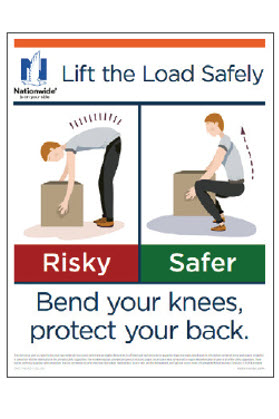 (PDF)
(PDF) 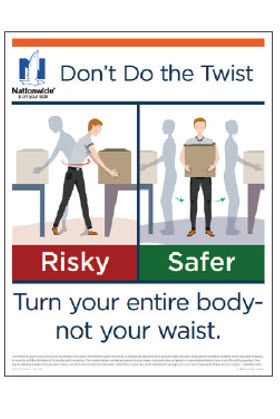 (PDF)
(PDF) 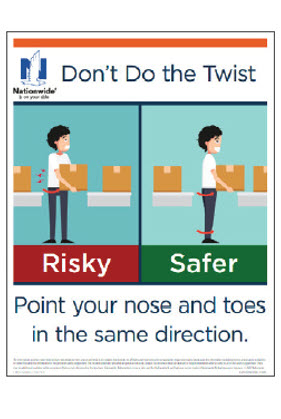 (PDF)
(PDF)  (PDF)
(PDF) 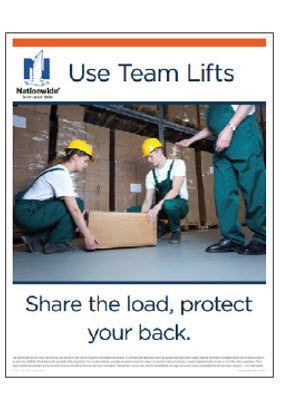 (PDF)
(PDF)
3: Safety Meeting Handouts
Use these handouts to hold a 5-minute safety/toolbox talk with your workers on material handling topics.