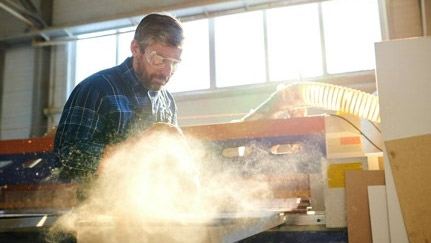
Woodworking operations create a combustible dust, which can cause risk for property loss if it isn’t properly handled. This article outlines an approach to help reduce that risk.
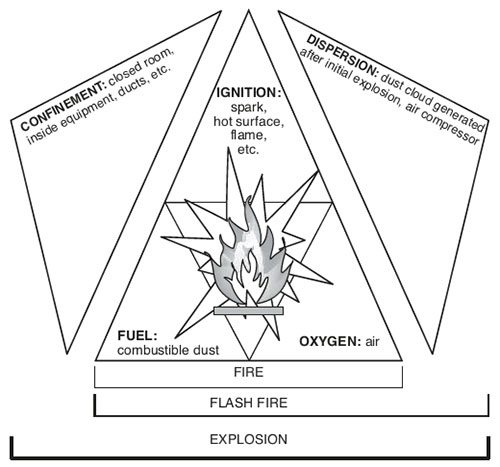
Combustible dust explosions can be an under-recognized hazard in woodworking facilities. According to NFPA, a catastrophic explosion can occur from as little as 1/32 of an inch of accumulated dust (about the thickness of a dime), covering just 5% of a room’s surface area. When ignited, a dust cloud can produce a fireball 8 to 10 times larger than the original cloud. Three of the four deadliest incidents have been dust explosions as cited by the U.S. Chemical Safety and Hazard Investigation Board (CSB; www.csb.gov).
For facilities or processes that handle dust, the owner/operator of that process has a responsibility to determine if the dust handled poses a combustible dust fire or explosion hazard. Many dusts are combustible, and if these dusts are suspended in air, they become a potential explosion hazard. NFPA standards require that all combustible dust users complete a Dust Hazard Analysis (DHA). A DHA is a methodical review of potential fire or explosive hazards associated with combustible dust and a plan to mitigate the risk. Through the DHA, the aim is to evaluate the dust hazards and determine which process is hazardous, provide a solution to eliminate or mitigate the hazard, and have a plan of action in case of an emergency.