

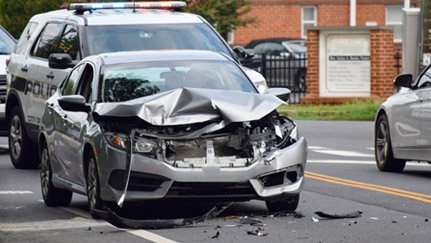
Learn how ADAS can reduce auto crashes and what organizations need to know about this new technology.
Light vehicle manufacturers are adding advanced driver assistance systems (ADAS) as optional or standard features at a rapid pace. Initial ADAS offerings five to 10 years ago were not well received by drivers or organizations as they were not well understood or trusted. However, recent ADAS systems have proven very reliable and become accepted by the general driving public. Independent research studies have shown ADAS to be effective in reducing accidents so organizations should consider the availability of ADAS when purchasing new vehicles.
What is ADAS?
Advanced Driver Assistance Systems are designed to “assist” the driver in recognizing and/or responding to unsafe situations the driver encounters. Unsafe situations include imminent rear-end, lane changing or backing hazards to name a few. Recognition typically includes visual warnings such as flashing lights and/or audio cues such as beeping. More advanced systems “respond” by taking control of vehicle actions such as braking or veering the vehicle back into its lane of traffic.
Learn more about common ADAS features
- Insurance Institute of Highway Safety (IIHS) ADAS website
- National Highway Transportation Safety Administration (NHTSA) ADAS website.
Do ADAS prevent accidents?
An IIHS study compared rates of police reported crashes and insurance claims for vehicles with and without these technologies and discovered all reduced accidents. For example: front to rear crashes (rear-ends) were 27% lower when equipped with forward collision warning (FCW), and 50% lower with FCW and autobrake.1
Read the research
- One-page summary of the findings (PDF) including information on lane departure warning, blind spot detection and backing technology.
- University of Michigan Transportation Research Institute study (PDF) on the topic with similar findings.
Which vehicles have ADAS?
The vehicle manufacturer’s website is a good place to start for determining what ADAS features are available. However, different naming schemes among manufacturers makes it difficult to compare systems. A NHTSA vehicle rating website includes a 5-Star safety rating of light vehicles as well as the standard or optional availability of forward collision warning/braking and lane change ADAS. The IIHS vehicle ratings website is another source for ADAS information including forward collision warning/braking, pedestrian crash prevention and headlights. We suggest you review both resources.
What does ADAS cost?
Increasingly, one or more ADAS features are becoming standard equipment on many common vehicles. For example, a top selling pickup comes standard with forward collision warning/braking and lane departure warning. When ADAS is optional it is often packaged with other features as an upgraded trim line, so it is difficult to break out the specific cost. Larger fleets may be able to add ADAS to basic models if they order enough vehicles.
ADAS on larger vehicles
ADAS is less common on medium and heavy vehicles but is becoming more popular, typically as an option. A recent study by the IIHS found FCW and automatic emergency braking (AEB) reduced rear-end collisions over 40% in tractor trailers. The AAA Foundation for Traffic Safety found similar positive results for Lane Departure Warning3 and AEB4 on large trucks.
Concerns/solutions
As with any new technology, organizations should evaluate its function and ensure controls are in place to address potential negative impacts:
1. Turning ADAS off
Many car manufacturers allow a driver to turn off one or more of the ADAS systems. This is a concern because:
- The driver will not have use of this safety technology
- Another driver, who does not realize the system is turned off, may become involved in an accident when expecting the system to function.
- There could be negative consequences to your organization if a vehicle is involved in an accident that could have been prevented if the system was not disabled.
Organizations should have strict policies prohibiting drivers from turning ADAS systems off unless operating in a capacity which the vehicle manufacturer recommends turning the system off.
2. Driver understanding
Drivers should be informed about the ADAS systems in their vehicles including how they work, their benefits and limitations.5 While sounding similar, ADAS among manufacturers, vehicle models and vehicle years are different. Whether drivers are moving from their personal car to their company vehicle or between company vehicles, the ADAS will likely be different and driver awareness/training is important. The vehicle manual is a good starting point in developing the training.
3. Driver over-reliance
Several driver surveys have shown that as driver assist technologies become more advanced some drivers become over-reliant on them and pay less attention to their driving duties, such as performing distracting activities (6). Organizations should warn drivers of the hazard and have policies requiring the driver to be fully in control of their vehicles at all times, no matter what safety technologies are in place.
Note: Drivers who regularly use advanced driver assistance systems are nearly two times more likely to text, fiddle with the radio, or engage in other distracted driving behaviors, according to a new study from the AAA Foundation.6
4. Repairs and calibration
Maintenance personnel should review instructions for maintaining ADAS and understand the need for recalibrating systems after accidents, damage or windshield replacement. Recalibration typically needs to be completed by the vehicle manufacturer.
Driver resource
Driver educational bulletin on ADAS (PDF)
Sources
[2] Front Crash Prevention Works for Large Trucks, Insurance Institute for Highway Safety, Highway Loss Data Institute September 2020.
[3] Leveraging Large-Truck Technology and Engineering to Realize Safety Gains: Lane Departure Warning Systems, AAA Foundation for Traffic Safety, September 2017
[4] Leveraging Large-Truck Technology and Engineering to Realize Safety Gains: Automatic Emergency Braking Systems, AAA Foundation for Traffic Safety, September 2017
[5] The Impact of Driver's Mental Models of Advanced Vehicle Technologies on Safety & Performance, AAA Foundation for Traffic Safety/SAFER SIM, May 2020
[6] Understanding the Impact of Technology: Do advanced driver Assistance and Semi-automated Vehicle Systems lead to improper Driving Behavior? AAA Foundation for Traffic Safety, December 2019