

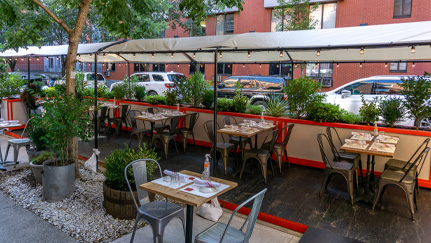
For many restaurants and hospitality businesses, outdoor dining has become a lasting part of operations—and a valuable one. Expanding into patios, sidewalks or parking areas can increase capacity and create a great guest experience. It can also introduce new exposures that are important to manage thoughtfully.
As activity picks up during the warmer months, this is an ideal time to review your outdoor setup and make sure everything is designed to support both safety and long-term success.
Why it matters
Outdoor environments bring different risks than indoor spaces. Without the right controls in place, businesses may face claims related to slips and falls, premises liability, or even third-party property damage. Taking a proactive approach can help reduce these risks while reinforcing a safe and welcoming experience for your customers.
Key risk considerations for outdoor dining areas
Start with compliance and planning
Before expanding or opening an outdoor dining area, it’s important to confirm you’re meeting local requirements. This includes permits, zoning ordinances, and any regulations related to serving alcohol outdoors. Ensuring your space meets ADA accessibility standards and fire code requirements is equally important, helping you provide safe access for all guests while avoiding potential compliance issues.
Create separation from traffic
If your outdoor dining area is near a roadway or pedestrian traffic, clear separation is essential. Well-placed, highly visible barriers can help protect guests and define the dining space. Choosing appropriate locations—away from intersections, blind spots, or high-traffic areas—can further reduce exposure and improve overall safety.
Focus on surface safety
Safe footing is one of the most important elements of any outdoor space. Surfaces should be level, stable, and slip resistant, without loose materials that could shift or create uneven walking conditions. Thoughtful layout also matters—keeping tables and seating clear of elevation changes like curbs or steps can help prevent incidents.
If you’re using lighting or temporary fixtures, take extra care to secure cords and equipment so they don’t create tripping hazards or risk tipping.
Make hazards visible
Clear visual cues can go a long way in preventing accidents. Marking changes in elevation with bright paint and using signage where needed helps guests navigate the space more confidently and safely, especially in unfamiliar or crowded environments.
Maintain conditions throughout service
Even a well-prepared space requires ongoing attention. Regular checks during service hours can help identify and address hazards like spills, debris, or shifting surfaces before they lead to an incident. Keeping a record of inspections and any corrective actions can also support your broader risk management efforts.
Ensure adequate lighting
Proper lighting supports both safety and the overall dining experience. Well-lit walkways and seating areas help guests move comfortably, particularly during evening hours. Ensuring fixtures are secure, weather-resistant, and properly installed can prevent both electrical and physical hazards.
Keep pathways clear and accessible
Maintaining clear pathways is critical—not just for your guests, but for the surrounding public space as well. Sidewalks, entrances, emergency exits, and hydrants should always remain accessible. Designing your layout to allow at least 36 inches of clearance for wheelchair access helps ensure your space is inclusive and compliant.
Choose durable, commercial-grade furniture
Outdoor environments require furniture that can stand up to both weather and frequent use. Using commercial-grade tables and chairs designed for outdoor settings can improve stability and reduce the risk of breakage. Regular inspections help identify wear or damage early, allowing you to replace items before they become a safety concern.
Plan for changing weather
Weather conditions can shift quickly, so it’s important to be prepared. Umbrellas, tents, and other structures should be properly secured and routinely inspected. Having a clear plan to anchor, remove, or temporarily close outdoor areas during high winds or storms can help prevent damage and protect your guests.
Reinforce safe operating practices
Your team plays a key role in maintaining a safe environment. Training staff to recognize and respond to hazards promptly can make a meaningful difference. Clear expectations—such as avoiding active traffic areas during service and carefully managing any approved open flames—can further reduce risk.
Be ready to respond
Even with strong controls in place, incidents can happen. Preparing in advance can help reduce their impact. Some businesses choose to install surveillance cameras in outdoor areas and retain footage as part of their claims response strategy. Encouraging timely incident reporting and maintaining inspection and maintenance logs can also help demonstrate your commitment to safety and due diligence.
Supporting you every step of the way
You don’t have to manage these risks alone. Working with risk management professionals, your insurance advisor, and local authorities can help you make informed decisions and keep your operations aligned with best practices.
At Nationwide, we’re committed to helping you protect what matters—so you can focus on delivering a great experience for your customers, both indoors and out.