

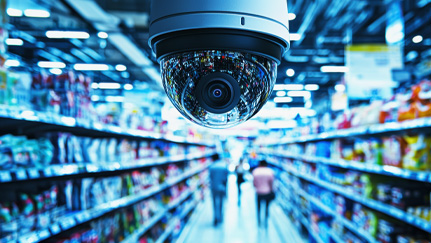
Security cameras in retail environments are essential for safeguarding stores and enhancing security. Retail environments are highly susceptible to theft from both external shoplifters and internal employee theft. Installing security cameras not only acts as a powerful deterrent against crime and fraud but also provides invaluable peace of mind. These systems help monitor daily operations, prevent theft, and quickly resolve disputes, creating a safer and more enjoyable shopping experience for everyone involved.
Conduct a risk assessment
Before purchasing and installing security cameras, conduct a thorough risk assessment to understand your establishment’s vulnerabilities. Identify areas that require monitoring, such as entrances, exits, aisles and parking lots.
Key features to consider
When selecting security cameras for retail, consider these key features to ensure you get the most effective and reliable system.
- Resolution: High-definition (HD) cameras, typically with 1080p resolution or higher, provide clear and detailed footage, which is essential for identifying individuals and incidents. For even better clarity, especially in larger areas, 4K resolution cameras are recommended.
- Field of view: Security cameras with wide-angle lenses can cover larger areas, reducing the number of cameras needed. Pan-tilt-zoom (PTZ) cameras can allow remote control of the camera, offering flexible coverage.
- Low-light performance: If cameras are used during nighttime surveillance, ensure they have good low-light performance or infrared capabilities. Providing adequate lighting outside can also enhance camera image quality.
- Durability: Ensure security cameras are suitable for their intended environment. Outdoor cameras should be weatherproof and durable.
- Motion detection: Many security cameras can record footage when motion is detected, saving storage space and making it easier to review footage.
- Audio capabilities: Some security cameras have built-in microphones to capture sound, providing more context to visual footage.
Integration with other systems
Often security cameras can be integrated with other systems.
- Alarm systems: Cameras that integrate with alarm systems can trigger alerts and notifications during suspicious activities.
- POS systems: Some cameras can be integrated with Points of Sale (POS) systems to watch transactions and deter theft.
- Advanced features: Advanced cameras can include analytics and AI features, such as facial recognition or people counting. Selecting a system that allows remote access to live and recorded footage via a smartphone or computer provides an added level of convenience and efficiency.
Wired vs. wireless security cameras
Choosing between wired and wireless security cameras involves weighing the pros and cons of each type. Here is a comparison to help decide which is best for your establishment.