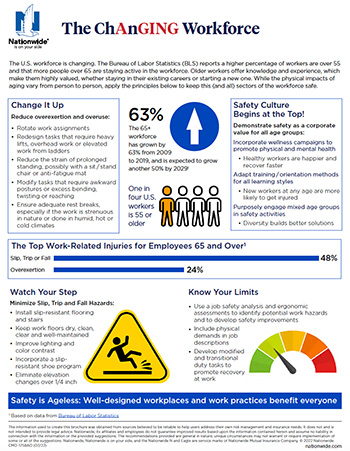

Aging within the workforce is not a new phenomenon. It is an expected part of the work and life cycle. However, workforce shortages and the need for skilled workers on the business side have combined with economic and social needs on the worker side resulting in an increase in the percentage of older workers in the workforce. Those beyond traditional retirement age growing at the fastest rate.1 In short, the workforce is aging, and data from the Bureau of Labor Statistics (BLS) indicates this trend is likely to continue. Is your business and its workforce ready for the future? Consider these key points.
Do not discount experience
With age comes an inescapable change in mental and physical abilities, but these do not necessarily lead to declining work performance or production. With experience comes the ability to plan and work smart. These learned abilities allow the experienced older workers to rely on their wisdom and less on physical strength and speed. The impact of aging on physiological attributes varies from person to person. This variance depends in part on lifestyle activity more than chronological aging.2
Avoid stereotyping
Businesses must not stereotype people on age but determine who can perform the job regardless of their age.3 This approach allows for equality in hiring qualified employees. Everyone brings different skills and abilities to employers. Employers must treat each candidate as a unique individual. To infer employees’ capabilities solely upon chronological age misses the fact that age does not match one to one with performance capacity.