
The case for commodities in a diversified portfolio
Key takeaways:
- As trends like reshoring and energy security reshape the global economy, commodities may be positioned to benefit from long-term structural demand.
- Commodities have historically moved differently than stocks and bonds, offering a potential source of diversification and portfolio resilience.
09/16/2026 – Every investment cycle has its distinct themes and subthemes, which often create a dynamic interplay among asset classes and investment factors. Prior to the post-COVID era, the broader investment cycle was defined, in part, by well-functioning global supply chains, lean inventories, and a low cost of capital that allowed companies to borrow on favorable terms and blunt the impact of interest expense on bottom-line performance.
A recent shift may be underway, with undercurrents spanning supply chain reconfiguration, transformative AI infrastructure investment, natural resource protectionism, and changing demographics, to name just a few. These crosscurrents all have implications for inflation, portfolio diversification, and investors' ability to navigate a rising geopolitical risk premium.
Broadly speaking, commodities can offer differentiated exposure to many of today’s emerging investment themes. Many of these themes, such as reshoring and energy security, appear to run directly through commodities. That could transform the asset class from a simple cyclical story into a longer-term structural theme, supporting diversified allocations.
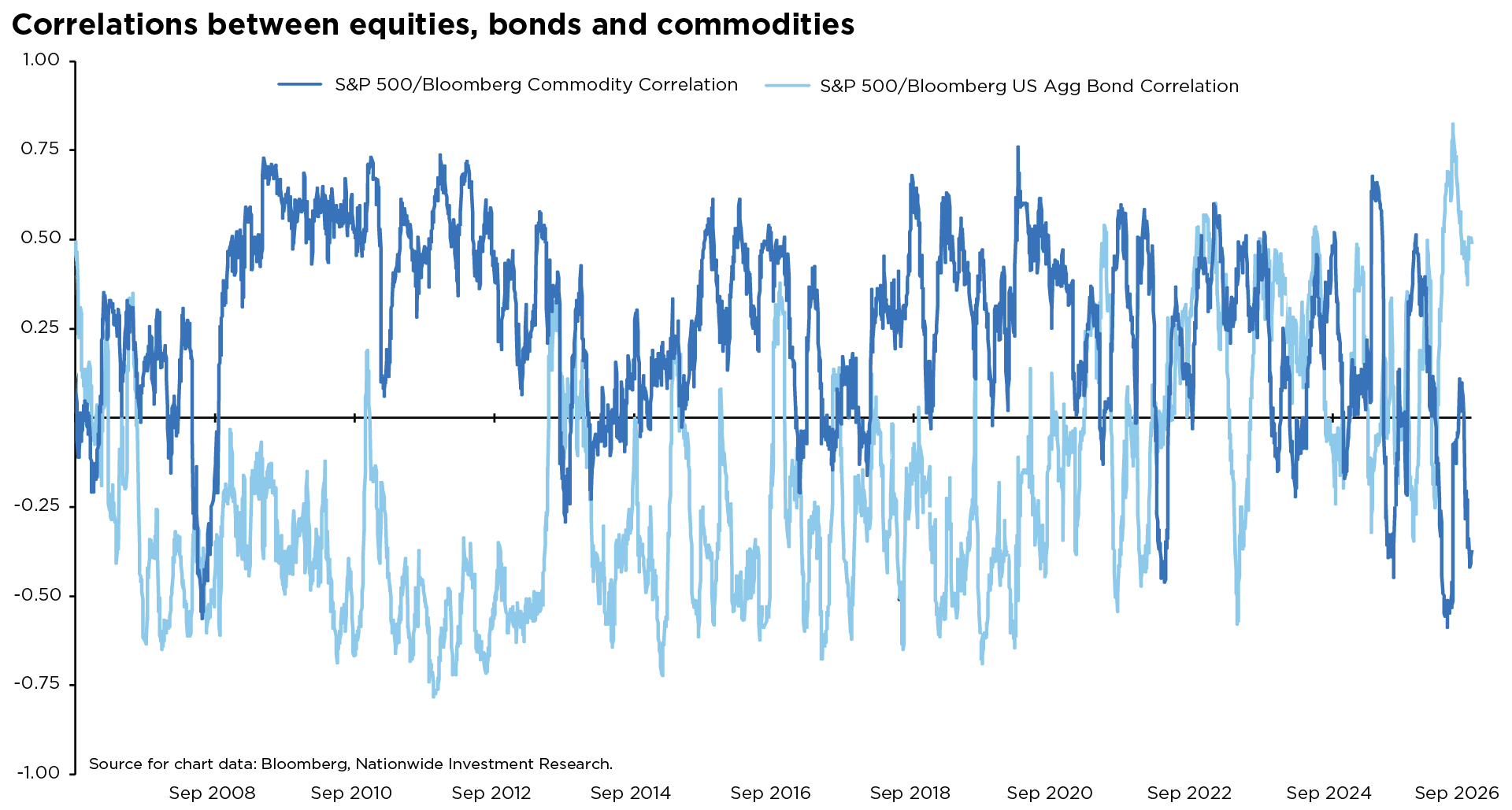
It’s important for investors to understand that commodities are spot assets, meaning their prices are driven by the level of demand, not the rate of change in demand. Importantly, many of the structural shifts occurring today are unlikely to be short-lived and suggest elevated levels of scarcity. That could make commodities a valuable complement to equities and bonds in a diversified portfolio.
Rather than trying to predict a commodity supercycle, investors should focus on building long-term portfolios that can help offset inflation, offer low correlations with equities and bonds, and deliver adequate return potential. Arguably, broad-based commodity exposure may satisfy all three conditions, especially the return objective; the Bloomberg Commodity Index has gained close to 34% year to date, trouncing both the S&P 500® Index and the Bloomberg U.S. Aggregate Bond Index.
More instructive than price returns, perhaps, is how stocks and bonds have been moving in tandem lately, underscoring how dependent cross-asset relationships are on the prevailing macro environment. (See chart.) This dynamic is important when thinking about diversification; both equity and bond prices have been declining in parallel, eroding the protective role fixed income typically plays in a diversified portfolio.
That said, commodities have historically exhibited lower correlations with stocks and bonds, making them a potentially valuable source of diversification. While not without risks, commodities appear well-positioned to benefit from a highly fragmented economic backdrop, offering investors the opportunity to access diversified sources of return and enhance portfolio resilience.
Author(s)

Mark Hackett, CFA®, CMT®, CFP®
Chief Market Strategist, Nationwide Investment Management Group
Mark Hackett is the Chief Market Strategist for Nationwide’s Investment Management Group, bringing more than 20 years of experience in the asset management industry to the role.
Trending articles
What could matter most for bond investors in 2026? Income, flexibility, and a disciplined approach to security selection.
As sports betting gains popularity, investors may blur the line between gambling and investing. Here's why time and compounding matter.
Looking beyond rates reveals what's historically fueled small-cap gains most: stronger earnings and a growing economy.