Loading...

Knowledge and planning help ease client doubts about Social Security.

Social Security benefits are an important part of retirement income planning for many retirees, helping them cover basic living expenses. But concerns about current and future Social Security payments—from taxes to the program’s ability to pay full benefits down the road—is a constant worry for retirees and non-retirees alike.

Nationwide Retirement Institute's® 2025 Social Security survey polled over 1,800 Americans across different age groups to gauge their sentiment around the present and future of Social Security. With insights from the survey, financial professionals can retain and strengthen client relationships by focusing on the top concerns about Social Security and retirement income planning. 

Set expectations for retirement spending that are closer to reality.

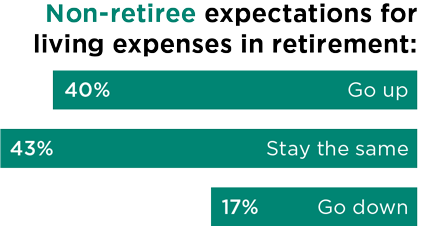
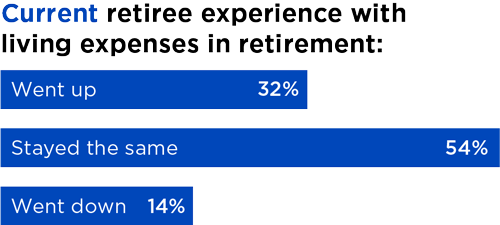
While spending patterns are likely to change in retirement, how they change may not match what many non-retirees expect. Nearly a quarter of non-retirees expect expenses to decrease in their first year of retirement, but in reality only 15% of current retirees said they did.
 

Retirees spend more of their income on essentials than what non-retirees expect.

% of total retirement income spent or expected to spend on essential and discretionary spending in retirement.
Chart that shows the % of total retirement income spent or expected to spend on essential and discretionary spending in retirement. For non-retirees it is 71% essential and 29% discretionary. For retirees it is 78% essential and 22% discretionary.
Couple in their 60s outside gardening and smiling while holding a pot of flowers.

Build knowledge about Social Security—and confidence, too.

Our survey found many people are confident in their knowledge of Social Security (38% of current and non-retirees each) but actual knowledge is low. For example, when asked 15 true/false questions about Social Security, the average person got around half of the answers wrong.

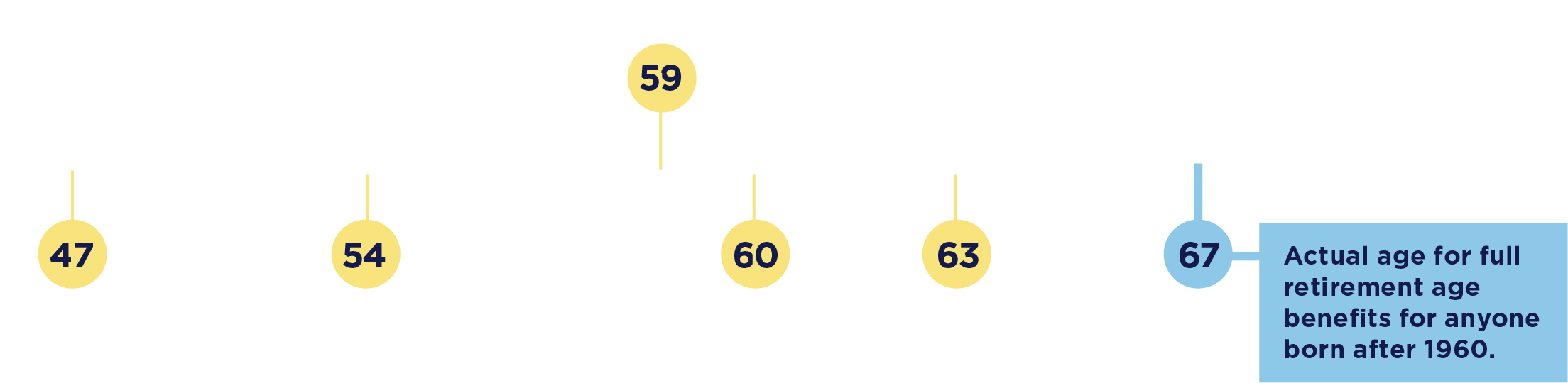
Chart that shows only 21% of non-retirees knew the correct age when they’d be eligible for full Social Security benefits.

Only 21% of non-retirees knew the correct age when they’d be eligible for full Social Security benefits.

Chart that shows only 38% of non-retirees who knew the correct age when they’d be eligible for full Social Security benefits.

38% of non-retirees didn’t know.

When asked to select the factors that determine the maximum Social Security benefit an individual can receive, only 8% selected all correct responses.

Man in his 60s and a financial professional sitting down and looking at a sheet of paper.

Fear for Social Security’s future drives planning opportunities.

A majority of Americans are deeply concerned that Social Security won’t be there for them when they need it most. This creates urgency for financial professionals to initiate planning discussions with clients and explore retirement income strategies.

83% 83% are concerned about Social Security’s long-term viability.

74% 74% worry Social Security will run out of funding in their lifetime.

61% 61% agree they’ll need to keep working because Social Security won’t be enough.

Professional guidance prepares a path to better outcomes.

Working with a financial professional tends to boost client confidence in their overall retirement income plan, from Social Security to taxes. And financial pros who are skilled in retirement income planning are more likely to attract clients from those who are not.


Among current clients of financial professionals and those who plan to ask one about Social Security in the future,

Around 4 in 5

(78%) are extremely or somewhat likely to switch to a financial professional who can show how to maximize their Social Security benefits if their current financial professional could not.

Give clients confidence to meet Social Security challenges.

Insights and resources from the Nationwide Retirement Institute® help simplify the complexities around Social Security, from filing decisions, to taxation, to maximizing benefits. Be ready to answer client questions and design a plan to meet their overall retirement income needs.

Learn more about Social Security planning from Nationwide.

The research was conducted online in the United States by The Harris Poll on behalf of Nationwide among 1,812 US adults aged 18+ who currently receive or expect to receive Social Security (“national sample”), June 2-July 10, 2025.

For complete survey methodology, including weighting variables and subgroup sample sizes, please contact news@nationwide.com.

This material is not a recommendation to buy or sell a financial product or to adopt an investment strategy. Investors should discuss their specific situation with their financial professional.