The Nationwide Social Security 360 Analyzer® tool helps you provide clients with the personalized guidance they’re seeking. With our resources you can help answer their key question as they approach retirement: When should I take my Social Security benefits?


About Nationwide Retirement Institute Retirement savings & income
Health care costs & longevity
Legacy, estate & wealth transfer
Business growth, protection & transfer
Market & news
About Nationwide Retirement Institute
Why Social Security optimization planning matters
The age at which clients start claiming Social Security can have a huge impact on the size of their benefit. Clients can file as early as age 62, but they would receive a reduced monthly benefit compared with the amount they’d receive at full retirement age. Or they could delay filing up to age 70 to increase their monthly benefit by as much as 80%.1
A guaranteed income floor
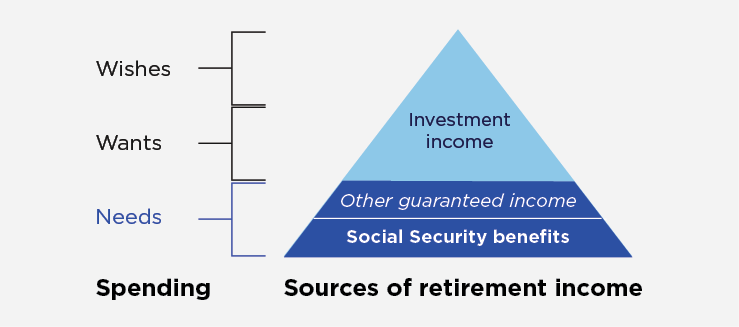
Social Security benefits are guaranteed income, so they provide an income floor in retirement. Benefits replace, by many estimates, about 30% to 40%2 of a retiree’s pre-retirement income from wages, with the remaining 60% to 70% of their monthly “paycheck” often coming from savings.
Unique benefits of Social Security
By itself, Social Security would be a powerful asset in a portfolio, and it offers features that other sources of income typically do not, including:
- Guaranteed income for life: Social Security benefits are paid until the recipient passes away
- Annual inflation increases: Cost-of-living adjustments help recipients keep up with prices over time
- Survivor benefits: A widowed spouse can collect a benefit that is based on their spouse’s benefit
- Preferential tax treatment: A portion of Social Security income will always be tax free
Keep these insights in mind as you consider:
How current events affect Social Security claiming decisions
Client knowledge gaps and misunderstandings that hinder the ability to maximize benefits
Strategies for integrating Social Security benefits into an overall retirement income plan
Check out our videos
Learn how Nationwide can help you more confidently answer your clients when they ask: “When should I file for benefits?”

For more information about Social Security, view our many resources.
[1] This figure is based on an individual with full retirement age of 67; it compares early filing at age 62 and receiving reduced benefits of 71% of the primary insurance amount versus delayed filing at age 70 and receiving credits to increase benefits by 25% over and above the primary insurance amount.
[2] https://www.cbpp.org/sites/default/files/atoms/files/8-8-16socsec.pdf (PDF)
[3] "The 2020 Annual Report of the Board of Trustees of the Federal Old-Age and Survivors Insurance and Federal Disability Insurance Trust Funds," Social Security Administration (April 2020).
[4] If the divorce was within the past 2 years, your client’s ex-spouse must have filed for benefits. If the divorce occurred more than 2 years ago, there’s no requirement for the ex-spouse to have filed.