Mark Hackett, CFA®, CMT®, CFP®


Markets and economy
Markets and economy
When AI pushback becomes a market risk for growth
Key takeaways:
- Cautionary commentary from technology companies about the pace of AI development has coincided with growing public concerns over data centers and the broader implications of AI.
- A moderation in AI development could temper demand for the most capital-intensive segments of the AI buildout, potentially weighing on earnings growth and equity returns.
09/23/2026 – For much of the past year, investors have fixated on AI, from the staggering level of capital expenditures (capex) to the competition for infrastructure financing. Investors have been especially sensitive to changes in future capex commitments, with many believing that slower spending could ultimately unravel the AI trade.
Lost in the narrative is a shift in sentiment toward AI, as investors, CEOs, and the public grow more skeptical. Cautionary commentary from technology companies about the pace of development has coincided with concerns over data centers and the implications of AI.
The initial debate around AI focused on when productivity gains, wider adoption, and earnings growth would begin delivering benefits. Yet a deeper and potentially consequential shift in sentiment may be emerging as a risk to the AI trade.
We may be witnessing a classic Hemingway moment in a technological race with few historical parallels. Like the bankrupt protagonist in The Sun Also Rises, concerns surrounding AI may have accumulated gradually, then suddenly. This reluctance did not emerge overnight. It is also unfolding during a midterm election season, which could have implications for regulatory oversight.
Pew Research Center data shows that concern about AI has risen from 37% to 52% over the past five years. Meanwhile, 71% of Americans now believe AI will lead to fewer jobs in the United States over the next two decades, up from 64% in 2024. Among adults under 30, that figure has increased from 61% to 73%.
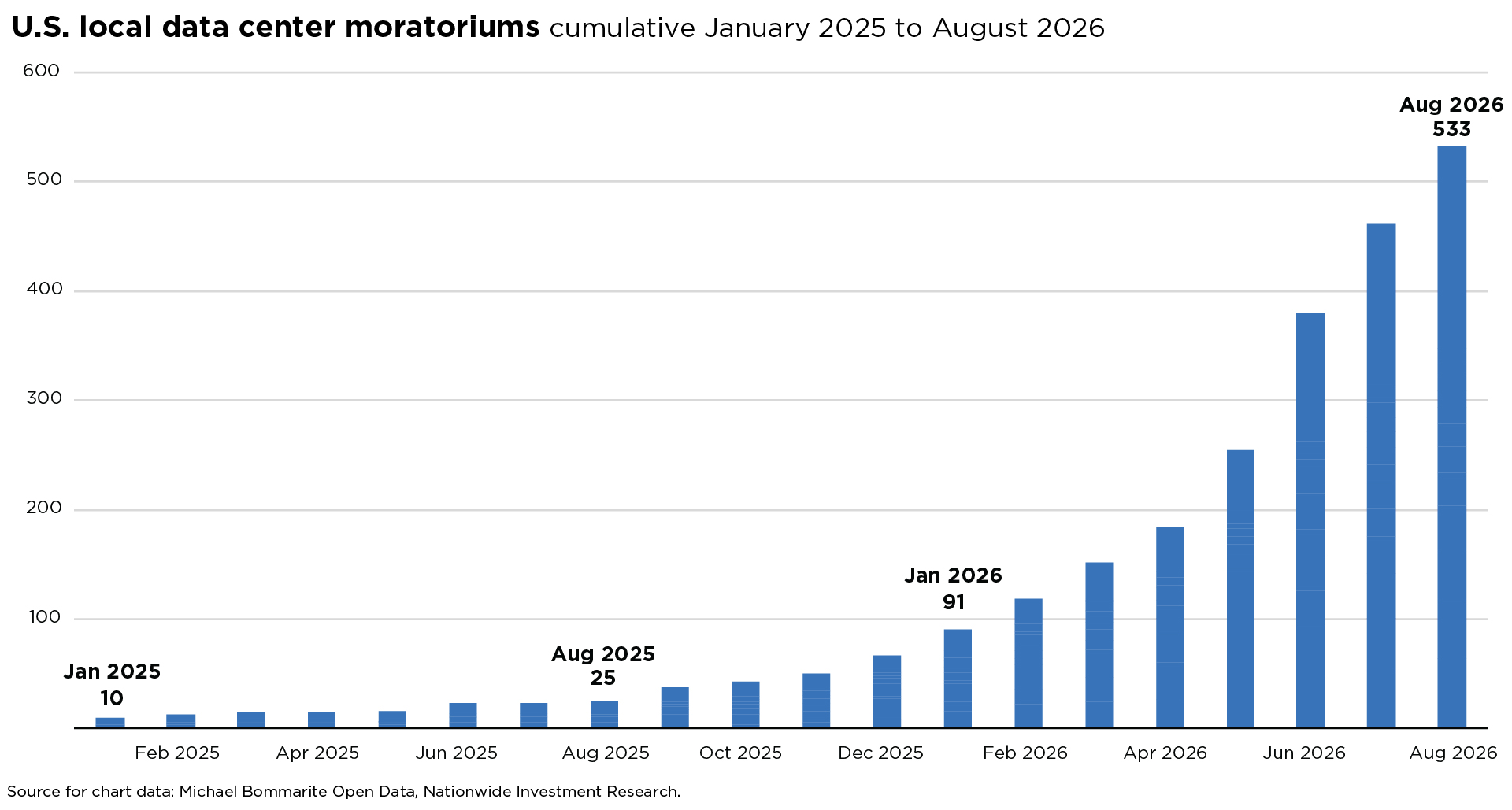
Opposition to and skepticism about AI are no longer limited to surveys. They are becoming more visible in public debate. According to Data Center Watch, community opposition blocked or delayed roughly $130 billion in data center projects in the first quarter of 2026 alone, while the number of active opposition groups more than doubled to 833 across 49 states.
Investors should not dismiss the possibility that worsening public sentiment could weigh on the AI trade. The AI infrastructure buildout has been a key driver of economic growth. That growth has supported double-digit earnings and margin expansion, as evidenced by the 2Q26 earnings season. In turn, those results have helped lift equities and earnings expectations, contributing to a wealth effect that has pushed asset values to new highs. Likewise, slower AI development could reduce demand for the most capital-intensive parts of the AI buildout.
While the public debate continues, investors should remember the importance of diversification in managing concentration risk. For AI-related investments, investors should regularly reassess earnings expectations and avoid making investment decisions based on reactions to negative headlines.
Author(s)

Mark Hackett, CFA®, CMT®, CFP®
Chief Market Strategist, Nationwide Investment Management Group
Mark Hackett is the Chief Market Strategist for Nationwide’s Investment Management Group, bringing more than 20 years of experience in the asset management industry to the role.
Trending articles
What could matter most for bond investors in 2026? Income, flexibility, and a disciplined approach to security selection.
As sports betting gains popularity, investors may blur the line between gambling and investing. Here's why time and compounding matter.
Looking beyond rates reveals what's historically fueled small-cap gains most: stronger earnings and a growing economy.
Sources/Disclaimers
This material is not a recommendation to buy or sell a financial product or to adopt an investment strategy. Investors should discuss their specific situation with their financial professional.
Except where otherwise indicated, the views and opinions expressed are those of Nationwide as of the date noted, are subject to change at any time and may not come to pass.