Loading...

Education and guidance can help clients make confident Social Security decisions.

American workers are increasingly worried about Social Security being there when they need it and whether their benefits will be enough. In the 13th annual Nationwide Social Security Survey, nearly three-quarters of respondents worry the program will run out of funding in their lifetime. 

For many, Social Security decisions aren’t just about the solvency of the program—their own long-term income security matters too. Financial professionals can help through education and guidance that builds greater retirement confidence by positioning themselves with clients and prospects as the go-to resource to help optimize each Social Security benefit payment in retirement.

Social Security uncertainty contributes to hasty filing decisions.

For financial professionals, this is an opportunity to step in with thoughtful guidance—before clients make a costly and (mostly) irreversible decision for their retirement.

1 in 2

Americans have filed or plan to file for Social Security as early as possible to make sure they receive something before the program changes or runs short on funds, however:

Filing as early as possible locks in a 30% benefit cut for life (that may be in addition to the 22% cut projected by Social Security trustees if congress doesn’t take action first)

Two construction workers talking outside.

Education can help clarify common client misperceptions.

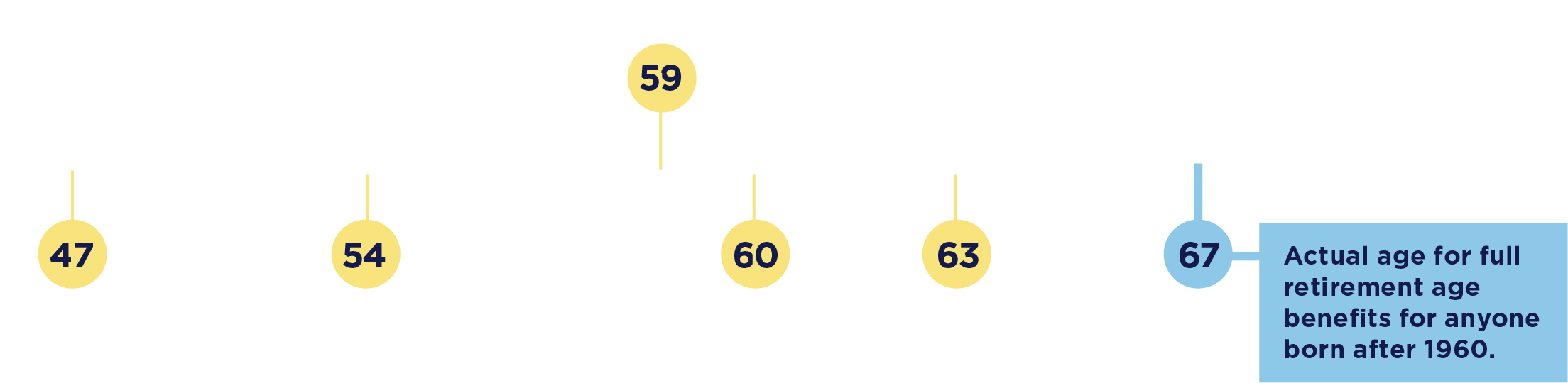
For example, many people think they’re eligible for full Social Security benefits earlier than they really are. This is especially true among younger generations. Setting clients straight on the Social Security rules can help them put their retirement plans on a better path.

Average age when different generations believe they’re eligible for full retirement age benefits:

Chart showing the average age when different generations believe they’re eligible for full retirement age benefits. Gen Z: 47; Millennials: 54; All Generations: 59; Gen X: 60; Pre-Retirees (age 60-65): 63; Actual age for full retirement benefits for anyone born after 1960: 67.

Retirement income security becomes key as spending plans change.

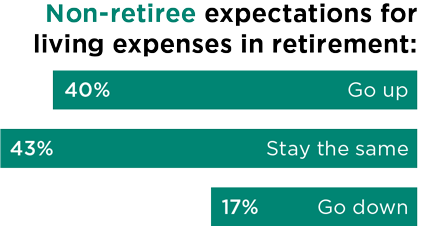
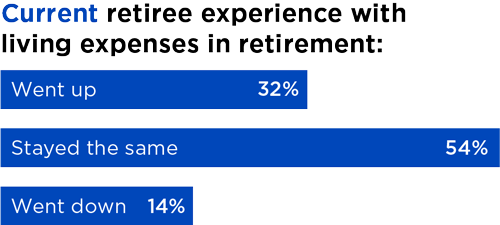
Conventional financial planning wisdom says spending goes down in retirement, but most non-retirees aren’t expecting that. In reality, the majority of current retirees say their living expenses have stayed the same in retirement.
Chart showing Non-retiree expectations for living expenses in retirement: 40% expect to go up, 43% expect to stay the same, 17% expect to go down
Chart showing current retiree experience with living expenses in retirement: 32% went up, 54% stayed the same, 14% went down
Image of a financial professional and a client sitting at a desk talking

Help your clients turn Social Security concerns into action.

Addressing Social Security knowledge gaps and funding fears is a great way to help clients plan for greater retirement security and build their retirement confidence. 

8 in 10

U.S. adults want their financial professional to explain how Social Security benefits are taxed.

7 in 10

U.S. adults want to discuss protected retirement income with their financial professional.

Addressing concerns about Social Security can be the focal point of client conversations, but financial professionals have a bigger opportunity to broaden the discussion to their overall retirement income plan. Nationwide can be your valued resource for tools and insights that promote more informed Social Security decisions and greater confidence in the financial future.

Learn how Nationwide supports your retirement income planning efforts.

The 2026 Social Security survey was conducted online in the U.S. by The Harris Poll on behalf of Nationwide among 1,823 adults age 18+ who currently receive or expect to receive Social Security (“national sample”), including 300 Gen Z (age 18-29), 512 Millennials (age 30-45), 511 Gen Xers (age 46-61), and 500 Boomers+ (age 62+) and an additional oversample of 60–65-year-olds (n=464) The survey was conducted May 11-June 4, 2026.

For complete survey methodology, including weighting variables and subgroup sample sizes, please contact charley.gillespie@nationwide.com.

For financial professional use only.

This material is not a recommendation to buy or sell a financial product or to adopt an investment strategy. Investors should discuss their specific situation with their financial professional.

Nationwide Investment Services Corporation (NISC), member FINRA, Columbus, Ohio. Nationwide Retirement Institute is a division of NISC.

Nationwide is on your side and Nationwide Retirement Institute are service marks of Nationwide Mutual Insurance Company © 2026 Nationwide