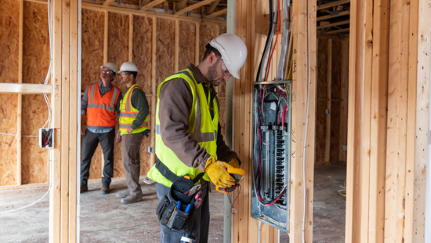
Your home is your castle, your safe place, your shelter from the elements, and keeping it in good condition is important. As a part of regular home maintenance, be sure to check in on your home’s electrical system. There are a number of signs that homeowners can be aware of that can indicate electrical work may be needed. These are a few of them.
8 Common warning signs your electrical system needs attention
1. Buzzing or humming sounds
Particularly in older homes, strange noises are frequently nothing to be alarmed about. But if you hear buzzing, humming, sizzling or crackling noises when you operate your electrical system, these can indicate a serious problem. Reach out to a licensed and bonded electrician promptly.[1]
2. Flickering or blinking lights
Flickering and/or blinking lights can be a slightly more subtle indicator that electrical repairs are needed. In a properly functioning system, the correct amount of wattage is sent to each area of the home. When there’s damage or overwear to a part of the system, it doesn’t send the wattage the way it should, causing the lights to suddenly dim and (usually) return to normal unexpectedly. Flickering lights can be a sign that there’s too much electricity concentrated in one area, which in turn can cause a fire.[1]
3. Overheated or sparking electrical features
Every once in a while, you might notice a small blue spark coming from one of your outlets when you’re plugging in or unplugging an appliance. This is usually normal, and there shouldn’t be any cause for concern.[1]
However, if your outlet or electrical feature emits yellow, white or red sparks, sparks that linger, or ones that produce the smell of burning or melting plastic, contact your electrician right away, as these are common signs of an underlying wiring problem. Likewise, if you notice your electrical features becoming hot to the touch or even overheating, immediate attention is needed, as these can indicate arc faults or short-circuiting.[2]
4. Circuit breaker problems
Most circuit panels have a life between 25 and 50 years.[2] As they start to age and as more modern appliances start to require more wattage, your original circuit board might not be capable of keeping pace. Frequent breaker trips can be your cue that it’s time to upgrade or even replace your panel, especially in homes built prior to 1973 or in homes that have too few outlets for the appliances being run. If you find yourself relying heavily on extension cords to increase your number of outlets, it might be time to upgrade your panel, as overloaded outlets or circuits can cause fires.[3]
5. Sparking outlet or loose plug
If you notice heat coming from your light switches or find that an outlet is sparking, call a professional electrician immediately. Your wiring might need to be replaced, or it could be an issue with the fixture. Also, if switches or outlets stop working altogether or work only sometimes, it could be a sign of loose wiring, which is another potential fire hazard. Loose outlet wiring can be another potential source for an electrical shock. Even a partially exposed outlet can deliver a nasty shock to someone trying to plug into or unplug from it.[4]
6. Dead outlet or switch
Dead outlets are certainly inconvenient, but how is one to know when a dead outlet might be dangerous? First, check the area around the outlet. You might be able to see the heat damage, and if it’s been recent enough, you might even feel some warmth in the wall. There might also be a lingering smell of burning or melting plastic. Sometimes, too, there could be loose connections and/or worn-out insulation on the outlet wiring. These are all indications that a professional will need to get involved.[5]
If there’s nothing obvious at the site of the outlet, a good next step would be to check the breaker. You may have just tripped a breaker, and the remedy is simply to reset it. Another harmless cause for a dead outlet might be that the switch is in the off position. If you have a half-powered outlet, or even a whole outlet powered by a switch, try flipping it. If it’s not a switch you use frequently, you might not have known what it controlled.[5]
7. Frayed wires
As structures age, so too do their wiring systems, and one result of this aging can be frayed wires. Multiple things can cause wires to fray, including nails, screws, severe weather, or pests chewing at them. Frayed wires can be especially dangerous because they increase the chances of arc faults. Arc faults occur when there’s a gap in the physical path of the electricity, such as a small space where the wiring has disintegrated, causing the electricity to jump or arc between the contact points.[6] Another way to think of it is as a leak in your home’s electrical system. Because they are essentially unrestrained electrical currents, arc faults are a leading cause of house fires and should be remedied as soon as they are detected.[1]
8. Burning smells
New appliances might produce an unfamiliar odor when they first arrive in your home. This could be for any one of several reasons: the appliance's paint, finish or some other superficial issue, the packaging it arrived in, or in the case of water-bearing appliances, the smell of the hoses being used for the first time. However, if you notice an odd smell coming from an electrical outlet, immediately unplug anything connected to it, and leave it disconnected until a qualified electrician has had a chance to diagnose the issue. Likewise, if there’s an odd scent coming from your breaker panel or fuse box, contact an electrician at once. [6]
It should come as no surprise that the smell of something burning indicates a serious issue. If the wiring in your house is getting hot enough to melt its coverings, there is an immediate risk of fire, and you need to take action right away. If possible, identify the source of the issue — it might be an individual fixture or it could be the breaker box — and get it resolved quickly. Reach out to a licensed professional immediately. [7]
Importance of regular electrical maintenance
Regular, routine maintenance is an important step in keeping your home’s electrical system in good working order, but even that can do only so much. Having extra sources of protection, such as a smart home sensor, can help reduce your risk of loss.[8]
(accessed August 2025).
[8] “A smarter way to help protect your home and your family,” nationwide.com/personal/insurance/homeowners/smart-home (accessed August 2025).