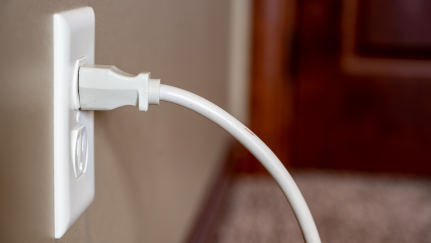
Accidents involving electrical systems are a leading cause of fires in homes.
According to the National Fire Protection Association from 2019–2023:[1]
- Electrical distribution or lighting equipment (e.g., wiring, lighting, cords, plugs) were associated with the start of nearly 32,000 home fires per year.
- These fires caused an average of 425 civilian deaths, 1,279 injuries and $1.6 billion in property damage each year.
- Electrical distribution/lighting equipment ranked first in direct property damage and third among equipment associated with home fires and home fire deaths and injuries.
- Wiring equipment was linked to 4% of home fires and 6% of deaths from those fires.
- Cords/plugs (most often extension cords) were a factor in 1% of fires and 6% of deaths in those fires.
Fortunately, there are steps homeowners can take to reduce the risk of electrical fires and help keep their families and homes safe.
What is an electrical fire?
Electrical fires can occur when some part of an electrical system overheats or otherwise malfunctions. Short circuits, loose wires and sources of immense resistance within a current are all examples of how this can happen. These fires usually begin within the electrical system and then spread to nearby flammable materials. [3]
How to help prevent electrical fires
Here are some safety tips that can help prevent an electrical fire in your home [1][2]:
- Avoid plugging more than one heat-producing appliance (such as toasters and coffee makers) into the same outlet.
- Plug large appliances, such as refrigerators and stoves, directly into a wall outlet (you should avoid using power strips or extension cords).
- Avoid running power cords under rugs or across areas of foot traffic such as doorways.
- Entrust electrical work within your home to licensed professionals.
- Consult a qualified electrician about upgrading your home with AFCI protection, which can detect potential dangers within the electrical system better than standard breakers.
- Pair light fixtures with light bulbs that meet their recommended wattage.
Additional electrical safety tips
Extension cord safety guidance
Here are tips for safer use of extension cords and power strips in your home[4][5]:
- Don’t use extension cords as a substitute for repairing your home’s electrical wiring.
- Inspect extension cords for broken connectors, damaged insulation and missing hardware before each use.
- Avoid running extension cords through walls, over beams, around corners or through doorways.
- Use extension cords that are approved for the environment and the expected loads.
- Discard damaged extension cords immediately.
- Use surge-protected power strips. Inspect the power strips regularly for damage or signs of overloading.
Temporary wiring safety rules[6][7]
- Do not use temporary wiring for permanently repairing building wiring.
- Aim to use temporary wiring only when needed for maintenance, repair or demolition activities.
- Limit temporary wiring for holiday or ornamental lighting to no more than 90 days when possible.
- In outdoor settings, use outdoor-approved temporary wiring and extension cords.
- Protect temporary wiring from sharp edges, heat and sunlight to avoid the breakdown of the insulation.
- Remove project-related temporary wiring when the project is completed.
Perform maintenance and inspect all electrical equipment frequently
- Inspect all electrical appliances and their cords. Cords that are frayed or damaged should be removed and replaced immediately; they should not spliced or taped.[4]
- Hire a licensed professional electrician for electrical maintenance and inspections.
Safeguards to install on electrical equipment
- Write the purpose of each circuit breaker, fuse or switch on the panel board.
- Label all disconnecting switches and circuit breakers.
- Consider upgrading outdated circuit breakers. Hire a licensed professional electrician for such projects.
- Aim to ensure that there is sufficient access and working space around all electrical equipment for safe operation and maintenance.
- Cover all unused electrical openings (including conduit knockouts) with electrical enclosures and fittings.[8]
Have questions? Talk to an independent Nationwide insurance agent today.
[8] “Electrical Panel Safety,” ocwr.gov/publications/fast-facts/electrical-panels/ (accessed May 2025).