
To learn about debt and ways to boost your financial wellness, check out our Personal Finance 101 Webinar.
Smart strategies to take control of your debt
Debt can be a part of life at any stage—whether you're starting your career, managing a household, or enjoying retirement. From credit cards to medical bills, it’s easy for financial obligations to add up over time. Learning how to manage and reduce debt is a powerful step toward improving your financial wellness, lowering stress, and creating more peace of mind. These three strategies can help you take control and move forward with confidence.
1. Assess your debt
Start by organizing all your debt in one place to get a clear picture of your financial obligations. Whether you prefer a spreadsheet, budgeting app, or notebook, choose a method that works for you.
For each debt, include key details such as:
- Type of debt (e.g., credit card, mortgage, personal loan)
- Monthly payment amount
- Due date
- Interest rate
- Outstanding balance
- Any applicable fees or penalties
Once everything is listed, you’ll have a better understanding of who you owe, how much you owe, and how each debt impacts your finances.
This is also a good time to distinguish between helpful and harmful debt. Debt with lower interest rates and long-term benefits, such as a mortgage, can support your financial goals. In contrast, high-interest debt like credit cards or payday loans can quickly become a burden. Prioritize paying off high-cost debt to reduce financial strain and improve your overall financial health.
2. Understand Your Debt-to-Income Ratio
Your debt-to-income (DTI) ratio shows how much of your monthly income goes toward paying off debt. It’s a helpful way to understand whether your current debt load is manageable or putting too much pressure on your budget.
Lenders often use this ratio when evaluating applications for loans, credit cards, or refinancing. A lower DTI generally signals that you’re in a better position to take on new credit.
To calculate your DTI ratio:
- Add up your total monthly debt payments
- Divide that number by your gross monthly income (before taxes and deductions)
- Multiply the result by 100 to get a percentage
For example, if your monthly income is $4,000 and your debt payments total $1,000, your DTI would be 25%.
If your ratio feels high, creating a plan to reduce debt can help you regain control and improve your financial flexibility.
3. Choose a debt payoff strategy
There’s no one-size-fits-all approach to paying off debt, so it’s important to find a strategy that fits your financial situation and personality. No matter which method you choose, make sure to include debt payments in your monthly budget. This helps you stay consistent and committed to your plan. (Looking for a better idea of where your money is going? Start with these worksheets to develop a realistic strategy.)
Popular debt repayment strategies can give you structure and motivation. Take time to explore your options, choose the one that feels right, and take the first step toward becoming debt-free.
Debt avalanche method
The debt avalanche method focuses on minimizing the total interest you pay over time. With this strategy, you continue making minimum payments on all your debts but use any extra funds to pay down the debt with the highest interest rate first.
Once that debt is eliminated, you redirect those payments toward the next highest-interest debt. This process continues until all your debts are paid off.
This approach can help you save more money in the long run by reducing the amount of interest you pay overall.
How to use the debt avalanche method
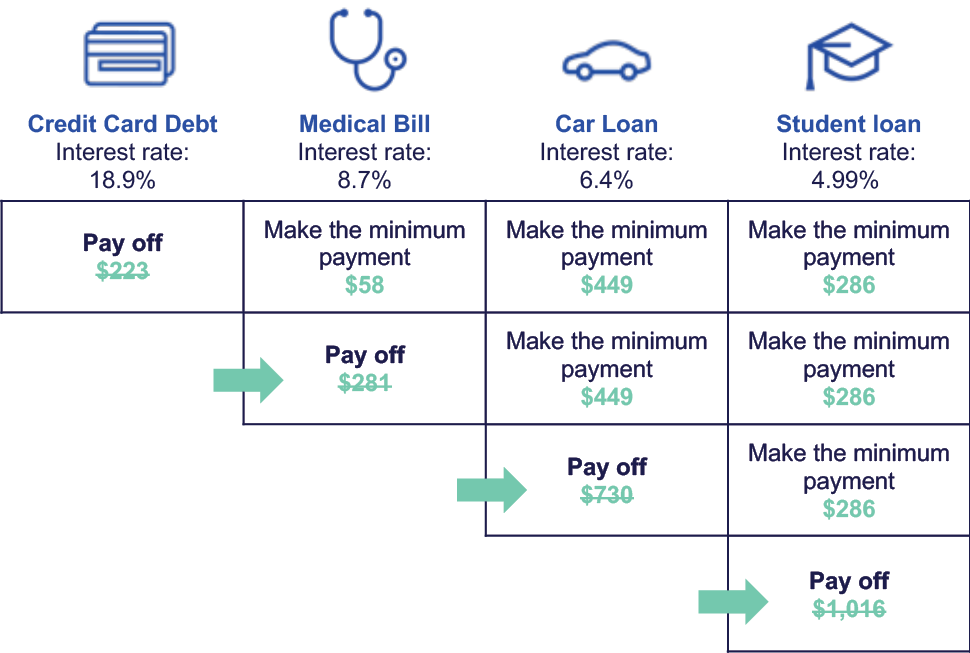
- List your debts in order from highest to lowest interest rate.
- Pay extra toward the debt with the highest interest rate while making minimum payments on the rest.
- When that debt is paid off, apply the freed-up funds to the next highest-interest debt.
- Repeat the process until all debts are eliminated.
Debt snowball method
The debt snowball method is a great option if you’re motivated by quick wins. This strategy focuses on paying off your smallest debts first, which can help build momentum and keep you motivated.
While continuing to make minimum payments on all your debts, you apply any extra funds to the one with the lowest balance. Once that’s paid off, you roll that payment into the next smallest debt. Over time, your payments grow like a snowball, helping you eliminate debt faster.
How to Use the Debt Snowball Method
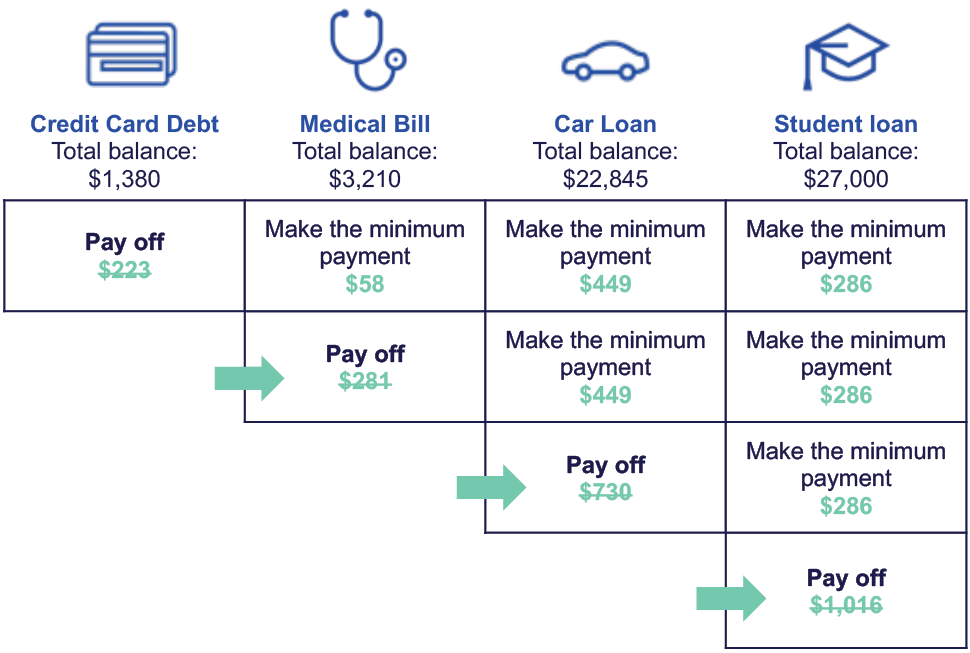
- List your debts from the smallest balance to the largest.
- Pay extra toward the smallest debt while making minimum payments on the rest.
- When that debt is paid off, apply the freed-up funds to the next smallest balance.
- Continue the process until all debts are paid in full.
Now that you’ve explored three practical strategies for managing debt, take the first step today. By assessing your financial obligations, calculating your debt-to-income ratio, and choosing a repayment method that fits your goals, you can build a stronger financial foundation and move closer to a debt-free future.