Toolbox talk | Worker safety
Worker Safety: Eye Safety
Simplifying your toolbox talks
What you need to know about eye protection
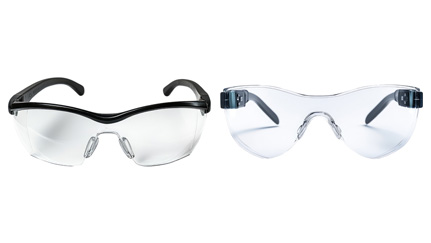
In 2020, more than 18,500 workers experienced eye-related injuries.1 The construction sector is among the industries with the highest number of severe injuries, including those involving the eyes.2 These injuries can be severe, potentially causing partial or complete blindness. Fortunately, most can be prevented by wearing proper eye protection.
What You Can Do:
- Meet the standard: Ensure eye protection meet ANSI/ISEA Z87.1 Standard for Safety Glasses
- Select appropriate eye protection: Choose eye protection suitable for the specific hazard (dust, fogging, splashing, chemicals, UV, welding radiation, etc.).
- Inspect: Check your eye-wear for scratches, dirt or other hazards before use
- Replace: Change out eye wear if defects or other hazards are noted
- Clean: Regularly maintain your eye protection.
- Consistently wear: There are few places on a jobsite where there is not a reasonable probability of eye injury from hazards discussed above. The best practice is to wear eye protection 100% of the time on the jobsite.
How Do Eye Injuries Happen?
- Not wearing eye protection
- Using inappropriate eye protection for the hazard
- Failing to maintain or replace eye protection when needed
What Are the Hazards?
- Flying objects/particles: Cutting, chiseling, grinding, hammering, etc.
- Liquid splashes: Pouring liquids or filling containers
- Dust/powders: Grinding, cutting, sanding, or polishing
- Thermal/radiation: Welding or laser cutting metal
- Bloodborne pathogens: Exposure to blood or other body fluids
If an Injury Occurs:3
- For contamination with particles or foreign objects:
- Do not rub your eyes, as this can further scratch or damage your eyes
- Flush eyes with an eye station, with saline or artificial tears
- Seek medical attention for objects that do not wash out, for metal slivers, or continued discomfort
- Punctures:
- Do not try to remove object.
- Cover and protect the eye with a shield or other protective cover
- Seek immediate medical attention immediately
- Chemicals:
- Immediately flush the eye with water for at least 15 minutes. Place the eye under a faucet or shower, use a garden hose, or pour water into the eye from a clean container.
- If you are wearing contact lenses, immediately remove them before flushing the eye.
- Do not try to neutralize the chemical with other substances.
- Do not bandage the eye.
- Seek immediate medical attention after flushing.
Confirm review of this toolbox talks article.