Toolbox talk | Worker safety
Worker Safety: Hand Protection
Simplifying your toolbox talks
What you need to know about hand protection
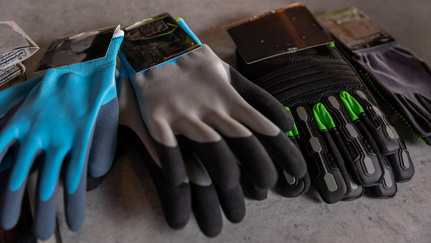
Hand injuries are one of the most frequent injuries suffered by construction workers according to the Bureau of Labor and Statistics.1 Though usually minor, they can cause days off work or even permanent or partial disability. Selecting and wearing the right glove for the hazard is essential.
What You Can Do:
- Choose the right gloves: Select gloves designed for the hazard and task.
- Seek guidance: If unsure what glove to use, ask your supervisor, safety director or request a hazard assessment.
- Ensure proper fit: Gloves should fit properly to provide adequate protection
- Comfort is important: Choose gloves that meet the hazard requirement, but are also comfortable for extended use.
- Inspect regularly: Regularly inspect gloves for holes, damage or other potential hazards.
- Replace when necessary: Change gloves immediately if they show signs of wear or other potential hazards appear
- Wear gloves consistently: Don’t get caught bare handed. Always wear appropriately rated gloves on the jobsite to ensure continuous protection, as hazards can change rapidly.
Understand Potential Hazards:
- Cuts/Lacerations
- Punctures
- Amputations
- Abrasions
- Chemical or Thermal Burns
- Skin Absorption of Harmful Substances
- Electrical Shock or Burn
- Arc Flash Events
- Frostbite
Types of Gloves Available:
- Cut resistant gloves: Classified under ANSI/ISEA 105 Hand Protection Classification, ranging from A1 (minimal to no cut protection) to A9 (used for extreme cut hazards)
- Chemical-resistant gloves: Protect against hazardous chemicals
- Electrical safety gloves: Insulated gloves rated for different voltage levels
- Arch flash gloves: Gloves designed to help protect against arch flash events and carry different ratings based upon voltage or arch flash calorie rating (heat energy).
- Mechanics gloves: Specialty gloves for repair and maintenance tasks with different levels of cut and impact protections
- Medical gloves: Disposable and protective gloves designed to provide a barrier between bloodborne pathogens, bacteria, viruses and other harmful substances.
- Cold weather gloves – Insulated gloves to protect against cold environments.
- Heat resistant gloves – Gloves designed to protect against heat hazards
Confirm review of this toolbox talks article.