Toolbox talk | Lockout/Tagout
Worker Safety: Lockout/Tagout
What You Need to Know
Every year, OSHA estimates Lockout/Tagout (LOTO) compliance prevents 50,000 injuries and 120 fatalities1. Construction workers face significant exposure to hazardous energy from electrical, mechanical, hydraulic, pneumatic, chemical, and thermal sources. Injuries from uncontrolled energy can cause amputations, electrocution, burns, or death.
What is Hazardous energy?
Hazardous energy is any stored or residual energy that can cause harm when released unexpectedly. Examples:
- Electrical: Live circuits, energized panels.
- Mechanical: Moving machine parts.
- Hydraulic/Pneumatic: Pressurized systems.
- Thermal/Chemical: Heat or chemical reactions.
What Is Lockout/Tagout?
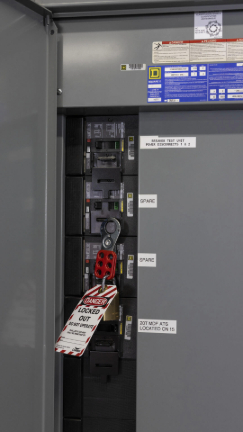
- Lockout: Placing a physical lock or barrier on an energy-isolating device to prevent activation.
- Tagout: Attaching a tag to indicate equipment is locked out and must not be operated.
What you can do
- Never skip steps. Identify and isolate all energy sources.
- Use only authorized devices for LOTO.
- Lockout all energy sources.
- Tagout: Put a tag to warn others and identify responsible person.
- Release stored energy: Discharge or relieve all stored energy.
- Try out: Before working on equipment, test to make sure equipment is locked out and energy is dissipated.
- Never remove or tamper with a lock or tag.
- Apply your own lock and tag when multiple people are working on a single piece of machinery or equipment.
- Only you can remove your lock & tag.
Why it Matters
Construction workers face significant exposure to hazardous energy. Failure to follow proper procedures can cause significant injuries or death. Following lockout/tagout procedures saves lives.