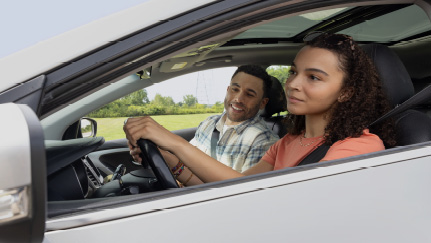
Driving on the highway for the first time can be nerve-racking, which is why it’s common for new drivers to navigate only local roads until they gain enough real-world experience to venture onto the interstate. Once a new driver feels ready to take on a highway, being fully prepared can help a beginner make a smooth and safe transition from local roads to the interstate.
Here are some highway driving tips that new drivers should consider before driving on the highway for the first time.
1. Pick the right time to start driving on the highway
If you’re planning your first highway drive, you want to pick the right time and place. Consider starting off on a highway that isn’t too busy or during a time of day when fewer drivers are on the road. You also want to drive on a bright, clear day without any rain, snow or fog that could decrease visibility.
2. Start off driving in the right lane
When you’re driving on the highway for the first time, you should drive only in the right lane. Young drivers should avoid heading into the left lane, which is intended for passing. “Staying in the right lane will help them interact with traffic coming onto the freeway, and they’ll maintain their speed easier there,” says Maria A. Wojtczak, owner/operator of DrivingMBA, a driver’s education business in Arizona.
3. Change lanes on the highway with speed and distance
Establishing proper speed and distance remains key to managing a lane change on an interstate. You should leave four to six seconds of space between your car and the vehicle in front of you as you maneuver. You should also routinely check the rearview, side mirrors and blind spots before switching over. More space means you have more time to avoid a collision or react to debris on the highway.
4. Use turn signals when merging and changing lanes
Young drivers must get into the habit of using their turn signals, even if they believe their intentions are obvious. Blinkers are the driver’s way of communicating with other cars on the road. It’s vitally important to know how to merge safely onto the interstates.
To merge seamlessly, you should first accelerate on the on-ramp, with your turn signal on while watching the next lane of traffic to look for an opening. Second, adapt to the speed of the cars in the lane you are merging into, so you can blend in with traffic safely. Third, check your blind spots to make absolutely certain you’re clear to merge.[1]
5. Do blind spot checks on the highway
Newer drivers tend to stare at what’s right in front of them. But highway speeds and unpredictability demand a wider viewpoint. It’s important to look farther down the road and regularly check your mirrors and blind spots. To check your blind spot, you will need to carefully and quickly look over your shoulder. Before you merge onto the highway or change lanes, it’s key to check over your shoulder to make sure there’s not another car in an unexpected spot. Also, try to avoid driving for an extended period in a neighboring car’s blind spot if you can help it. In addition, it’s important to learn the rules of the road and take extra precautions around large trucks, vans, cyclists and motorcycles.[2]
6. Be mindful of the speed limit
It’s important to always stay aware of the speed your car is going on the highway. When you drive at a high speed on a fast-moving road for a period of time, you may feel you are driving slower than your car is actually moving. To avoid this, check your speed regularly and safely adjust, being mindful of the cars around you. A sudden change of speed might put others at risk and could cause an accident.[3]
7. Keep your cool while driving
Learning to drive on the highway is about more than proper driving. It’s also about making sure a young driver’s maturity level is up to the task. “They must understand never to take anything personally, especially on a highway,” says Michael Soubirous, a retired California Highway Patrol lieutenant. “If someone cuts you off, let it go. You never know the mental state of the other party, and maybe they simply made a mistake. Drivers are not perfect, after all.”
8. Stay away from distracted driving
According to the CDC, drivers under the age of 20 have the highest proportion of distraction-related fatal crashes. That’s why it’s crucial to stay focused on the highway. Don’t try to change music or talk to friends while driving on the highway. Focus on safe driving. Find out ways to prevent teen distracted driving.[4]
Get auto insurance for more protection
If you have a teen driver on the horizon, looking into additional protection is a great next step. Consider contacting Nationwide to be sure you and your teen drivers are covered with the appropriate auto insurance.