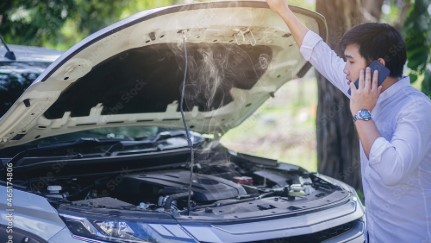
Most drivers have seen it before: a car pulled over on the side of the road with steam or smoke pouring from beneath the hood while the owner looks on nervously. An overheated car isn’t a pretty sight, but what should you do if it happens to you? And what can you do to help prevent it in the first place? We’ll answer both questions and more in this article. [1]
What causes a car to overheat?
Before we get into responding to and preventing overheating, let’s talk about how it actually happens. Your car is designed to resist overheating; however, if it starts to get too hot, that’s often an indication that something is amiss. Here are a few common causes as to why your car may be running hot:
Cooling system and coolant
Every modern car has a cooling system that distributes coolant throughout the vehicle. This helps keep internal engine temperatures from climbing too high. Leaks, blockages or pump malfunctions in this system can all result in your engine overheating. [1]
Car thermostat
The amount of coolant in your engine is regulated by your car’s thermostat. This determines how much coolant is necessary to maintain an appropriate temperature. If anything is wrong with this system, it could misread and not supply the proper amount of coolant needed. [1]
Low motor oil
Oil plays a crucial role in lubricating a car’s moving parts; on top of that, it also removes excess heat from the engine. In turn, low oil levels can correspond with high engine temperatures. [1]
Radiator cooling fan
As the name suggests, your radiator fan works to cool your car’s internal temperatures. If it stops running, or even runs at improper levels, that can be enough to cause your car to overheat. [1]
Hoses and belts
A car’s cooling system is connected by hoses and belts. Hoses move coolant throughout the engine and radiator, while belts activate the water pump. If hoses are cracked, brittle or loose, coolant can leak, and broken belts can stop the water pump from working. Any of these issues can disrupt the flow of coolant, resulting in an overheated engine. [1]
If you’re unsure what’s causing your car to overheat, it’s always a good idea to find a reliable mechanic who can diagnose and service your car. We also encourage you to be prepared in case your car overheats while you’re on the road.
How to know whether a car is overheating
Fortunately, most cars will not overheat without warning. There are several noticeable signs: [1]
- Steam or smoke coming from beneath your car’s hood.
- A burning or sweet odor coming from your car engine.
- The needle on your temperature gauge pointing toward the red, or “H”, depending on the design of your car.
- Temperature warning and check-engine dashboard lights may light up on some vehicles.
- The engine may run rough, stall or go into “limp mode” to prevent further damage.
If you notice any of these signs, don’t wait to see whether they get worse. Pull over right away and turn your car off so it can cool down.
What to do when a car overheats
If your car begins to overheat, it’s important to act quickly. Running on high heat for too long can cause serious damage and potentially put you and your passengers at risk. Follow these steps at the first sign of overheating: [1]
- Pull over at the first safe location, put your car in park and turn off your engine. You’ll want to wait at least 10 minutes to give your car a chance to cool off.
- Pop your hood and leave it open to allow the hot air to dissipate faster.
- After you’ve given your car a chance to cool, turn your power back on by rotating your key to its first position in the ignition. This allows you to check the temperature gauge and see whether it dropped to a safe level without turning your engine back on. If your gauge reads a safe temperature and your fluid levels are normal, try starting your engine.
- Once the engine has cooled completely after a few hours and the temperature gauge reads “cool,” check the coolant reservoir. If the levels are low and you have coolant, carefully top it off.
At the first sign of anything unusual — such as strange sounds or a failure to start at all — stay put, leave your engine off and call roadside assistance.
What to avoid when your car overheats
When a car overheats, follow these tips to prevent further damage and to keep you and any passengers safe: [1]
- Don’t panic or drive erratically. Don’t dangerously weave through traffic or slam on your brakes.
- Stop driving as soon as possible. If you keep driving, you can cause further damage such as warp the cylinder heads, crack the engine block or do other irreparable and costly damage. Carefully pull over to the nearest safe location to inspect your vehicle.
- Do not pour cold water on a hot engine. Doing so can cause cracks in the engine.
- Don’t avoid the issue. An overheated engine isn’t a concern that will just go away. Topping it off with some coolant may not resolve the issue completely; you must find the cause of the overheating and address it.
What happens to a car when it overheats?
An overheated car can cause serious and expensive internal damage such as warped or cracked cylinder heads, blown head gaskets, engine detonation (engine knock) and more. [2] If your car overheats, do your best to mitigate further damage and determine the root cause
How to stop a car from overheating
Overheating poses a risk to both you and your car, so it’s best to try to avoid it in the first place. From preventive maintenance to tricks you can use in a pinch, there are many ways to help your car stay cool. Here are some ways to do it: [1, 3]
- Check your temperature gauge – You’ve probably looked at your car’s temperature gauge countless times without taking much notice, but it’s there for a reason. If you ever see the needle point toward the red portion of the dial, that’s a sure sign it’s time to pull over and give your engine a chance to cool off.
- Turn on the heat – You read that right: Turning on the heat can help cool off your engine in a pinch. Doing this pulls hot air out of your engine compartment, cooling off your engine. It’s not an ideal solution for you or your passengers, but worth keeping in mind for long drives on hot days.
- Add engine coolant – Coolant is the fluid that helps keep your engine from overheating; it’s located in the coolant reservoir under your car’s hood. If temperatures are rising, it’s always a good idea to check your coolant level. This is indicated by lines on the side of the reservoir. If you’re low, you can add more coolant yourself — but be careful NOT to if your engine is hot. Wait until it cools off.
- Have a mechanic flush your radiator – Just like oil, coolant becomes dirty over time and needs replacing. A mechanic can do this for you in a procedure called a radiator flush, where the old coolant is drained, the radiator is flushed with a cleaning fluid, and new coolant is added. Check your owner’s manual for specifics on how often your vehicle needs this done.
- Consider replacing your car’s battery – The less power there is in your battery, the harder your car has to work. This puts your car at risk of overheating. This may begin to occur if your battery is older than 3 years. Your mechanic can advise you on whether your battery is ready to be replaced.
- Check the drive belt – Coolant circulates within your car’s engine thanks in part to the drive belt. If your drive belt isn’t functioning properly, there’s a good chance your engine could overheat.
- Check the brakes – Ever heard of sticking brakes? Brakes might not be the first place you’d think to look if your engine overheats, but stuck brake calipers can create enough extra drag on your engine to eventually generate a lot of heat. If your mechanic can’t find anything wrong with your engine itself, ask them to take a look at your brakes.
- Add engine oil – Coolant doesn’t turn down the temperature all on its own. Engine oil is also responsible for removing excess heat. If your oil levels dip, your engine temperature may rise enough to cause overheating.
- Check the vehicle’s thermostat – Your engine regulates its temperature using an internal thermostat, a valve that controls the flow of coolant. If the thermostat malfunctions, insufficient coolant in your engine can cause overheating.
- Get professional maintenance regularly – Many of the issues we’ve just covered can be caught early and prevented by routine maintenance. Have a professional mechanic service your vehicle annually, and overheating will be far less likely.
Frequently asked questions
Why does my car overheat when idling?
Leaving your car running, but not moving, can make the situation worse. If you can’t safely turn off your vehicle right away, drive the overheated vehicle slowly to a safe location and turn off the engine completely. This at least ensures constant airflow through the motor. [2]
Why does my car overheat when the AC is on?
Your car may overheat when the AC is on because the air conditioning system puts extra strain on the engine, which might expose or worsen existing issues in the cooling system, causing a vehicle to overheat. [4]
Can a car overheat due to outside temperatures?
A car’s engine can overheat in any weather. However, the odds are much higher when it’s hot out. The air that surrounds the engine — such as heat rising off the asphalt, engine-generated heat and outdoor temperatures — increase the likelihood of a car overheating. [5]
Roadside Assistance can help in a pinch
Knowing how to prevent and respond to an overheated car is crucial. However, breakdowns can happen, and we’re here to help. Adding Roadside Assistance to a Nationwide auto policy can help you protect yourself and your vehicle and get you back on the road faster when the unexpected happens.