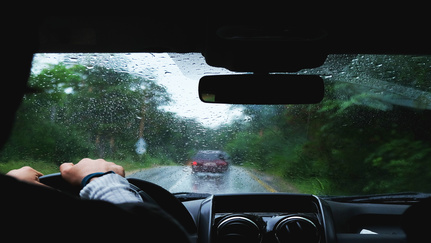
Driving in wet conditions can cause several issues, including lowered visibility or the need for longer braking distances. It can also cause your car to hydroplane.
If you’ve ever driven on wet roads or through a puddle of standing water and felt like you didn’t have control of your vehicle, you may have already experienced this. Since this can happen to any driver, it’s important to know what to do when hydroplaning.
What is hydroplaning?
Hydroplaning happens when roads are wet. Water reduces tire traction, causing your vehicle to slide or skid. Losing control of your car while hydroplaning can be particularly scary and unnerving, but there are a few precautions you can take to keep yourself safe and remain in control of your vehicle.[1]
What causes hydroplaning?
Hydroplaning is usually caused by too much water between your tires and the road. This can cause your tires to lose contact with the surface and subsequently lose traction. Additional contributing factors to hydroplaning include:[1]
- Vehicle speed: As the speed of your tires increases in water, their traction decreases. When you drive faster, your tires have less time to function properly.
- Vehicle weight: Increased vehicle weight reduces the likelihood of hydroplaning.
- Tire tread depth: Worn tire tread will decrease traction and increase your chances of hydroplaning.
- Depth of the water: The deeper the water is, the more likely you may lose traction.
What to do if your car hydroplanes
No matter how safely you drive, hydroplaning may still happen. If your vehicle starts to hydroplane, you should follow these steps:[2]
- Remain calm and slow down. Avoid the natural urge to slam on your brakes. Instead, ease your foot off the gas pedal.
- Keep your hands on the steering wheel. Keep steering your car in the direction you need to go but avoid jerking the wheel suddenly.
- Use a light pumping action on the pedal if you need to brake. If you have anti-lock brakes, you can brake normally.
- Once you’ve regained control of your car and your tires make traction with the road again, continue driving. Consider driving at a slower speed and pay close attention the road.
How to avoid hydroplaning
With the proper car maintenance and helpful tips, there are ways you can avoid hydroplaning:[1]
- Steer clear of standing water if possible.
- Drive more slowly on wet roads.
- Don’t ignore tire maintenance. Keep tires properly inflated and regularly rotate them.
- Regularly check your tires’ tread for wear.
- Don’t use cruise control while you’re driving in the rain or on wet roads so that you can exert (and maintain) complete control in the event you do hydroplane.
Keep in mind that hydroplaning can occur at any time you are driving in wet conditions. Knowing how to handle it properly can keep you, your passengers and others on the road safe.
Practice safe driving in all weather conditions
When driving in the rain, make sure to practice safe driving:
- Ignore distractions when driving. Keep your focus on the road and slow down.
- Practice defensive driving. Be aware of what other drivers around you are doing and keep a safe distance between yourself and the car in front of you.
- Avoid drowsy driving.
Stay protected when you’re on the road with proper auto insurance coverage.