Or call 1-844-240-1195
Business solutions center
Business solutions center
Safe delivery practices for small businesses
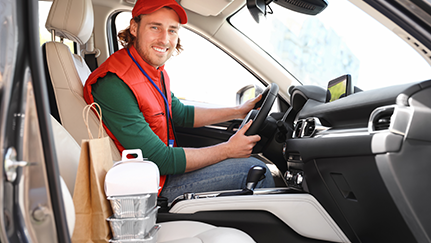
More and more small businesses today are offering delivery services. Whether you’re just thinking about offering delivery service or have been making deliveries for years, you should know about the potential risks that delivery could pose to your business and employees. Read on for our best advice for reducing risk by keeping your drivers’ personal safety a priority and creating driver safety plans with employees.
Rule #1: Keep drivers' personal safety top of mind
There are several things you can personally do to help keep your drivers safe. The first is to make sure each delivery order is legitimate:
- When receiving phone orders, use a phone with caller ID to record the caller’s number
- Carefully record the details of each order, including the associated address, before making any delivery so you can keep tabs on where your drivers will be going
- Be aware of suspicious orders; be extra cautious, for instance, of callers who aren’t sure about their address or phone number, who seem intoxicated or are unsure about what they want
- Make sure that drivers follow the COVID-19 procedures recommended by the Centers for Disease Control and Prevention (CDC) designed to help small businesses during the pandemic
Educate your drivers about the importance of personal safety
As the owner of your small business, it’s in your best interests to coach your delivery team on ways they can protect their personal safety while out on the road:
- Make sure your employees monitor for suspicious activity at each delivery location and avoid making the delivery if they feel unsafe when they arrive at a location
- Do not allow employees to deliver to poorly illuminated areas or hotel rooms; if a driver comes across these situations, they can call the customer and request they come outside to receive the order
- Require payments to be made electronically at the time the order is placed to eliminate cash transactions
Make sure your drivers follow safe driving policies
Did you know that you could be held accountable if one of your employees causes an accident while working for you, even if they’re driving their own vehicle? To assist your drivers and protect your business, we’ve developed easy-to-follow guidelines to help you and your employees create your own basic driver safety program1. Remember:
- Drivers must possess a valid driver’s license, have three years of driving experience and an acceptable driver record; the employee must own the vehicle, and it should be in safe operating condition and insured
- Employees should avoid distracted driving by avoiding phone calls, texting or browsing the internet while the vehicle is moving; “Organizations need to establish a clear policy of no phone use while driving; drivers need to set up their navigation app while parked and pull over to a safe place to park before making or receiving calls,” according to Nationwide Loss Control Services
- Drivers should be familiar with defensive driving strategies; follow local, state and federal traffic laws; and wear their seat belts
- Inform your drivers that safe driving is more important than making on-time deliveries; in fact, it’s best to not establish on-time guarantees because they can lead to speeding and unsafe driving
- Drivers must remain extremely cautious when making delivery stops; remind them to watch for children in residential areas, limit the need to back up and make sure no children have come near the vehicle while it was parked
Take extra precautions when delivering alcohol
As the business owner, you should know and follow federal, state and local liquor laws if you’re delivering alcohol. Drivers making deliveries with alcohol should be at least 21 years old and have completed TIPS/TAM training. A few more precautions to keep in mind:
- Alcohol must be in an approved, sealed container before leaving the restaurant
- The customer accepting the alcohol must be at least 21 years old and must present valid identification; the person’s name on the identification should match the name on the order
- If the customer accepting the alcohol appears visibly intoxicated, the delivery should be canceled
Make safety a team effort
It’s important that both you and your employees educate yourselves on the best safety practices to follow when making deliveries. We hope this blog post and our driver safety program guidelines (PDF) will help you and your drivers create or update your policies to keep both your business and those who work for you safe.
[1] https://www.mylosscontrolservices.com/libraries/sites/1/assets/import/Documents/Loss-control-PDFs/establishing-driver-safety-program.pdf
Learn more about Nationwide business insurance Talk to a specialist
Product, coverage, discounts, insurance terms, definitions, and other descriptions are intended for informational purposes only and do not in any way replace or modify the definitions and information contained in your individual insurance contracts, policies, and/or declaration pages from Nationwide-affiliated underwriting companies, which are controlling. Such products, coverages, terms, and discounts may vary by state and exclusions may apply.
The information included here is designed for informational purposes only. It is not legal, tax, financial or any other sort of advice, nor is it a substitute for such advice. The information may not apply to your specific situation. We have tried to make sure the information is accurate, but it could be outdated or even inaccurate in parts. It is the reader’s responsibility to comply with any applicable local, state or federal regulations. Nationwide Mutual Insurance Company, its affiliates and their employees make no warranties about the information nor guarantee of results, and they assume no liability in connection with the information provided.