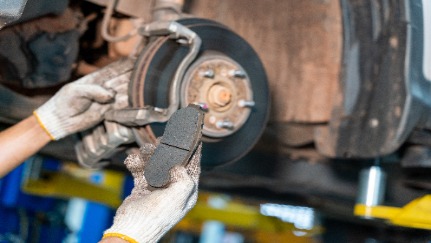
If your car has disc brakes, then you’ve got a small piece of material called a brake pad to thank when you slow down or stop. When you press down on the brake pedal, brake pads are pushed against a disc in your tire, creating the friction that slows your car.[1]
This process may cause your brake pads to wear down and become less effective over time, meaning that checking and replacing them on a regular basis is an important part of maintaining your car. When considering how often to replace brake pads, know that it varies depending on where you drive and how liberal you are with your brake use. The average brake pad is replaced around 30,000-70,000 miles, however that number can go up or down depending on the material your pads are made of and the kind of vehicle you drive. A brake pad check is usually part of your routine car maintenance, but it’s best to know how to check brake pads yourself to see if they’re approaching replacement time.[2]
Signs your brake pads need to be replaced
1. Listen for a squealing or grinding noise when braking
Sometimes listening to the sounds your car makes is the best way to determine if something is wrong. You may be able to tell when to replace brake pads if your brakes start to squeak or grind each time you apply them. Many brake pads are designed with a piece of metal that is intended to create that telltale squeak once the pad has reached a certain degree of wear. When you hear the squeak, it’s time to take a peek.[1]
2. Check for vibration in the brake pedal when braking
Worn down brake pads don’t just squeak; they’ll also create vibrations throughout the car that you can feel in the steering wheel and brake pedal. If you feel that vibration, it may be a sign that either your pads need to be replaced or your rotor (the disc your pads press against to create friction) has become warped. In either case, it’s time to bring your car in for servicing.[1]
3. Inspect brake pads through the rim of the wheel
What do brake pads look like? You can see for yourself without having to remove any part of your wheel, and in the interest of inspecting your pads’ condition, you should consider doing so. With your car safely off and in park, have a look through your rims. You’ll see the rotor and the caliper which clamps your pads to it. Inside the caliper, you can see the brake pads. Many have a wear indicator in the center that allows you to easily measure brake pad thickness. If that wear slot is gone or barely visible, it may be time to take your vehicle in for new brake pads.[2]
4. Checking the brake pads after removing the wheel
In some cases, you may have to remove your wheel to check brake pad wear. Try to ensure that your car is on a level surface before doing this. Use a jack to lift the car, unscrew the lug nuts, and then remove the tire. With the wheel removed, you can more easily inspect the brake pad for excessive wear. If the pad is less than a quarter inch thick, it’s time to replace it.[3]
5. Have a professional mechanic inspect the brakes
If you notice any squeaking or vibrating, or you observe excessive wear upon checking your brake pads, your next step should be to make an appointment with a professional mechanic. This is also an excellent opportunity to have any other routine maintenance performed that your car might require. Visit the Nationwide car depreciation calculator to make better-informed choices about maintaining and insuring your car.
Brake performance is incredibly important, and the average cost to replace brake pads can vary greatly, so it’s best to take steps to preserve yours. Maintaining a safe following distance from the car in front of you, braking gradually, and avoiding “riding the brake” are excellent ways to take it easy on your brake pads and extend their lives.
And when fully functioning brake pads aren’t enough to avert trouble, you can count on Nationwide for dependable auto insurance.