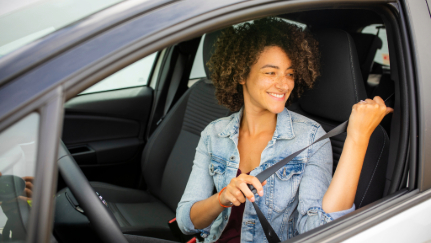
Getting a driver’s license is a major milestone for teens and a significant moment for parents. While it brings freedom and independence, it also introduces new risks.
According to the Centers for Disease Control and Prevention, in 2020 more than 227,000 teen drivers were injured and 2,800 died in car crashes. With distractions like smartphones, food, passengers and stereo systems, how can parents help keep their teens safe? Fortunately, today’s car technology offers powerful tools to support safer driving. [1]
Teen driver technology in cars
Some modern vehicles come with built-in features designed to encourage safer driving habits. Some can even be controlled by the parent using a teen-specific key fob.
These features can include:
- Volume control on the car stereo
- Vehicle acceleration limits
- Speed warning notifications
- Seat belt notifications
Other features in modern cars, such as traction control, blind spot monitoring, and automatic emergency braking provide an additional layer of safety for your teen driver (and others).
Cars equipped with Apple CarPlay® and Android Auto can also help reduce distractions. Both allow key smartphone apps to be used on the car’s display screen. They allow the driver/passenger to manage music, driving directions and other useful applications without touching their phone.
Some auto manufacturers also have features to track, speed, distance, and other metrics for parents to monitor. Similarly, some insurance carriers offer usage-based car insurance programs that can monitor driving behavior and provide feedback to the driver to help them make safer driving decisions. Discover how Nationwide’s SmartRide® program rewards safer driving with potential savings on auto insurance.
As always, if you’re unsure about what is available from your insurance carrier, you can speak with your independent insurance agent. [2]
Distracted driving and smartphones
In 2023 alone, 3,275 people lost their lives due to distracted driving. Smartphones are a common and potentially dangerous distraction for teen drivers.
Many smartphones now include “Do Not Disturb While Driving” settings that can help reduce distractions by silencing notifications. Encouraging your teen to use these helpful settings can help keep their focus on the road.
There are also smartphone apps that track speed, braking and overall driving behaviors, that can send reports to parents. You can even monitor the location of your teen or car through various apps, so you can confirm they arrived safely at their destination.
Preparing young drivers for the open road
While driver’s education classes have long been a training fixture, parents can give their teen additional practice with driving simulators.
Typically, driving simulators create a wide range of road hazards and real-life driving situations, allowing teens to safely practice how to respond in the moment. With guided coaching, they can learn how to handle specific challenges, such as abrupt stops, poor weather and unexpected obstacles, without the risks of being on the road.
Simulators can provide a safe, controlled, learning environment for teens to develop confidence and gain valuable experience behind the wheel.
Get the proper insurance coverage for your teen driver
Preparing a teen for the road involves more than just driving lessons. It’s also important to ensure they’re covered with the appropriate insurance. Nationwide offers a variety of auto insurance solutions designed to support families and promote safe driving habits.
Talk to your independent insurance agent to:
- Add your teen to your auto policy
- Review coverage options tailored for young drivers
- Explore programs that reward safe driving with discounts
Have questions?
Your local independent agent is available to help navigate the process with confidence.
[1] “Risk Factors for Teen Drivers,” CDC, cdc.gov/teen-drivers/risk-factors/?CDC_AAref_Val=https://www.cdc.gov/transportationsafety/teen_drivers/teendrivers_factsheet.html (accessed May 2025).
[2] “How Teen Driver Mode helps keep young drivers safe on the road,” GM News, news.gm.com/home.detail.html/Pages/topic/us/en/2024/oct/1025-teendriver.html (accessed May 2025).
[3] “Distracted driving,” NHTSA, nhtsa.gov/risky-driving/distracted-driving (accessed May 2025).