

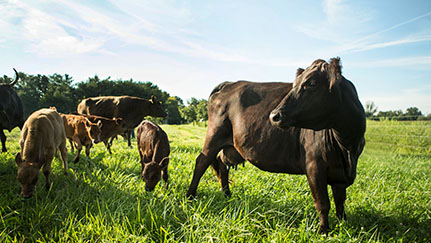
High livestock prices are great news for ranchers, cow/calf producers, dairy operators and hog farmers. But strong markets also bring increased risk. As livestock values rise, so does the incentive for theft and its financial impact on producers. Without a solid risk management strategy and the right insurance coverage, you could lose revenue you’ve worked hard to build.
“The threat of livestock theft has evolved and changed a lot over the years. Today, it can happen to just about anyone,” said Nationwide Senior Consultant Erin Cumings. “Dairy operations and hog producers face the same escalating theft risks as cattle ranchers, since rising pork and dairy prices make those animals equally attractive targets.”
Livestock theft has picked up in recent years, driven in part by higher market values. In 2025, for example, Texas law enforcement officials recovered almost $13 million in stolen livestock alone. Incidents like the theft of 64 Holstein calves — each worth around $2,000 — from an Ohio farm in May 2026, and more than $400,000 in beef cattle stolen from a Colorado ranch the previous summer highlight the growing trend.
How livestock theft has evolved
When you think of livestock theft, you probably picture cut fences and missing calves. But the crime has evolved over the years. Today, producers can lose the livestock equity they’ve built in many ways, both physically and on paper.
- Stealing unbranded young calves. These are harder to trace once they enter the auction circuit.
- Exploiting hogs and dairy calves. Hogs load quickly, lack individual ID without RFID tags, and face fewer brand inspection laws. Dairy bull calves, often sold off and frequently moved, are also easy targets.
- Baiting near fences. Thieves place feed near fences to gather animals. They then return at night to load them onto trailers.
- Using running brands. Thieves use running brands to alter existing brands on cattle, making it easier to move stolen animals to states with less strict brand laws.
- Using drones and game cameras. Thieves use drones and game cameras to scout pastures and track producers' movements.
- Check-kiting in livestock operations. A form of bank fraud exploiting the "float" period, where bad checks create artificial funds to buy livestock or pay fees.
- Buying “phantom herds” or double-counting. Fraudsters solicit funds for cattle purchases but pocket the money. Some may double-count herds they’re using for collateral for multiple loans.
- Falsifying dairy records and double-collateral. Thieves may misrepresent milk production to secure loans or use dairy cattle as collateral for multiple loans.
Distance and limited visibility create risk
As livestock theft methods evolve, so do the challenges of managing and monitoring your herd. For many producers, livestock are spread across multiple pastures, barns or facilities, sometimes miles apart and not always within sight.
That distance creates opportunity for theft to go unnoticed. The longer it takes to recognize something is wrong, the more difficult it becomes to respond, recover animals or prevent further loss.
In today’s environment, it’s not just about securing livestock—it’s about knowing what’s happening across your operation at any given time. When visibility is limited, even the best prevention practices can fall short.
Around-the-clock surveillance: Barn Owl cellular cameras
Ear-tagging and branding are centuries-old practices that still provide essential security. So too does making sure gates, buildings and equipment are locked down. Producers can also work closely with industry partners to ensure all herd documents match actual animal numbers. And technology is leveling the playing field for producers by enabling them to keep a close eye on their animals regardless of how far away their dairy barns or pastures are.
Tools like Barn Owl remote security camera systems make it possible to monitor livestock and facilities, even in remote locations. These remote security camera systems detect and alert you to unplanned activity, such as vehicles entering a pasture or unfamiliar movement in a barn. Real-time notifications allow you to respond immediately, instead of discovering a loss after the fact.
Because they operate on cellular networks, they don’t require Wi-Fi connections. This makes them especially effective in monitoring remote pastures, hog confinement buildings and unattended dairy calf facilities.
“These types of cameras not only give you a clear, around-the-clock view of your operation, but they also act as a strong visual deterrent,” Cumings said. “If someone can quickly see that your premises are monitored 24/7, they’re much less likely to target your livestock.”
Nationwide policyholders are eligible for preferred pricing on Barn Owl cellular camera systems. To learn more about how you can save on Barn Owl and other Agtech solutions, visit Nationwide.com/AgTech.
Make sure you are covered
Contact your Nationwide Farm Certified agent today to review your livestock insurance coverage, learn more about AgriChoice® policy options and discuss the best ways to protect your livelihood from theft.