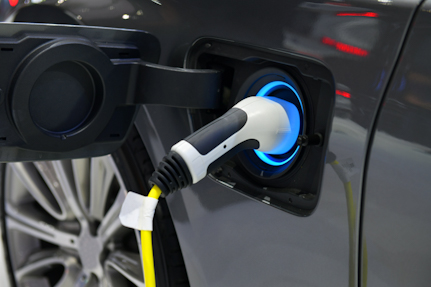
This article focuses on managing charging areas, charging equipment and operational considerations associated with battery-powered equipment.
Common charging hazards and operational considerations
Agribusiness operations may see charging risks in settings such as:
- Electric forklifts charging in warehouses, coolers, shops or packaging areas.
- Electric UTVs charging in machine sheds, service buildings or livestock support buildings.
- Employee-owned electric vehicles plugged into chargers meant for business equipment.
- Temporary or aftermarket charging setups that were not designed for the equipment being used.
- Charging stations installed by third-party contractors without a clear long-term maintenance agreement.
- Charging areas established over time without a formal review of housekeeping, fire protection or maintenance expectations.
For many operations, the biggest issue is not just the charger itself. It is knowing who owns it, who services it and who is allowed to use it.
Questions to ask about charging stations
Who owns the charging station?
Before a charging station is put into service, find out whether the business owns it, leases it, rents it or uses a unit maintained by a third party. This should be documented clearly. If ownership is unclear, maintenance responsibility is often unclear too.
Who handles inspection, maintenance and repairs?
If an outside company installed the charger, do not assume that same company handles ongoing service. Clearly document the following:
- Who owns the charger
- Who installed it
- Who handles routine inspections
- Who performs preventive maintenance
- Who is allowed to repair or replace damaged parts
- Who to contact if the charger stops working
Without clear responsibility, damaged charging equipment may stay in use longer than it should.
Is the charger being used only for its intended purpose?
A charger installed for a forklift or UTV should not automatically be used for every battery-powered vehicle on site. An employee-owned electric vehicle may need different connectors, voltage or manufacturer guidance. Using a business charger for a personal vehicle can create compatibility, overloading and fire risks.
Operations should have a written policy that explains:
- Which vehicles or equipment may use each charger
- Whether employee-owned electric vehicles are prohibited from using equipment chargers
- Who can approve exceptions
- What signs should be posted at the charger location
Location and separation matter
Distance matters when you are managing lithium-ion battery fire risk. Charging should occur in designated locations that follow manufacturer recommendations and provide appropriate separation from combustible materials and other high-hazard exposures.
If charging must happen indoors, place equipment away from combustible storage, wall openings, exit paths and critical building systems. Try to avoid putting many charging units in one tight area unless the building and fire protection features were designed for that exposure. Charging areas should not block exits or interfere with access to electrical rooms, fire protection equipment or utility controls.
Fire protection and building considerations
Charging and parking areas for electric forklifts and UTVs should be reviewed as part of the building’s overall fire protection plan. That review should include:
- Building construction type
- Where the charging area is located
- Nearby combustible storage
- Sprinkler protection
- Ventilation
- Emergency response access
- Separation from other hazards such as fuel storage, propane or chemical areas
- Housekeeping and combustible material management around charging areas
As electric-powered equipment becomes more common, agribusiness operations should work with qualified electrical, fire protection and risk management professionals to decide whether existing protection is enough.
Preventive maintenance for battery-powered equipment and charging systems
Preventive maintenance should apply to both the vehicle and the charger. A written inspection checklist can help employees spot problems before equipment is used or charged.
A daily or pre-use check may include:
- Battery swelling or bulging
- Cracked battery housings
- Leaking fluids
- Unusual heat, odor or discoloration
- Frayed, cut or damaged charging cables
- Loose plugs or connectors
- Damaged charging ports
- Warning lights, fault codes or communication errors
- Impact damage to the vehicle or battery compartment
- Debris, dust or combustible material around the charger
- Confirmation that the charger matches the equipment being charged
If any of these problems are found, take the equipment out of service until a qualified person can evaluate it.
Employee training and operating rules
Employees who use or work around charging areas should be trained on site-specific charging procedures and how to recognize battery and charging hazards. Training should cover:
- Approved charging locations
- Which chargers may be used for which equipment
- A rule against unauthorized charging
- Safe charging practices, including monitoring charging activities and avoiding charging when facilities are unoccupied whenever possible
- What to do if a battery looks swollen, damaged or overheated
- Emergency reporting steps
- When equipment must be tagged out of service
This is especially important where multiple types of battery-powered equipment are present and employees may attempt to use chargers for equipment they were not intended to support.
Emergency planning
Battery fires can behave differently from ordinary fires, so this risk should be part of emergency planning (PDF). Charging areas should be included in facility emergency planning and routine safety reviews.
Consider documenting:
- Emergency contacts for charger service and repair
- Shutoff procedures
- Fire department pre-planning information
- Equipment isolation procedures
- Alternate operating plans if a charging area or electric fleet is out of service
Final takeaway
Electric forklifts, UTVs, battery-powered equipment and charging stations can help agribusiness and processing operations improve efficiency, but they also introduce charging, maintenance and fire safety considerations. Clear ownership, clear maintenance responsibility, proper charger use, employee training and a written preventive maintenance process can all help reduce the chance of a serious loss. As electric-powered equipment becomes more common, charging stations and battery-powered vehicles should be supported by clear policies, proper maintenance and safe operating practices.