

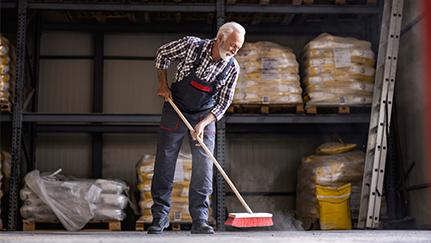
Good housekeeping and storage are not just about appearance or keeping a space clean. They are essential to preventing injuries, fires, and business disruption.
Many losses start with simple issues such as clutter, dust buildup, blocked exits, or poor storage. Over time, these problems can create unsafe conditions and make it harder to respond in an emergency.
Facilities that maintain clean, organized work environments are better able to control risks, protect property, and prevent small problems from becoming major losses.
Start with a plan, not just cleanup
Good housekeeping is not a one-time task. It needs to be part of daily work. Strong housekeeping practices include:
- Clear expectations for cleanliness and organization
- Assigned responsibility for each work area
- Routine cleaning schedules (daily, weekly, monthly)
- Quick cleanup of spills and debris
- Regular inspections to identify and correct issues
When housekeeping is treated as an ongoing process, results are more consistent and effective.
What good housekeeping looks like
Good housekeeping means keeping work areas clean, safe, and well-organized every day. This includes both how spaces are maintained and how materials are stored.
General work area practices
- Keep floors clean, dry, and free of trip hazards
- Clean as you go throughout the day
- Remove trash and combustible materials regularly
- Keep aisles, exit, and fire equipment clear
- Maintain tools and equipment in clean, good condition
These basic steps help form the foundation of a safe and efficient workplace.
Storage and material management
Proper storage is just as important as cleaning when it comes to safety and fire prevention. Good storage practices include:
- Use designated storage areas
- Separate raw materials, finished goods, and waste
- Store materials based on their hazard level (e.g., flammable, corrosive)
- Use approved containers and proper stacking methods
- Avoid overloading shelves and racks
- Keep materials away from heat and ignition sources
- Keep aisles and exits clear
- Limit buildup of unused materials
- Secure materials to prevent falling or shifting
- Keep proper clearance below sprinkler systems
- Separate materials that should not be stored together
Strong storage practices reduce risk and support smoother operations.
Fire prevention and control
- Reduce combustible materials such as dust, debris, and packaging
- Maintain clearance around electrical panels, heaters, motors, and dryers
- Clean equipment to prevent overheating
- Remove grease and residue buildup
- Keep electrical rooms free of storage
- Make sure fire protection equipment is easily accessible and regularly inspected
Risks of poor housekeeping
Failing to maintain proper housekeeping can result in:
- Blocked exits or safety equipment
- Small fires that spread rapidly
- Dust-related fires or explosions
- Slips, trips, and falls
- Equipment damage and operational downtime
Most of these risks can be prevented with consistent attention to housekeeping and storage.
Turning best practices into action
Knowing what looks good is the first step. The next step is putting these practices into place every day. A clear housekeeping program can help set expectations, assign responsibility, and support accountability. Check out the Housekeeping Inspection Checklist (PDF) to get started.
- OSHA 29 CFR 1910.22 Walking-working surfaces
- NFPA codes and standards for fire protection, storage, and life safety
- Good housekeeping fact sheet (National Pork Board) https://employeesafety.pork.org/content/Additional%20Resources/Good%20Housekeeping%20Fact%20Sheet.pdf
- Agriculture: general housekeeping in the workplace https://coactionspecialty.safetynow.com/agriculture-general-housekeeping-in-the-workplace/?print=pdf
- Housekeeping safety checklist
- https://www.nwmissouri.edu/services/facility/pdf/ehs/7-minute-safety-awareness/7-Minute-Safety-Good-Housekeeping-check-list.pdf
- Safety starts with housekeeping (Ohio State University) https://agsafety.osu.edu/newsletter/ag-safety-stat/november-2017/injury-prevention/safety-starts-housekeeping