

All farm and ranch insurance Insurance by farm type
Property and liability insurance
Vehicles and equipment insurance
Financial services
All farm and ranch insurance All commercial agribusiness insurance All agribusiness risk management
Farm & agribusiness resources
Farm & agribusiness resources
Harvest strategies for managing grain quality, safety risks and storage challenges
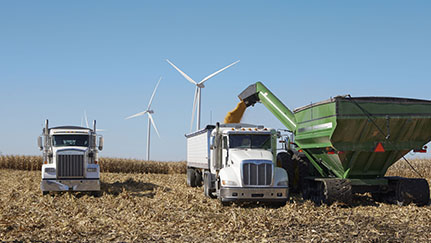
Harvest 2026 is bringing a different set of challenges for many grain operations. Wet conditions, delayed harvest, grain quality concerns, increased dryer usage and storage management issues are creating overlapping operational and safety risks for farms, grain elevators and ag retailers with grain storage.
Grain sprouting, mold development, stalk rot, cob rot and elevated mycotoxin levels may affect grain quality, storage performance and marketability. As outlined in Bad Grain Impacts to Harvest and Storage, these conditions can create challenges during harvest and throughout the storage season. In some cases, drying grain may reduce moisture content but will not eliminate grain quality problems.
Successful harvest operations require proactive planning, grain monitoring and strong safety practices. Understanding how moisture, grain quality and storage conditions interact can help operations reduce losses and safely navigate the challenges of the 2026 harvest season.
Managing excess crop moisture at harvest
Many Midwest regions experienced above-average rainfall, leading to excess moisture in crops. High-moisture grain can cause issues like bridged grain and crusting in storage, which disrupt proper flow and create serious safety risks for workers. Additionally, prolonged drying times increase the chance of grain dryer fires, as most commercial dryers lack built-in fire suppression. And the accumulation of crop residue further exacerbates these risks, impeding grain flow and heightening fire hazards.
Higher-moisture grain may also require significantly more drying time, increasing exposure to grain dryer fires, equipment failures and operational interruptions. Additional attention to housekeeping, maintenance and monitoring may be needed throughout harvest.
To help manage these hazards:
- Clean grain dryers (PDF) religiously. Clean every 12 to 24 hours during high-moisture periods.
- Establish fire watch protocols. Assign team members to monitor dryer operations and post emergency contacts.
- Review emergency response plans (PDF). Collaborate with your local fire department for preparedness (PDF).
- Monitor storage conditions. Check bins daily for toxic gases, heating, odors, moisture migration and other signs of grain deterioration, and use temperature-monitoring systems when available.
Managing grain quality concerns during harvest and storage
Beyond moisture challenges, many operations are also watching for grain quality issues associated with delayed harvest, disease pressure and wet growing conditions.
Grain sprouting, mold development, stalk rot, cob rot and elevated mycotoxin levels may affect grain quality, storage performance and marketability. In some cases, drying grain may reduce moisture content but will not eliminate existing quality concerns.
- Test grain quality early. Consider grain quality and mycotoxin testing (PDF) before storage, sale or feed use.
- Monitor grain condition throughout storage. Watch for changes in temperature, moisture and grain quality.
- Understand buyer requirements. Grain quality standards and discounts may vary by buyer.
- Evaluate grain segregation needs. Keeping affected grain separate may help preserve quality and marketing options.
- Identify problem fields early. Monitor fields for lodging, disease pressure, grain sprouting and other signs of deterioration.
Harvest conditions can create additional safety risks
Wet conditions can create challenges beyond grain quality. Muddy fields, unstable field entrances and soft rural-road shoulders can make equipment more difficult to control and increase stopping distances. Delayed harvest and compressed timelines may also place additional pressure on employees and equipment.
Planning equipment movement carefully, evaluating field access points and allowing additional stopping distance can help reduce transportation-related incidents during harvest.
Avoiding grain storage risks when time is tight
Fall harvest is always a rush on farms and at commercial grain storage locations. And when a big crop’s coming in from the field — especially in a hurry — it can stress grain storage capacity and tempt farmers and ag retailers to use unsafe or unsuitable temporary storage or overlook grain bin safety protocols.
Temporary grain storage solutions, such as ground piles, depend on specific site conditions to function effectively. Proper drainage and stable ground are essential, as poor site conditions can lead to significant issues. High grain volumes and quality variations also increase bin entry risks when grain flow is disrupted. Equipment can also be strained, leading to clogs.
To help manage temporary grain storage safely:
- Select sites strategically. Choose well-drained, stable locations for temporary storage.
- Use proper ground pile (PDF) storage techniques. Ensure drainage, use covers with ventilation and monitor temperatures.
- Plan grain transfer operations. Monitor grain condition during transfers and prioritize moving at-risk grain first.
- Maintain quality control. Establish checkpoints for moisture, temperature, and visual quality during transfers.
- Address grain bin safety (PDF). Never enter bins alone; use a lifeline (PDF) and trained observer.
- Implement lockout/tagout systems (PDF) on equipment. For plugged sumps or bridged grain, use professional salvage services.
Successful harvest operations require maintaining grain quality and proactively managing risk to protect your people, operation and livelihood. Nationwide offers resources and support beyond traditional insurance for proactive risk management.
Nationwide policyholders are encouraged to consult with their agent or contact Risk Management Solutions for direct support at RMSolutions@nationwide.com or 1-800-260-1356.