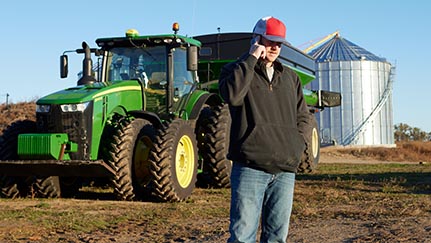
Whether because of an illness, death in the family or other serious disruption, farmers are always ready to spring into action to help other farmers in need. Farmers Helping Farmers happens often in rural America, and it exemplifies the spirit of community so common in American agriculture.
But lending your labor, machinery and equipment can create risk for everyone involved. If something goes wrong with that machinery or equipment, who pays for it?
“Borrowing or sharing farm machinery can be a practical way to keep operations running smoothly and reduce costs,” said Nationwide Farm Staff Underwriting Director Peter LaMair. “It’s also a way to run into unexpected insurance gaps.”
Know your machinery-sharing agreement
Not all farm machinery and equipment is shared the same way. The type of arrangement — like borrowed, co-owned or custom-hired machinery — shapes who’s responsible for damage, injuries and insurance. Insurance coverage often can vary significantly based on individual policy language and the specific ownership agreement. It pays to know exactly where you stand based on your specific arrangement.
"The biggest misunderstanding I run into is farmers assuming that 'shared' means 'covered,'” LaMair said. "A borrowed tractor and a tractor owned by multiple parties can carry completely different exposures. Knowing the difference before you turn a key is what protects your operation. Assuming your farm policy covers all three the same way is one of the most common — and most expensive — mistakes we see.”
Three factors that help determine who pays
When shared equipment gets damaged, the answer to "who pays?" usually comes down to three things:
- How the loss happened
- Who was operating the equipment at the time
- What the agreement says
“This is where a lot of farmers get caught off guard. The equipment owner isn't always the only party affected by a loss,” LaMair said. “If you borrow a neighbor's machine and it's damaged while you're using it, the owner's insurer may come looking to you for reimbursement, especially if the borrowed equipment carried limited coverage to begin with.”
That's why documentation matters so much. When you take stock of your operation's machinery, don't just list what you own. Include leased and borrowed equipment too. A careful inventory helps you spot potential gaps before a loss exposes them. If you find one, you can talk with your agent about adding coverage before the equipment ever leaves the machine shed.
"Documentation isn't red tape. It's protection," LaMair said. "When a farmer can show me exactly what equipment moves through their operation and under what terms, we can build coverage that closes those potential gaps. Without that picture, we're all guessing, and guessing is expensive."
Put the handshake in writing
Most shared-equipment arrangements between farmers happen on a handshake. But a handshake doesn't spell out what happens when a machine gets damaged or someone gets hurt.
A simple written agreement can set clear expectations before any issue affects your operation. Ensure it covers the questions that matter most and consult a legal professional to make sure you're fully protected. Consider documenting:
- Who is allowed to operate the equipment. Only certain trained operators, or is there anyone on the crew?
- The condition of equipment prior to operation. Ensure all equipment is in good working condition, keeping it safe and reliable.
- Who handles repairs. If something breaks during use, who pays and who arranges the fix?
- Who is responsible for transport. Moving equipment carries its own risks. Decide who owns them.
- What happens if damage occurs. Spell out how a loss will be handled before it happens, not after.
Share equipment with confidence and the right coverage
The right coverage, a clear agreement and a few honest questions up front are all it takes to share equipment with confidence.
Every operation is different, and so is every farm machinery and equipment arrangement, even when farmers are helping farmers. A Nationwide Farm Certified agent can review your current coverage, help you spot gaps around borrowed, leased and custom-hired equipment, and make sure you're protected.