Contact with electricity is one of the leading causes of fatalities in the workplace. The Electrical Safety Foundation International (ESFI) estimates 150 workplace electrical fatalities occur in the U.S. on average every year.1 Injuries from uncontrolled electrical energy can cause serious injury or death.
What is “electrically safe working condition?”
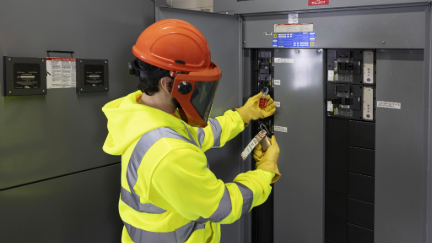
NFPA 70E defines “electrically safe working condition” as a state in which an electrical conductor or circuit part has been disconnected from energized parts, locked/tagged out, tested for the absence of voltage, and, if necessary, temporarily grounded for personnel protection. Examples of energized sources could include energized panels, temp power systems, building automation systems, etc.
Energized sources over 50v should be put in ESWC before working on or near (e.g. within the limited approach boundary) “exposed, energized parts”.
Plan Ahead
Involvement – Each person who could be exposed directly or indirectly to a source of electrical energy shall be involved the planning and in the lockout/tagout procedure.
Planning – Ensure a job safety plan is in place before beginning work, including plans for emergency response, etc.
PPE – Select appropriate arc flash PPE required for the task, from start to finish. Ensured PPE has been inspected before use and meets inspection standards
Qualifications – Only qualified personnel should be completing work on electrically powered equipment
What you can do
- Always adhere to NFPA 70E Standard for Electrical Safety in the Workplace and requirements outlined within OSHA CFR 1926 Subpart K
- Identify all possible sources of electrical supply to the specific equipment.
- Always verify sources using current drawings and labels. Outdated diagrams can lead to missed energy sources.
- After properly interrupting the load current, open the disconnecting device(s) for each source.
- Wherever possible, visually verify that all blades of the disconnecting devices are fully open or that drawout-type circuit breakers are withdrawn to the test or fully disconnected position.
- Release stored electrical energy (e.g. discharge capacitors and batteries), which might include grounding
- Block or relief stored nonelectrical energy in devices to the extent the circuit parts cannot be unintentionally energized by such devices.
- Apply lockout/tagout devices in accordance with your company’s documented and established procedure.
- Use an adequately rated portable test instrument to test each phase conductor or circuit part at each point of work to test for the absence of voltage. The best practice is to test a known live source, then the circuit, then re-test the live source to confirm tester functionality.
Why it matters
Construction workers face significant exposure to hazardous energy such as electricity, on a regular basis. Failure to establish electorally safe working condition on energized equipment can cause significant injuries or death. Following electrically safe working condition processes and procedures save lives.