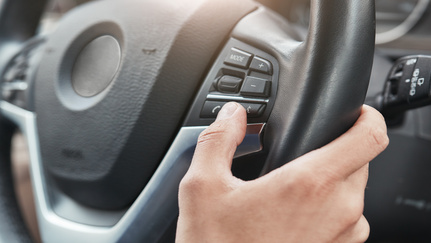
How to use cruise control
The location of the cruise control buttons can vary per car. For your car, check the manufacturer’s manual for the location and specific instructions. To set cruise control, press the ON/OFF button or switch. If you press this button again, it typically turns the system off. The Res + (resume/increase seed) button increases the cruising speed by 1 mph, while the Set – (set speed / reduce speed) button decreases it by 1 mph. To shut off the cruise control, you can press the Cancel button or simply press the brake pedal.[1]
What is cruise control?
Cruise control locks your car’s accelerator at a specific speed, allowing you to take your foot off the pedal and remain at a constant speed. Because it’s so convenient for commuters and drivers who use the highway frequently, cruise control is a feature that generally comes standard on most models of cars.[2]
What is adaptive cruise control?
Adaptive cruise control is very similar to conventional cruise control, only it automatically adjusts the speed of your vehicle depending on how fast the vehicle in front of you is going. It may also reduce your speed around tight curves and adjust to speed limit changes, depending on your car’s technology.[3]
How to set cruise control
Follow these steps when setting the cruise control:[1]
- Evaluate weather conditions: Check for hazardous weather conditions and any oncoming obstacles before applying cruise control.
- Build your speed: The ideal speed for cruise control is between 55 and 70 mph.
- Turn cruise control on: The button is usually on or near your steering wheel.
- Set cruise control: Press another button on your steering wheel and remove your foot from the accelerator.
- Watch the road carefully: You will have a slower reaction time if your foot is off the brake or accelerator pedal.
How does cruise control work?
Cruise control adjusts the throttle position in your car to control your speed. It does this by a cable connected to an actuator, instead of just by pressing the pedal to adjust the speed.[4]
Cruise control safety tips
Follow these safety tips while using cruise control on the road:
- Use it on highways or straight roads: Because cruise control is used to maintain a constant speed, using it on highways is ideal.[5]
- Don’t use it in heavy traffic: If you hit traffic and use the brakes a lot, cruise control isn’t ideal.[6]
- Don’t use it on wet streets: Wet roads are dangerous, and it’s important to keep control of your car and its speed in those conditions.[6]
- Keep your distance from other cars: A set speed could cause you to get dangerously close to other vehicles.[6]
- Hover your foot over the brake: Always be prepared to brake whenever necessary.[6]
- Be aware of your surroundings: Look out for other cars on the road and stay in your lane.[5]
Cruise control when it’s raining
Avoid using cruise control when the roads are wet. You might not be able to stop as quickly as you’d like when using cruise control. This could lead to dangerous situations and even accidents. Wet roads can affect your car’s ability to maintain a constant speed. There’s even a possibility that if you’re using cruise control while it’s raining, your vehicle could hydroplane.[7]
Frequently asked questions about cruise control
Does cruise control save gas?
Cruise control can help you save an average of 7% to 14% on gas. When you don’t use cruise control and constantly press the accelerator and brake pedals, more gas is usually used. Cruise control works best to save gas when driving on flat roads that are free of congestion.[8]
Is cruise control bad for your car?
In general, cruise control isn’t bad for your car. It can actually reduce heavy acceleration and deceleration. It doesn’t damage your car in any way, and the frequent use of it doesn’t affect your vehicle.[9]
Is cruise control safe?
Cruise control is convenient for long stretches of driving, and it can keep you from speeding if you set your speed to the correct limit. However, if the road conditions are rainy or snowy, cruise control can be dangerous. To use cruise control safely, it’s best to know when you should and shouldn’t use it. [9] Using cruise control on the highway makes your driving more predictable to other drivers. Instead of constantly changing speeds, cars know how fast you’re driving and can follow safely behind you or pass.
When should cruise control not be used?
You shouldn’t use cruise control in the following conditions:[1]
- When the roads are wet and slippery.
- During heavy traffic.
- On hills and winding roads.
Before you hit the road, make sure you’re covered and have proper auto insurance coverage.