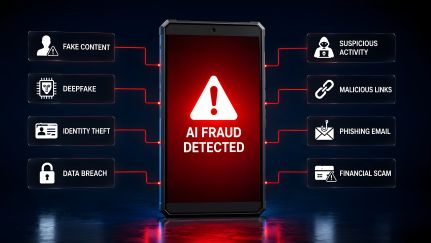
Artificial intelligence (AI) is changing how people work, shop and communicate. It's also changing how criminals try to scam us.
Cybercriminals are using AI to create more convincing emails, text messages, websites and online interactions. These scams can look so realistic that it may be difficult to tell what's legitimate and what's not.
The good news is that a few simple habits can help protect you and your family.
Watch for Urgent Requests
Scammers often create a sense of urgency to pressure people into acting quickly.
Be cautious if someone asks you to:
- Send money immediately
- Share personal information
- Verify account credentials
- Purchase gift cards
- Provide passwords or security codes
Taking a few moments to slow down and verify a request can help you avoid becoming a victim.
Think Before You Click
AI can help criminals create convincing messages that look professional and free of obvious spelling or grammar mistakes.
Before clicking links:
- Review the sender carefully
- Be cautious of unexpected messages
- Type website addresses directly into your browser when possible
- Verify suspicious requests through a trusted source
If something feels unusual, trust your instincts and investigate further.
Protect Your Personal Information
The more information criminals can gather about you, the easier it may be for them to create convincing scams.
Consider limiting the amount of personal information you share publicly on:
- Social media
- Online forums
- Professional networking sites
Details such as birthdays, pet names, schools and family information can sometimes be used to support identity theft or account compromise.
Use AI Tools Carefully
AI-powered tools can be helpful for research, writing and everyday tasks. However, it's important to be mindful about what information you share.
Avoid entering:
- Social Security numbers
- Financial account information
- Passwords
- Medical records
- Tax documents
When using public AI tools, assume that sensitive information should stay private.
Keep Your Accounts Secure
Good cybersecurity habits remain one of the best defenses against fraud.
Consider:
- Using strong, unique passwords
- Enabling multifactor authentication when available
- Keeping devices and software updated
- Monitoring financial accounts regularly
Small steps can make it much harder for criminals to succeed.
What to Remember
AI is making scams more convincing, but the fundamentals of staying safe remain the same. Slow down, verify unexpected requests, protect your personal information and think carefully before clicking links or sharing sensitive data.
A little caution can go a long way toward protecting yourself and your family online.