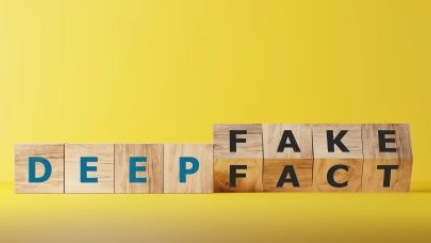
The growing threat of deepfakes
In our tech-savvy world, distinguishing reality from fiction is getting tougher, thanks to deepfakes. These AI-created videos and audio clips are so realistic that they challenge our ability to separate what's real from what's fake, posing serious threats to identity protection and trust in media. Here’s a look at why deepfakes are so convincing and why we might fall for them.
What is a deepfake?
Deepfakes combine "deep learning" with "fake" to produce highly realistic but entirely fake images and sounds. As this technology advances, concerns grow about its misuse in politics, entertainment, and business. Criminals can now convincingly alter faces, voices, and gestures, creating content that’s nearly indistinguishable from reality.
Why overconfidence misleads us
We often think we can easily spot deepfakes, but research shows otherwise. A study from the Center for Humans and Machines and CREED1 at the University of Amsterdam found that people are overly confident in their ability to detect deepfakes, despite their actual accuracy being much lower. Even with incentives to identify deepfakes correctly, participants' confidence didn’t improve, showing a gap between our belief in our skills and our actual abilities.
The power of perception and emotions
Deepfakes can influence our perceptions and emotions, even if we know they exist. Studies reveal that deepfake videos can shape our opinions just as much as real content2, affecting public opinion and personal attitudes. This impact extends to auditory deepfakes as well, where fake voice recordings can sway beliefs and perceptions.
Deciphering reality
As deepfake technology advances, distinguishing real from fake is becoming more difficult, especially in politics. Fabricated content can influence public opinion and elections, while genuine content may be dismissed as fake, further blurring the truth.
Deepfakes and human vulnerabilities
Deepfakes exploit our psychological tendencies, such as our trust in what we see and hear. They create highly realistic content that plays on cognitive biases, like confirmation bias, making us more likely to accept fake information that aligns with our existing beliefs.
Deepfake implications
Deepfakes present serious societal challenges by spreading misinformation and eroding trust in media and institutions. Their ability to create convincing fake realities fosters confusion and skepticism, undermining the credibility of audiovisual content.
The challenge to identify verification
Deepfakes threaten traditional identity verification methods, making it easier for fraudsters to bypass security checks. This poses risks in banking, online services, and secure communications, where accurate identity verification is crucial. They can also be used on social media and news platforms to spread misinformation or impersonate individuals.
Deepfake detection: key indicators
Detecting deepfake videos involves scrutinizing various subtle anomalies that can reveal the artificial nature of the content. Here are some key indicators to look for:
- Shadowing and Lighting: Inconsistencies in shadows and lighting can be a giveaway. Real videos have natural lighting that interacts consistently with the environment and subjects, while deepfakes often struggle to replicate this accurately.
- Blinking Patterns: Human blinking is irregular and varies from person to person. Deepfake algorithms sometimes fail to mimic natural blinking patterns, resulting in either too frequent or too infrequent blinking.
- Glitchy Movements: Look for unnatural or glitchy movements, especially around the face. These can include sudden shifts or distortions that don't align with the rest of the video.
- Facial Features: Pay attention to facial features like the eyes, mouth, and skin texture. Deepfakes may exhibit unnatural smoothness or lack the fine details present in real faces.
- Lip Sync: Watch for mismatches between the audio and visual elements, like lips not syncing with speech.
- Audio Deepfakes: Detecting audio deepfakes can be tricky, but there are techniques to help. Look for anomalies in vocal patterns that don't match natural speech.
There are tools available that can help detect deepfakes. These AI-powered solutions, including enhanced biometric systems like facial recognition, can identify subtle differences between real and fake traits.
Recognizing our psychological vulnerabilities, such as overconfidence and susceptibility to manipulation, is essential. By understanding key indicators of a deepfake or utilizing cutting-edge fraud detection technology, you can effectively navigate the complex landscape of deepfakes.