What you need to know about arc flash safety

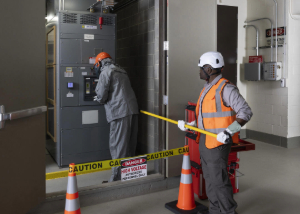
Worker in arc flash suit racking a new breaker with a site supervisor spotting the installation

Arc flash incidents are among the most catastrophic electrical events in the workplace. They can cause severe burns, permanent hearing loss, blindness, and even death in an instant. In the U.S., 5 to 10 arc flash explosions occur every single day1, putting thousands of workers at risk.

When an arc flash happens, temperatures can soar to 35,000°F, four times hotter than the surface of the sun, creating a violent blast of heat, pressure waves, and flying molten metal. This isn’t just an electrical shock; it’s an explosion capable of changing lives forever.

What is Arc Flash?

An arc flash occurs when electrical current leaves its intended path and travels through the air between conductors or to ground. This can be an explosive event:

  • Produces sound levels up to 140 dB and blast pressures exceeding 2,000 lbs/sq ft.
  • Can propel projectiles at 700 mph.
  • Ignites clothing and vaporizes metal, causing severe burns and structural fires.

Causes of Arc Flash:

  • Phase to phase, or phase to ground faults
  • Dropped tools or materials across exposed conductors
  • Accidental contact with energized parts
  • Material failure or corrosion
  • Faulty installation
  • Lack of timely maintenance and cleaning

What you can do:

  • Utilize safe work practices in accordance with OSHA and NFPA70E.
  • Always follow the hierarchy of controls with the goal of eliminating the hazard first by creating an electrically safe and de-energized condition.
  • Utilize lockout/tagout procedures when de-energizing.
  • Require or take advantage of engineering controls such as Infrared windows and ultrasound ports, remote operations, arc resistant switchgear, etc.
  • If equipment can’t be de-energized, conduct an arch flash assessment to determine potential for an arc flash and to identify proper PPE.
  • Use proper PPE: arc-rated clothing, face shields, gloves, and hearing protection.
  • Maintain safe working distance by implementing required boundaries (Restricted, Limited & Arc Flash).
  • Never ignore or by-pass barricades or warning labels.
 

Why it matters

Arc flash incidents can result in catastrophic injuries or fatalities. Following proper safety protocols significantly reduces risk and saves lives.

Confirm review of this toolbox talks article.
[1] Occupational Health & Safety (OSHA). Navigating OSHA’s Arc Flash Guidance: What You Need to Know. Sep 2025.