What you need to know

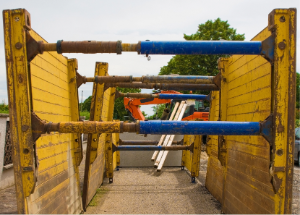
Two trench boxes awaiting placement in a trench

Trench boxes, also known as trench shields, are critical protective systems used to prevent cave-ins, a leading cause of fatalities in trenching and excavation work. While trench boxes are designed to protect workers from collapsing soil, improper installation, movement, or use can also create serious hazards. Understanding how to safely install, use, and work within trench boxes is essential to protecting yourself and your crew.

Basic safety requirements:

  • Never enter a trench box until it has been inspected and approved for use by a Competent Person.
  • Trench boxes must be installed in excavations 5 feet or deeper unless a Competent Person determines there is no cave-in hazard (such as stable rock).
  • Ensure trench boxes are designed by a registered professional engineer and carry tabulated data that contain physical information, specifications for use and structural and loading data.
  • Protective systems for use in excavations more than 20 feet (6.1m) in depth must be specifically designed by a registered professional engineer.
  • Inspect trench boxes prior to use for damage such as bent spreaders, broken welds, or missing pins, and report issues immediately.
  • Do not exceed the load capacity of the trench box and ensure spoils and equipment remain a safe distance from the trench edge.
  • Never enter, stand near, or ride in a trench box during installation, removal, or relocation, moving boxes create struck-by and cave-in hazards.
  • Trench boxes must be installed to prevent lateral movement. This is often achieved by minimizing gaps and backfilling around the shield.
  • The trench box must be properly positioned, no more than 2 feet above the trench bottom and extended as needed (typically 18 inches) above the vertical excavation face when using sloping or benching.
  • Multiple boxes or shields should be connected according to manufacturer’s directions.
  • Never leave the protection of a trench box to enter an unprotected trench area, even briefly.
  • Always use ladders or approved access to enter/exit. Ladders must be inside the protected area and extend at least 3 feet above the landing surface.
  • Do not excavate below the bottom of the trench box unless approved by the Competent Person and within allowable limits.

Why it matters

The greatest hazard in trenching is a cave-in, which can occur suddenly and with little warning. A single cubic yard of soil can weigh as much as a car, making survival unlikely without proper protection.

Misuse of trench boxes, such as entering unprotected areas, working around moving shields, or using damaged equipment can eliminate the protection they provide. Following safe practices ensures trench boxes function as intended and protects workers from potentially fatal hazards.

Confirm review of this toolbox talks article.

More resources