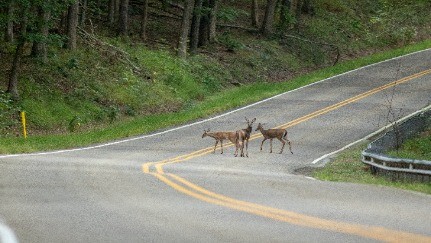
As summer gives way to fall, your chances of hitting a deer are begin to increase. Stay safe while on the road with these tips from the University of North Carolina Highway Safety Research Center.
1. Be cautious while driving during dusk or dawn
Deer are most active during sunrise and sunset, especially during mating season, which is in full swing from October through December. Ensure that you and your passengers are wearing safety belts at all times, even in the back seat, just in case you have to make a sudden stop.[1]
2. Pay attention to deer crossing signs
Be alert and observe your surroundings for any signs of wildlife while on the road. Deer are abundant in forested areas, but they may wander into suburban neighborhoods in search of food, so it’s important to drive cautiously even if you’re no longer in a deer-crossing zone.[1]
3. Stay alert if you spot a deer
Deer tend to travel in packs — so if you see one deer, slow down and proceed with caution. Even if you spot a deer on the side of the road or surrounding areas, remember that there could be others about to cross your path.[1]
4. Take precautions when driving at night
Nighttime driving can put a strain on the eyes, so be safe by driving at a moderate speed. If there is no oncoming traffic, turn on your high beams: You’ll not only be able to see clearer, but you’ll have a greater chance of spotting a deer from a distance.[1]
5. Don’t swerve to avoid hitting a deer
Do not swerve to avoid a deer collision. By swerving, you put yourself at risk for a worse collision with another vehicle or running off the road. Stay in your lane and try to slow down.[1]
6. Get comprehensive coverage for your car
Did you know that physical damage to your car as a result of something other than a collision with another vehicle might not be covered by standard auto liability insurance? With comprehensive car insurance, you can receive additional coverage and protection for car accidents involving animals.
7. Report the deer-vehicle collision
If your car hits a deer, contact your local authorities and insurance company to file a claim.[1]
Now that you know what steps to take to minimize deer-related car accidents while on the road, be sure to check out our safe driving tips for more helpful tips!
[1] “Stay Safe on the Road: Deer Season Driving Tips from Pine Belt Chevrolet,” pinebeltchevrolet.com/stay-safe-on-the-road-deer-season-driving-tips-from-pine-belt-chevrolet/ (accessed February 2026).