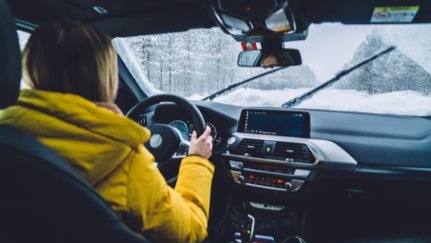
With nearly 70% of the nation’s roads being in snowy regions, many Americans have had a “white-knuckle” driving experience at some point. Winter roads claim the lives of 1,300 people per year on average and injure another 116,800, according to the U.S. Department of Transportation.[1]
Fortunately, safety features, including forward collision alerts and lane departure warnings, provide additional protections on slick roads. Many modern vehicles now pair these advanced driver‑assistance systems with winter‑specific technologies such as traction control, anti‑lock brakes and all‑wheel drive, which help maintain stability and steering control when roads are snow‑covered or icy. Comfort and visibility features also play a key role in safety: Heated side mirrors, windshield wiper deicers, heated steering wheels and remote start features can reduce distraction by keeping drivers warm and improving sight lines before the vehicle even moves.[2] At the same time, today’s safety tech works best when combined with good winter driving habits, such as clearing snow from sensors and allowing extra stopping distance, underscoring how technology and driver awareness work hand‑in‑hand to reduce winter driving risks.[3]
An increasing number of new vehicles are now equipped with these 6 technological safety advances:
1. Forward collision warning and auto-braking
Vehicles can sense hazards in the road, warn the driver and brake the car to prevent a crash. If a driver is following someone who slams on the brakes, for example, a combination of laser-based sensors and cameras detect the rapid change in distance and alert the driver through visual and audible warnings.[4] If the driver does not react quickly enough, automatic emergency braking can step in to slow the vehicle or bring it to a stop, reducing the severity of a collision or avoiding it altogether — an especially important benefit on snowy or icy roads where stopping distances are much longer. Because these systems rely on clear sensor input, it’s necessary to keep the windshield, front grille and bumper areas free of snow, ice and road salt so forward collision warning and auto‑braking features can “see” the road and operate properly in winter conditions.[5] While these technologies provide valuable backup, they are designed to assist the driver (not take their place), with full control returning as soon as the driver presses the brake.
2. Lane departure warning system
Keeping drivers in their respective lanes on slippery roads can be critical to highway safety, particularly at higher speeds where even a small drift can lead to a serious collision. Lane departure warning systems use forward‑facing cameras to monitor lane markings and detect when a vehicle begins to drift out of its lane without a turn signal. When this happens, the technology alerts the driver with audible warnings, visual alerts, or steering‑wheel or seat vibrations to prompt immediate corrective action. Many vehicles also include lane‑keeping assistance, which can gently steer the vehicle back toward the center of the lane if the driver does not respond quickly enough. These lane‑departure prevention technologies have been shown to reduce certain types of crashes, including sideswipe and run‑off‑road crashes, though they are designed only to support an attentive driver.[6] Because the systems rely on clear lane markings, they may be limited or temporarily disabled when snow, ice or slush obscures the lines on the road. Full control immediately returns to the driver as soon as he or she begins steering or making a lane correction.
3. Adaptive headlights
Visibility can be a major challenge on winter roads, especially during long nights, snowfall, and winding or poorly lit routes. Traditional headlights shine straight ahead regardless of where the vehicle is turning, but forward‑adaptive headlights react to steering input and vehicle speed to illuminate the road in the direction the car is actually traveling. When a driver turns the steering wheel —such as when rounding a curve or navigating an exit ramp — the headlights swivel to the right or left, helping drivers see farther down the road and spot obstacles, pedestrians or animals sooner. Improved lighting technologies, including adaptive headlights and high‑beam assist, are among the features that make winter driving safer by enhancing visibility when conditions are less than ideal.[4] These benefits translate into real‑world insurance results as well: According to IIHS research, vehicles equipped with these kinds of acceptable-rated headlights experience about a 15% reduction in single-vehicle nighttime crashes, reinforcing how better low-light and poor‑weather visibility can help drivers avoid crashes in winter driving conditions.[7]
4. LED headlights and taillights
Spotting taillights ahead can be a trying task, especially when visibility is reduced by falling or blowing snow, road spray, or early winter darkness. Halogen light bulbs were once the standard, but more manufacturers are now equipping vehicles with LED headlights and taillights. LEDs shine brighter and produce a clearer, more consistent light than halogen bulbs, making taillights easier to see through snowfall and slush. Modern lighting technology is an important part of safer winter driving because it helps drivers better identify vehicles ahead when conditions are poor. In addition, LED taillights illuminate more quickly than traditional bulbs, giving following drivers precious extra reaction time on slick roads. Because they are longer‑lasting and resist dimming, LEDs provide reliable visibility throughout the winter season — an added advantage when road conditions are unpredictable and stopping distances increase.[4]
5. Traction control
Traction control is another key safety feature that plays an important role in winter driving. Designed to prevent wheel spin on slippery surfaces, traction control systems automatically reduce engine power or apply braking to individual wheels when they detect a loss of grip. This helps drivers maintain control when accelerating on snow‑covered roads, icy intersections or slushy hills — situations where wheels can easily spin without moving the vehicle forward. By improving stability and reducing skids, traction control works hand‑in‑hand with anti‑lock brakes and electronic stability control to keep vehicles pointed in the intended direction.[4] While traction control doesn’t eliminate the need for cautious driving or proper winter tires, it provides an important safety net that helps drivers regain control more quickly when road conditions deteriorate.
6. Winter car heating features
Cold weather doesn’t just make winter driving uncomfortable. It can also create safety challenges that modern vehicle heating features are designed to address. Heated side mirrors, windshield wiper deicers and heated windshields are among the top safety‑related features for snow driving, because they help melt ice, reduce fogging, and keep sight lines clear during storms or freezing temperatures.[4] Additionally, comfort‑focused features such as heated seats, heated steering wheels and remote start also play an important safety role by helping drivers warm up faster and stay focused, rather than being distracted by the cold.[2] Remote start allows the cabin to heat up and windows to defrost before the driver gets in, while heated seats and steering wheels warm occupants more quickly than cabin air alone. Together, these heating technologies improve visibility, enhance driver alertness, and make winter driving safer and more manageable when conditions are at their worst.
More winter driving safety features become standard
Traction control and LED taillights are already becoming standard features in most vehicles, which means there isn’t an added cost for them. As vehicle safety technology continues to evolve, automakers are introducing additional winter‑focused features that further reduce risk in challenging conditions. Advances such as automated high‑beam assist, headlight washers that keep lenses clear of slush and snow‑specific drive modes that adjust throttle response, traction control and braking to improve stability on slippery roads are merely a few of the enhancements that are quickly becoming available on more models. There’s also a growing use of heated cameras and sensor‑cleaning features, which help critical driver‑assist systems function more reliably when snow, ice or road salt would otherwise block their view. Together, these emerging technologies reflect the industry’s shift toward preventing accidents before they happen, not just indemnifying a vehicle’s occupants after a crash.
As winter driving becomes safer with smarter vehicles, it’s just as important for drivers to make sure their insurance coverage keeps pace. Exploring reliable auto insurance options — such as those available through Nationwide — can help ensure that you’re prepared for winter hazards, protected against unexpected losses and confident every time the road conditions turn difficult.
Sources: