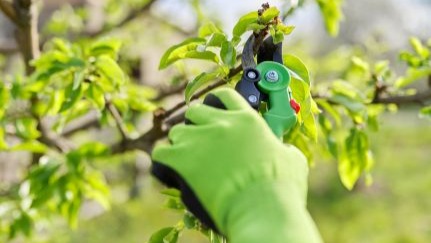
Tree maintenance techniques
So, how do you maintain a tree? Trimming, pruning, watering, fertilizing, and mulching are great ways to take care of your trees and other plants on your property. Not familiar with these techniques? Here are some quick breakdowns:[1]
- Tree trimming: To trim a tree means to cut away excess branches for aesthetic or other practical reasons.
- Tree pruning: Pruning also means cutting away excess branches but for the benefit of the tree’s health.
- Watering: If rain is scarce, you can give trees supplementary water to ensure they remain healthy and green.
- Mulching: Mulch can be comprised of numerous materials, organic and otherwise, and is spread on top of soil to maintain moisture levels, add nutrients, and insulate roots.
- Fertilizing: Fertilizer can also be comprised of multiple organic and non-organic materials and provides nutrients to soil.
Tree care tips
Trees can enhance any property with beauty, shade, tranquility and home value. Because they’re so advantageous to keep healthy, it’s crucial to learn as much as you can about tree maintenance for your property.
1. Begin landscape care, especially for new trees, in the fall
Many people wait until spring to begin thinking about their landscaping, but the pros know that getting a head start in the fall can make springtime care easier and more rewarding. There are a few important steps to take when preparing your trees for colder weather. Nip problems in the bud by practicing the PINE method: prune, inspect, nourish and extend.
- Prune unruly branches
- Inspect trees for dying limbs, insect damage or signs of disease
- Nourish trees with water and organic mulch
- Extend next year’s growing season by planting new trees in the fall[2]
Remember that healthy, well-cared-for trees generally don’t die, snap, lose limbs, or house termites. Keeping your trees healthy can help prevent damage to your home and property.
2. The best care for some of your trees may be to leave them alone
Homeowners often try to build a structure close to a beautiful tree to enhance the finished project, but this should be avoided. Construction too close to trees can harm their roots and limit the space they need to grow. Even routinely parking a car beneath a tree can compact the soil, hindering the roots from expanding and moving naturally. Be sure to discuss what your trees need with a contractor and mark off places where you don’t want construction vehicles to drive or park.[3]
3. Observe your trees and become familiar with tree diseases
Even though leaving your trees alone can be the best way to protect them, it’s also a good idea to observe them regularly so you’ll know when they change. A diseased tree is best diagnosed early. Changes you should monitor range from rapid discoloration to stunted growth. Knowing what your tree looked like when it was healthy can also be helpful when calling an arborist — a specialist in caring for trees, shrubs and other woody plants — to consider solutions.[1]
Getting yourself a guide to trees and their diseases will be key in considering a diagnosis for a tree on your property that’s changed noticeably.
4. Weekly mulching and pruning
Although your trees won’t require much to stay healthy, it’s still wise to take a few simple steps to help them thrive. Putting mulch around the base of your trees is an excellent practice, as it helps protect them from overwatering or overfertilization. Apply a 2‑ to 4‑inch layer and try to keep the mulch from touching the tree’s bark. It is best practice to clear out the older mulch before putting down a fresh layer.[1]
Most trees need very little pruning, and in many cases, trimming can actually slow their growth because the tree must heal before growing again. The right time to prune is when you notice dead limbs or branches that have cracked after strong winds or a heavy rainstorm. Taking the time to safely remove these damaged limbs helps prevent them from falling and potentially causing harm to your property.[3]
Benefits of tree trimming and pruning
The benefits of tree pruning are typically health-related. Dead pruning involves removing dead or dying branches. These pruning techniques help foster the long-term health of the tree, boosting the aesthetic appeal of your property and helping reduce the chances your home might be harmed by falling branches or trees during weather events.[3]
Improve tree health
Improving a tree’s health by cutting it might feel counterintuitive, but pruning really is an essential part of tree health care. A healthy tree needs ample access to sunlight, access that can be blocked by its own overgrown limbs.
Pruning limbs also helps spread nutrients more evenly around the tree, leading to overall improved health. It’s a great way of assessing tree health too, since pruning reveals more of the tree and can help find diseases before they spread further.[1]
Control pests and diseases
Trimming and pruning are excellent ways to help control pests. A healthy tree is a bastion against pests and diseases alike. Keeping your trees properly trimmed and pruned helps them turn away uninvited guests. These same pests (like termites, for example) could find their way into your home, so helping the trees helps you, too.[1]
Increase curb appeal
Want to know how to increase property value without making additions to your home? Properly maintaining the trees on your property is a great example of how to boost curb appeal. Think about it – a finely manicured lawn and freshly painted porch are nice, but if they’re shrouded by overgrown trees, the effect is diminished.
Benefits of mulching and fertilizing
There’s already soil there, so why is mulching important? Mulching fortifies the topsoil at the base of a tree, insulating the roots and helping maintain moisture levels. Learning how to mulch a tree neatly adds an aesthetic finish that creates an intentional look for your yard.[3]
Fertilizer, on the other hand, focuses exclusively on adding nutrients to the soil. The benefits of fertilizer are healthier trees that add more aesthetic appeal and have a lesser chance of posing safety risks to your home.[3]
Benefits of watering trees
You water your house plants, so why not your trees? If you’re experiencing a drought or you live in an area with limited precipitation, you may need to water the trees around your home to ensure they stay healthy and green. A little extra water can produce more lush foliage, too, so even if sufficient rain has fallen, you can water your trees to boost that verdant glow. Remember that younger trees may need more attention than older ones, so don’t hesitate to offer your saplings water.[3]
When to remove a tree
That beautiful, towering oak in front of your home may have kept watch for years, but it can quickly become a risk once it reaches the end of its life. Look for signs of health issues in your trees – excessive damage, rot, dead branches or fungal infections.[4]
Health isn’t the only reason to remove a tree, of course. Sometimes trees can begin to lean or simply sprout up in a dangerous position, like over the spot where you park your car. In any case, consider consulting a professional to determine whether the tree should be removed and avoid trying to remove it yourself.[4]
Protect your home and property
Aesthetic appeal counts, but at the end of the day, maintaining the trees on your property is primarily a matter of safety. Falling trees and branches can cause extensive damage to your home and pose a serious threat to you and your family. Preventing tree damage from storms starts with proactively caring for trees to minimize these risks.
On top of proper maintenance, homeowners should also safeguard their wallets against tree-related damages with a reliable insurance plan. Talk to an independent agent today to ensure your home has the coverage you need.