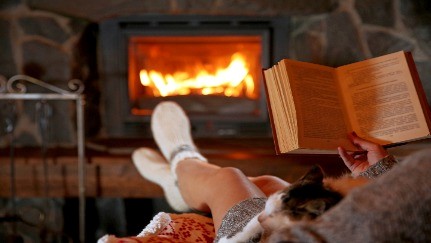
As the weather gets colder and your fireplace becomes more than a decorative focal point, be sure it’s up for the task of keeping your family members warm and toasty — and safe. Our list will help you keep track of proper maintenance and make sure your fireplace is ready for regular use this winter.
Inspect the fireplace and chimney
Have a professional inspect and clean your fireplace and chimney each year before you begin using it for the season. If you’re using a gas or wood fireplace, open the chimney flue prior to starting the fire to let fresh air feed the flames and allow smoke to exit. Close the flue once the fire is put out.[1]
It’s also important to keep the area surrounding the fireplace free from flammable objects. Be extra cautious of this during the holidays. Keep decorations and stockings a safe distance away from a fire, and never use your fireplace to burn Christmas trees or wrapping paper. Pine boughs and paper burn intensely and can lead to a roof or chimney fire.
Gas fireplace safety tips
Gas fireplaces are exceedingly popular for their efficiency and cleaner burning properties. Enjoy them safely by acknowledging the following safety conditions: [2]
Know your clearance zone. Many gas fireplaces have technology that makes it safe to place electronics and décor near the fireplace or on the mantle. However, certain items should never be placed within your fireplace’s clearance zone. These items include paper items such as books, newspaper, and magazines; fabrics, such as blankets or drapes; and wood.
Proper ventilation is key. Natural gas and carbon monoxide can kill. Make sure your flue and vents are all functioning properly.
Maintain your safety barrier. Whether it’s glass or metal, keep your safety screen in excellent condition. This will prevent flames or burning material from getting out of your fireplace and keep flammable items from getting in.
Electric fireplace safety tips
Electric fireplaces make it possible to have a fireplace in a location that wouldn’t normally be able to fit one. The flame isn’t real, but that doesn’t mean they are without risk. As a source of heat, an electric fireplace should always be treated with care. In addition to maintain the clearance zone discussed above, observe the following safety tips when using an electric fireplace.
Use proper cords. Many companies do not recommend using extension cords for electric fireplaces. Some will allow grounded, heavy duty cords that are the appropriate gauge and wattage rating. Make sure to follow the manufacturer’s specific guidelines to ensure your safety.[3]
Plug in to an appropriate socket. An electric fireplace is essentially a forced air heater, and it is subject to the restrictions of a standard household socket, wiring and fuse box. Be sure not to draw more power from your socket than it can handle, else you run the risk of starting a real fire.[3]
Wood fireplace safety tips
Replaced by more efficient, cleaner and safer options, wood fireplaces are less popular than they have been in the past. However, it’s difficult to deny the ambiance of a crackling fire with real burning wood.
Consider what type of fire you want so that you can select the right type of wood. If the fire is more for aesthetics, lighter wood or a synthetic log are good choices. If your fireplace is used for heat, oak or ash may be a better fit, because they’re heavier and burn hotter.
- Avoid using wood from recently cut trees. They contain high levels of moisture, which can lead to more smoke and deposits forming inside the chimney.
- Synthetic logs can burn unevenly, so be careful when using them. Even though they’re not real wood, the flue should still be open for proper ventilation as they still produce carbon monoxide.
- Wood should be seasoned and dry — it will appear darker, have cracks at the ends, and will sound hollow when hit against another piece of wood.
- Have a metal container handy when removing and storing hot ashes. Store it outside at a safe distance from your home, because embers and ashes can stay hot for quite some time.
- Start your fire with newspaper, dry kindling or organic fire starters. Never use gasoline, kerosene or charcoal starter.
- Use a stainless steel liner to help keep the fire and ashes contained.
- Install heat-proof glass doors to keep live embers from escaping the fireplace.
- Look for signs of creosote and soot buildup. Creosote is a dark substance that can accumulate if wood isn’t burning completely. It’s a highly flammable fuel and can burn at about 2,000°F. Soot, which can also be flammable, is softer than creosote. Both should be cleaned out of the chimney regularly.[4]
With these tips, you can help ensure that a cozy fire will be a safe and welcome addition to a chilly winter season. View these additional fire safety tips.