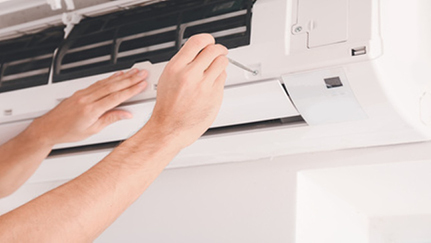
As we head into warmer months, you might want to ensure that your air conditioner is in good shape to keep your home cool. Spring is considered the best time of year to service your AC unit, but there are tasks you can do throughout the year to maintain the system. This can help prevent future costly repairs and prolong the life of your air conditioner.[1]
Is annual air conditioner maintenance necessary?
To keep your air conditioner from breaking during the hottest days of the year, you might want to have your AC serviced annually. Can’t remember the last time it was serviced? Then it’s probably time. The last thing you’d want is a broken air conditioner in the middle of summer and a long wait time to get it fixed.[2]
Air conditioner maintenance prevents breakdowns
One of the main reasons to keep up with regular maintenance is to save money in the long run. Just as a $50 oil change may save a $5,000 engine on a car, regular service on an air conditioner may keep it working as intended, so fewer repairs are needed, and you can avoid a costly replacement if it fails prematurely.[3]
Lower your electricity bill
Another way that regular maintenance helps you save is by lowering your utility bill. When you maintain your AC unit, it becomes more efficient at regulating the temperature of your home. This could help lower your energy bill because the AC doesn’t need to use as much energy to get the job done.[3]
Better indoor air quality
Another perk of regularly maintaining your air conditioner is that it can help prevent contaminants such as pollen or dust from circulating around your home. Additionally, regular maintenance can help prevent mold growth. Moisture buildup in your AC unit is the perfect breeding ground for mold, which can lead to odors and other risks.[3]
When to get A/C maintenance
We’ve already established that it’s best if you get your air conditioner serviced once a year, but for optimal performance, you should service it twice: once in the spring and again in the fall. It’s best to avoid servicing in summer, the busiest time for AC repair. Servicing in winter also isn’t recommended because running the air conditioner in the cold could damage it.[2]
How to service your air conditioner
Your 2 main options for servicing your air conditioner are to do it yourself or to hire a professional. If you choose to do it yourself, you can optimize your air conditioner’s efficiency by cleaning the evaporator and condenser coils, replacing the air filter, cleaning the vents, and winterizing your air conditioner. Just know that servicing your AC unit without a professional may lead to damage and could void your warranty. Proceed with caution.[2]
Know when to hire an HVAC maintenance professional
Certain air conditioner tasks should be left up to the professionals. Tasks that should be performed by professional technicians include checking the refrigerant levels of your air conditioner, fixing electrical issues (such as your circuit breaker or thermostat), performing tune-ups and deep cleaning your HVAC system.[4]
Replace the A/C air filter
Because the general rule of thumb is to replace your air filter at least every 90 days, you’ll want to do this yourself instead of leaving it to the professionals. Make sure you choose a filter rated MERV 13, which removes tiny allergen particles, helping anyone in your home with allergies and asthma. Another reason to change your air filter is that it can get clogged quickly, making your air conditioner less efficient than it should be.[2]
Clean the A/C vents
Similar to air filters, AC vents should also be cleaned as often as every 90 days. To clean AC vents, just unscrew and remove the vents, wipe them with a cloth and remove any buildup that reduces efficiency. Then, vacuum as deeply inside the ducts as you can reach to remove any dust. This helps reduce the amount of allergen particles in your home.[2]
Clean your air conditioner
While the highly technical maintenance of the AC unit is typically left to a professional, you can certainly clean it between services to ensure that it’s running smoothly: [5]
- Replace the filter if it’s dirty.
- Check the condenser unit to ensure that there aren’t any damaged insulation lines leading to or from your air conditioner unit. Verify that they don’t need to be replaced. Make sure you check your air conditioner’s manufacturer guidelines before cleaning the condenser so you don’t void the warranty.
- Using your unit’s instructions, turn off the breaker and remove the condenser unit’s top.
- By hand (or carefully using a vacuum), clean out any dirt at the bottom of your unit. Gently clean and inspect your condenser’s fins (if needed).
- Follow the manufacturer’s instructions and clean your air conditioner’s coils by spraying the fins (located inside the unit) with an air conditioner coil cleaner.
- Never use a pressure washer to clean your air conditioner.
Keep your home protected
Keeping your AC unit in good operating condition with regular maintenance is a great step to improve the value of your home. Make sure to protect your home with the proper coverage, and speak to an independent agent to see whether the breakdown of some equipment in your home is covered.